


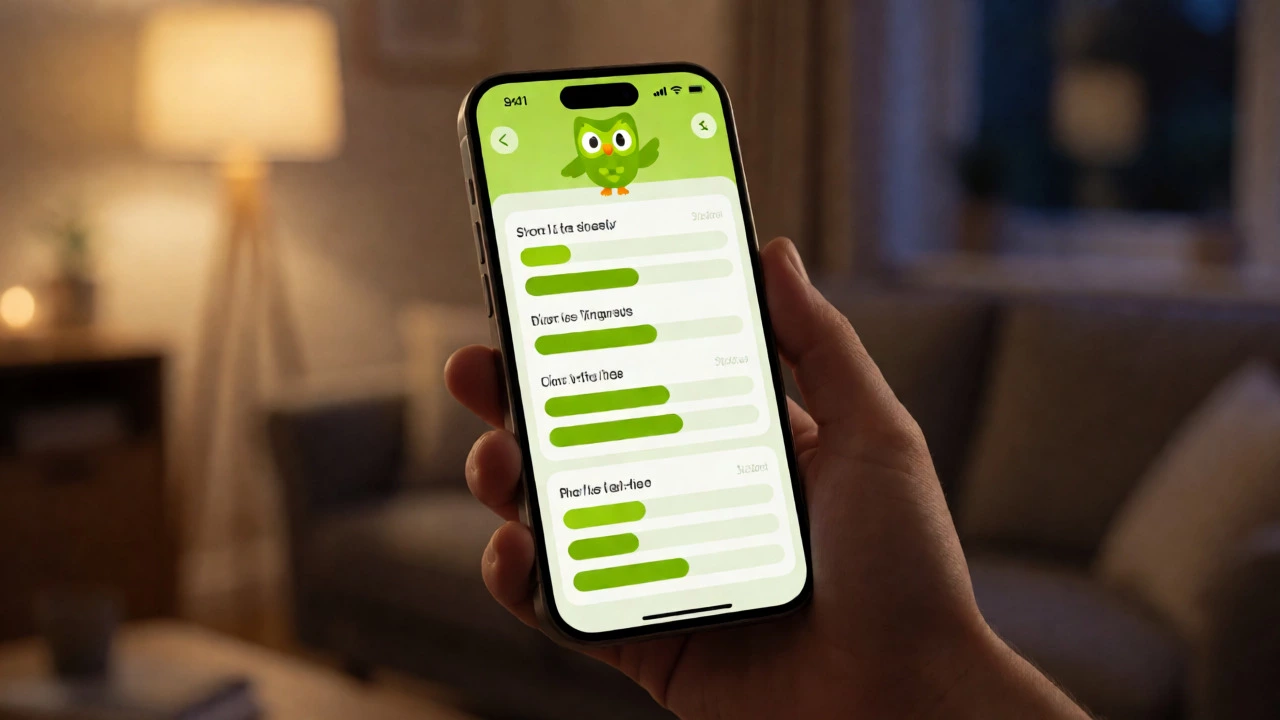


English Speaking Survival Toolkit
Master the essential phrases that keep conversations moving, even when your grammar fails.
Core Survival Phrases
Could you say that again?
Use when you miss something.
What does [word] mean?
Use for clarifying vocabulary.
Let me think...
Use to buy yourself time.
In my opinion...
Use to start giving thoughts.
I'm not sure, but...
Use to express uncertainty without stopping.
Practice Tracker
Consistency beats intensity. Track your daily 15-minute practice sessions.
Weekly Goal: 7 Days
0 / 7
Start logging to build your streak!
You know the words. You’ve studied the grammar rules. But when someone actually asks you a question in English is the world's most widely learned second language and the primary medium of international communication., your mind goes blank. This is the most common frustration for beginners. The gap between understanding English and speaking it feels like a canyon.
The good news? You don’t need perfect grammar to start talking. You just need a strategy that bypasses your fear of making mistakes. Here is how you can break the silence and start speaking English today, even if you only know a few hundred words.
1. Kill the Perfectionist Monster
The biggest barrier isn't vocabulary; it's psychology. Many learners wait until they feel "ready" to speak. That day will never come. In Birmingham, where I live, people speak quickly, use slang, and make grammatical errors all the time. If native speakers aren't perfect, why should you be?
Language Acquisition is a natural process where learners gain proficiency through exposure and usage rather than rote memorization alone. Think of it like riding a bike. You cannot learn to balance by reading a manual about physics. You have to get on the bike, wobble, and fall. Speaking English requires the same physical muscle memory. Accept that you will sound silly at first. Embrace the awkwardness. Every mistake is data telling your brain what doesn't work.
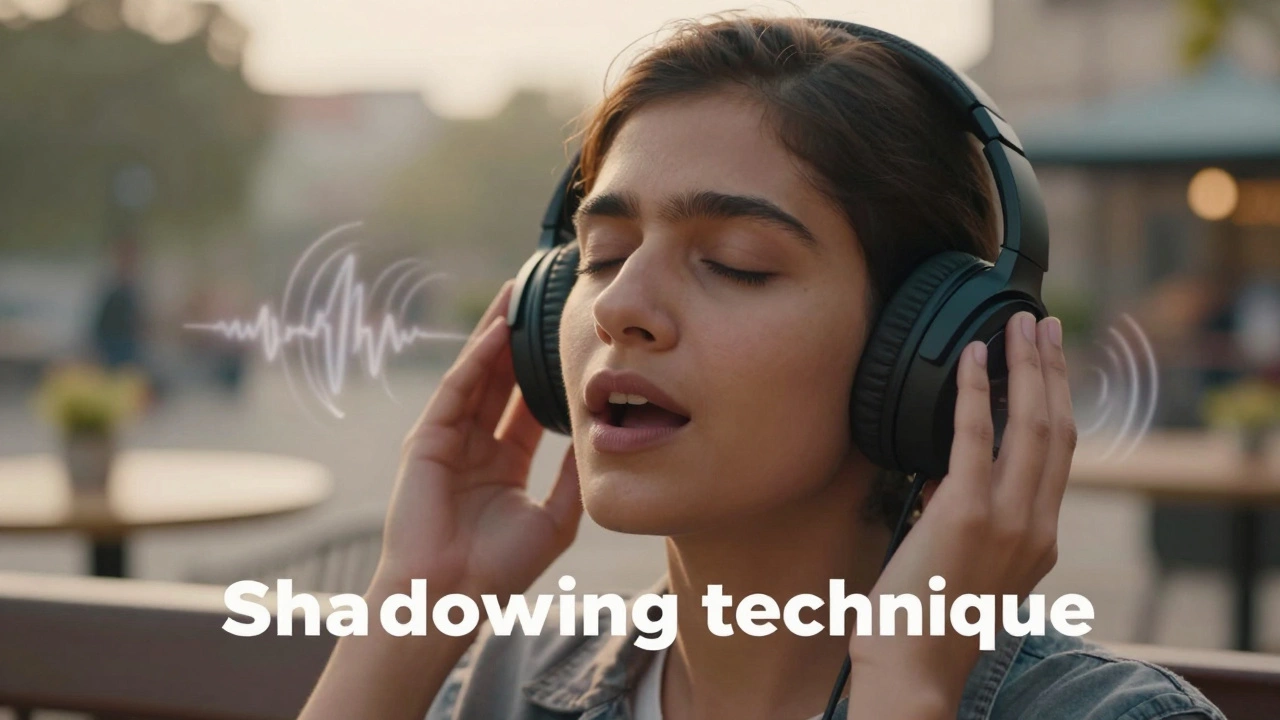
2. The Shadowing Technique: Speak Before You Understand
If you don't have a partner yet, you need to talk to yourself. One of the most effective methods for beginners is Shadowing is a language learning technique involving listening to a source audio and repeating it almost simultaneously to mimic intonation and rhythm.
- Find a short audio clip with a transcript (YouTube videos, podcasts, or audiobooks are great).
- Listen to one sentence.
- Pause and repeat it exactly as you heard it. Mimic the speed, the emotion, and the pauses.
- Once comfortable, try to speak along with the audio without pausing.
This trains your mouth muscles to form sounds that might not exist in your native language. It also helps you internalize the rhythm of English, which is stress-timed. Unlike syllable-timed languages (like Spanish or Japanese), English stresses certain words and glides over others. Shadowing teaches your ear to hear this music and your mouth to play it.
3. Build 'Survival Phrases' Instead of Vocabulary Lists
Most beginners spend hours memorizing lists of random nouns like "refrigerator" or "umbrella." This is inefficient. Instead, focus on high-frequency phrases that allow you to control a conversation. These are called Chunks are fixed expressions or collocations that native speakers use automatically, such as 'by the way' or 'I was wondering if'.
Learn these five survival chunks first:
- "Could you say that again?" - For when you miss something.
- "What does [word] mean?" - For clarifying vocabulary.
- "Let me think..." - To buy yourself time to formulate an answer.
- "In my opinion..." - To start giving your thoughts.
- "I'm not sure, but..." - To express uncertainty without stopping.
These phrases act as scaffolding. They keep the conversation moving even when your grammar fails. Native speakers appreciate effort more than perfection. Using "Let me think" shows you are engaged, whereas silence makes the other person uncomfortable.
4. Talk to Yourself (Seriously)
This sounds strange, but narrating your day is one of the best ways to build fluency. When you are cooking, driving, or cleaning, describe what you are doing out loud.
"I am chopping onions. The knife is sharp. I need to wash the bowl."
Why does this work? There is no pressure. No one is judging you. You can pause, restart, and correct yourself freely. This builds the neural pathways between thought and speech. Over time, you will find yourself thinking in English rather than translating from your native language. Translation is slow and clunky; direct thinking is fast and natural.
5. Find Low-Stakes Conversation Partners
Eventually, you need real interaction. But jumping into a business meeting is too scary. Start with low-stakes environments.
| Method | Pressure Level | Feedback Quality | Best For |
|---|---|---|---|
| Talking to Yourself | None | Self-correction only | Building confidence & muscle memory |
| Language Exchange Apps | Low | Peer correction | Cultural exchange & casual chat |
| Online Tutors | Medium | Professional correction | Structured improvement & grammar |
| Local Meetups | High | Natural immersion | Real-world speed & slang |
Apps like HelloTalk or Tandem connect you with native speakers who want to learn your language. It’s a fair trade. You help them with your native tongue; they help you with English. Keep conversations light. Talk about food, movies, or travel. Avoid complex topics like politics or economics until you are more advanced.

6. Immerse Your Ears Daily
You cannot speak well if you cannot hear well. Passive listening (having TV on in the background) helps slightly, but active listening is key. Spend 15 minutes a day listening to content designed for learners or clear, slow-paced media.
Podcasts are audio programs available on subscription or download, offering diverse content including educational series for language learners. Look for shows like "6 Minute English" by BBC or "Luke’s English Podcast." These hosts speak clearly and often explain idioms or cultural references. As you improve, switch to regular Netflix shows with English subtitles. Do not use subtitles in your native language unless absolutely necessary. Reading your own language while listening to English splits your brain's focus and hinders comprehension.
7. Record and Review
We often think we sound better than we do. Use your phone’s voice memo app to record yourself answering a simple question, like "What did you do yesterday?" Listen to it. It will be painful. You will hear mistakes you didn't notice while speaking.
Now, re-record it. Try to fix the errors. Listen again. Repeat this three times. You will likely see immediate improvement. This feedback loop accelerates learning because you become your own teacher. You start to recognize patterns in your errors, such as consistently dropping the 's' on third-person verbs or mispronouncing 'th' sounds.
8. Consistency Beats Intensity
Studying for five hours once a week is useless. Studying for 15 minutes every day is transformative. Language learning is a marathon, not a sprint. Your brain needs sleep to consolidate new neural connections. If you cram, you forget. If you space it out, you retain.
Create a habit stack. Attach English practice to an existing habit. For example, listen to an English podcast while commuting, or speak to yourself while brushing your teeth. Make it impossible to skip.
Is it normal to feel embarrassed when speaking English?
Yes, it is completely normal. Most beginners experience anxiety because they fear judgment. Remember that native speakers are usually patient and impressed by your effort. Focus on communication, not perfection. The embarrassment fades as you gain confidence through repeated exposure.
How long does it take to start speaking English fluently?
Fluency is a spectrum, not a destination. With consistent daily practice of 30-60 minutes, most beginners can hold basic conversations within 3-6 months. True fluency may take years, but functional speaking ability comes much sooner if you prioritize output over input.
Should I use translation apps when speaking?
Avoid using translation apps during conversation practice. They create dependency and slow down your thinking process. Instead, use gestures, synonyms, or descriptive language to explain what you mean. This forces your brain to retrieve vocabulary actively, which strengthens memory retention.
What is the best way to improve pronunciation?
Focus on individual sounds that don't exist in your native language, such as the 'th' or 'r' sounds. Use the shadowing technique to mimic native speakers' intonation and stress patterns. Recording yourself and comparing it to native audio is the most effective way to identify and correct specific pronunciation errors.
Can I learn English speaking skills without a tutor?
Yes, you can. While tutors provide structured feedback, many successful learners use self-study methods like shadowing, language exchange apps, and self-narration. The key is consistent practice and finding opportunities for real-world interaction, whether online or in local communities.