




Competitive Exam Difficulty Calculator
How well do these challenges match your experience?
Why This Matters
Your exam challenge isn't about the subject alone. It's about how your strengths and weaknesses match the exam's demands. The hardest exam for you might be the one that pushes your weak points most.
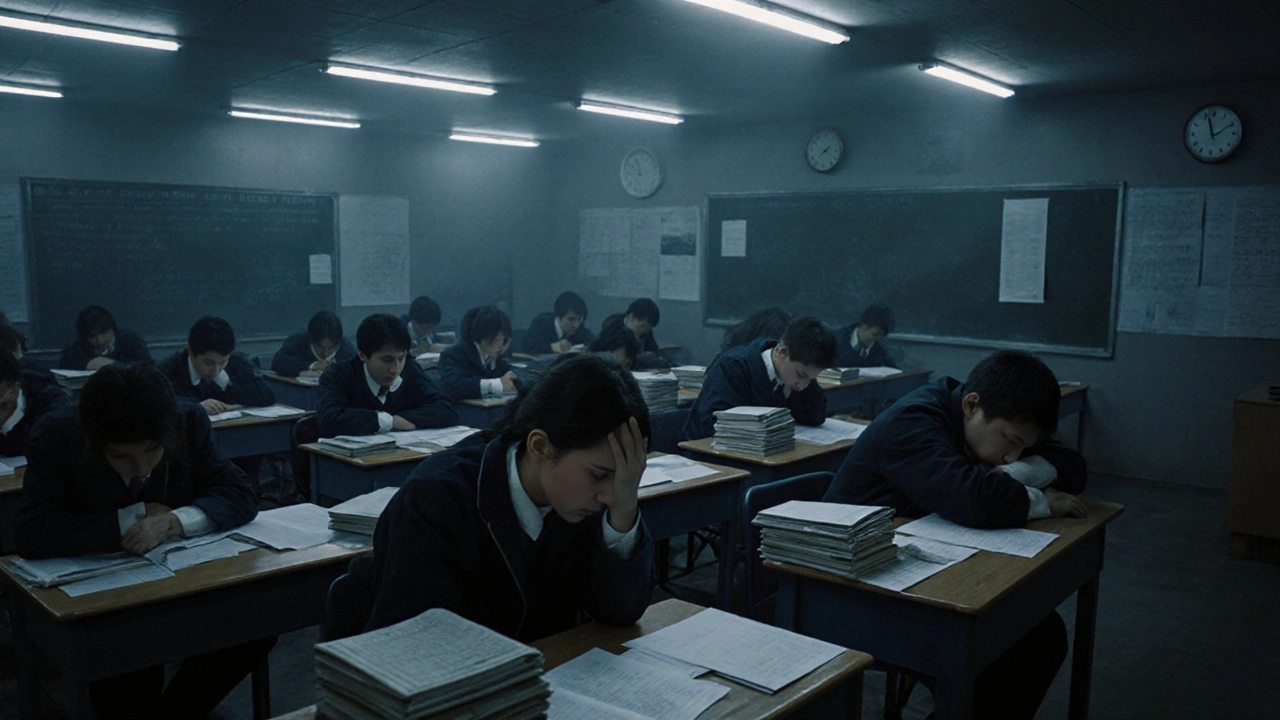
Remember: Competitive exams aren't designed to test knowledge. They're designed to filter people.
There’s no single answer to what the hardest subject to study for is - because it doesn’t depend on the subject alone. It depends on who you are, what you’re aiming for, and how much you’ve been prepared to sacrifice. For some, it’s the math in IIT JEE. For others, it’s the sheer volume of facts in UPSC. And for many, it’s the pressure of knowing one wrong answer could cost them a year.
Why ‘Hardest’ Is Personal
People say organic chemistry is the toughest. Or physics. Or history. But those are just subjects. The real challenge isn’t the topic - it’s the weight it carries in your exam. Take NEET. Biology is the highest-scoring section, so you’re expected to memorize 10,000+ facts - from plant taxonomy to human physiology - with zero room for error. One misremembered enzyme pathway, and you lose 4 marks. That’s not hard because it’s complex. It’s hard because it’s unforgiving.Compare that to UPSC. There, the subject isn’t even the problem. It’s the scope. You’re expected to know everything from ancient Indian architecture to international trade treaties. And you have to write essays on them - clearly, logically, with examples. The subject matter isn’t harder than engineering. But the depth, the writing, the time pressure - that’s what breaks people.
IIT JEE: The Math That Breaks Students
If you’ve ever sat through an IIT JEE mock test, you know what this feels like. The math section doesn’t test what you learned in school. It tests how fast your brain can rearrange logic under stress. A single problem might combine calculus, coordinate geometry, and algebra - all in one question. And you have 90 seconds to solve it.It’s not about being smart. It’s about practice. Thousands of students spend 12 hours a day for two years solving the same types of problems over and over. Why? Because the exam doesn’t care if you understand the theory. It only cares if you can recognize the pattern and apply the formula in under a minute. That’s why so many top scorers say math is the hardest - not because it’s abstract, but because it’s relentless.
UPSC: The Marathon That Never Ends
UPSC Civil Services is a different kind of beast. It’s not about memorizing formulas. It’s about building a mental library. You need to know the history of the Indian Constitution, the latest RBI policy, the structure of the UN Security Council, and the impact of climate change on Himalayan glaciers - all in the same week.The real difficulty? The answer format. You can’t just list facts. You have to connect them. You need to show cause and effect. You need to compare policies across decades. And you have to do it in 150 words - clearly, without jargon, and with examples that prove you’ve thought beyond the textbook.
One topper from Delhi told me he spent six months just reading the same 10 books - not to memorize them, but to learn how to think like a civil servant. That’s the hidden challenge. It’s not the subject. It’s the mindset.
NEET: The Biology Wall
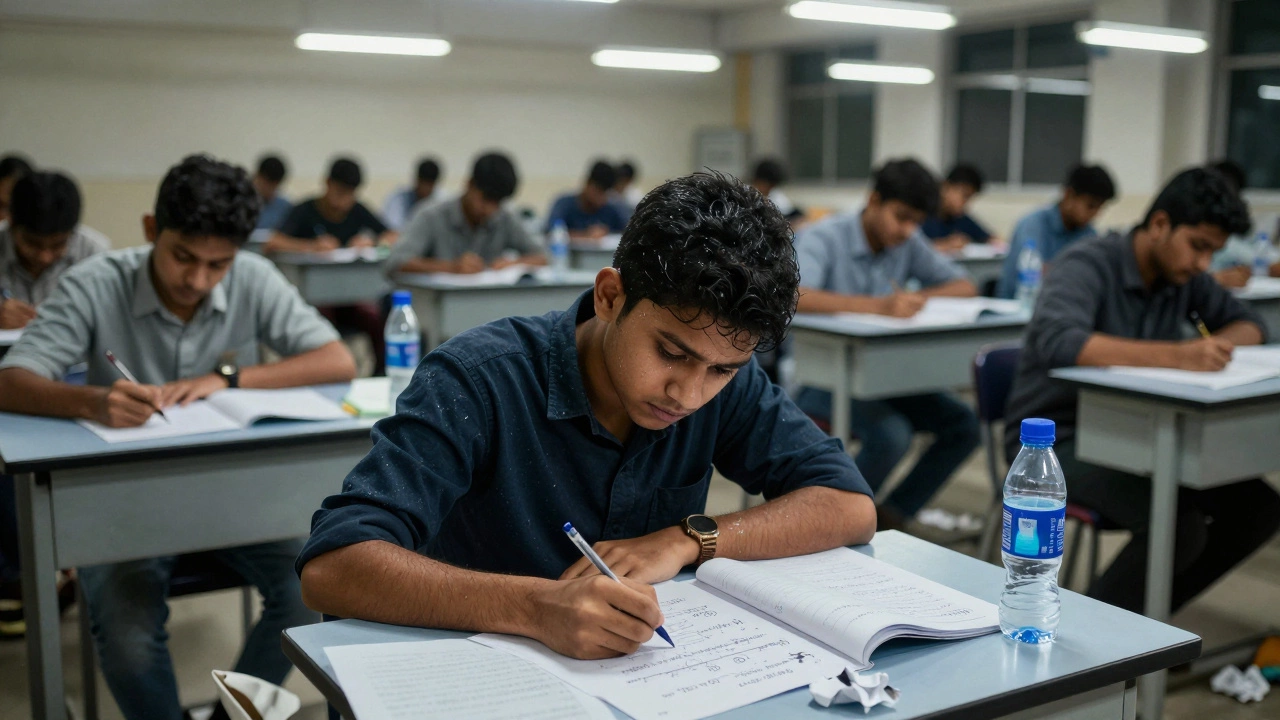
NEET’s biology section is the longest, the densest, and the most unforgiving. You’re expected to know every organ, every hormone, every phase of cell division - down to the protein names. And you have to do it in 45 minutes for 90 questions.It’s not that the content is advanced. It’s that it’s endless. A single chapter on human reproduction can have 200 key terms. And if you forget one - like the name of the hormone that triggers ovulation - you lose a mark. No partial credit. No explanation allowed.
Students who ace NEET don’t study biology. They live it. They label their walls with diagrams. They quiz themselves before bed. They carry flashcards in their pockets. They treat every question like a life-or-death test - because, for them, it is.
Why People Give Up
The hardest subject isn’t the one with the most formulas or the most pages. It’s the one that makes you doubt yourself the most.Take a student preparing for both JEE and NEET. They wake up at 5 a.m. Study physics until noon. Then biology until 8 p.m. They eat, sleep, and breathe exams. After six months, they’re exhausted. Their grades plateau. Their friends move on to college. Their parents ask, ‘When will you take a break?’
That’s when the real battle starts - not with the syllabus, but with their own mind. The hardest part isn’t learning. It’s staying motivated when progress feels invisible. It’s waking up every day knowing you might fail again - and choosing to try anyway.

What Actually Helps
There’s no magic trick. But there are patterns among those who succeed.- They focus on pattern recognition, not memorization. In JEE, they learn how 10 different problems use the same core concept.
- They write daily. For UPSC, even 200 words on a current issue builds clarity.
- They track mistakes. Not just ‘I got this wrong.’ But ‘Why did I get it wrong?’ - and then fix the root cause.
- They sleep. Seriously. Sleep deprivation kills retention. Top performers sleep 7 hours, not 4.
- They stop comparing. One person’s ‘hardest’ is another’s strength. Your path is yours alone.
It’s Not About the Subject - It’s About the System
The hardest subject to study for isn’t math, biology, or history. It’s the system that demands perfection from you without giving you room to breathe.Competitive exams aren’t designed to test knowledge. They’re designed to filter people. And the ones who win aren’t always the smartest. They’re the ones who built routines, stuck to them, and didn’t let fear win.
If you’re studying for one of these exams right now - whether it’s IIT JEE, NEET, UPSC, or something else - know this: the subject you hate the most isn’t your enemy. It’s just the arena. The real challenge is showing up every day, even when you’re tired. Even when you’re scared. Even when you’re not sure it’s worth it.
That’s what makes it hard. And that’s what makes it possible.
Is NEET harder than IIT JEE?
It depends on your strengths. NEET is harder if you struggle with memorization - biology demands near-perfect recall of thousands of facts. IIT JEE is harder if you struggle with problem-solving under time pressure - math and physics require fast, creative logic. Both are brutal, but in different ways.
Why is UPSC considered the toughest exam in India?
UPSC isn’t hard because the topics are advanced - it’s hard because the range is endless. You need to know everything from ancient Indian art to global economics, and write thoughtful, structured answers under strict time limits. Unlike other exams, there’s no syllabus you can ‘finish.’ You’re always learning. And the competition? Over 1 million applicants for 1,000 posts.
Can someone crack UPSC without coaching?
Yes. Thousands do every year. Coaching helps with structure and mock tests, but the real work - reading, writing, revising - has to be done by you. Many toppers from rural areas have cleared UPSC using only free online resources, NCERT books, and disciplined self-study.
How many hours should I study daily for competitive exams?
There’s no magic number. Some study 10 hours. Others, 16. What matters is consistency and focus. A student who studies 6 focused hours with active recall and revision will outperform someone who sits for 12 hours scrolling through notes. Quality beats quantity every time.
Is it too late to start preparing for IIT JEE in class 11?
Not at all. Many successful JEE toppers started seriously in class 11. The key is not how early you start, but how consistently you build concepts. Class 11 is where the foundation is laid - if you master the basics in physics, chemistry, and math during this year, class 12 becomes about revision and practice, not learning from scratch.
What Comes After the Exam?
When you finally crack it - whether it’s JEE, NEET, or UPSC - you’ll realize something: the hardest subject wasn’t the one on the paper. It was the one inside you. The fear. The doubt. The loneliness. The pressure to be perfect.But you didn’t just study for an exam. You trained your mind to keep going when everything told you to stop. And that’s a skill no test can measure - but one that will carry you far beyond any rank or score.