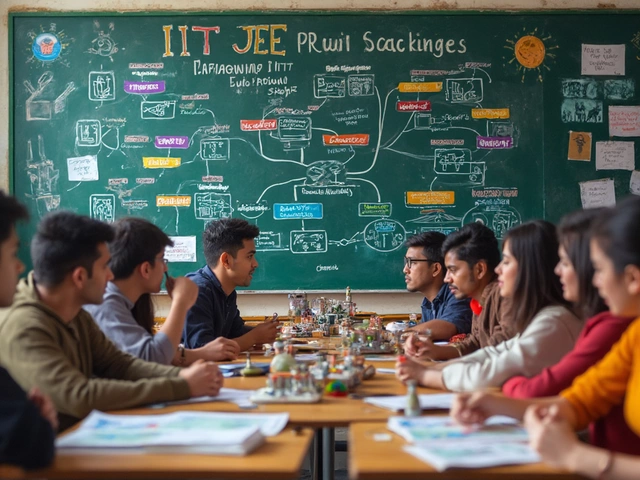
Cracking IIT JEE Without Coaching: A Realistic Guide
Discover if cracking IIT JEE without coaching is right for you. Learn essential strategies, resource recommendations, and how to manage self-study effectively.
When you hear IIT JEE, India's most competitive engineering entrance exam that determines admission to the Indian Institutes of Technology. Also known as Joint Entrance Examination, it's not just a test—it's a filter that separates hundreds of thousands of aspirants from the few who get into India's top engineering schools. The exam isn't about memorizing formulas. It’s about solving unfamiliar problems under pressure, thinking fast, and staying calm when the clock is ticking. That’s why mental ability, pattern recognition, and strategic practice matter more than raw hours spent studying.
Behind every IIT seat is a complex system of ranks, percentiles, and cutoffs. For example, JEE Mains, the first stage of the exam that qualifies students for NITs and IIITs, and also serves as a screening test for JEE Advanced doesn’t directly get you into IIT—but your score here decides if you even get to sit for JEE Advanced, the second and tougher stage that determines your actual IIT admission. And if you’re aiming for a top NIT, you don’t need an IIT rank—you need a percentile above 98, sometimes even 99. The number of IIT seats, the total number of engineering seats available across all 23 IITs in India is fixed each year, and competition only gets fiercer. With just around 12,000 seats for over a million applicants, your rank isn’t just a number—it’s your future.
People ask if you can crack IIT in 6 months or 2 years. The answer? Yes, but only if you know what to focus on. Top scorers don’t study everything. They master core topics like calculus, mechanics, and organic chemistry, then drill past papers until they can solve them blindfolded. Coaching centers like Allen, Resonance, and FIITJEE aren’t magic—they just give structure to the chaos. But even the best coaching won’t help if you don’t know how to manage time, avoid burnout, or pick the right branch. Choosing between Computer Science, Mechanical, or Civil Engineering isn’t just about popularity—it’s about your strengths, the job market, and where you’ll actually thrive.
What you’ll find below isn’t theory. It’s real advice from students who’ve been there. Whether you’re wondering what rank you need for IIT, if JEE Mains is harder than JEE Advanced, or which coaching actually delivers results—we’ve got the straight talk you won’t find in flashy ads. No fluff. No promises. Just facts, numbers, and tactics that work.

Discover if cracking IIT JEE without coaching is right for you. Learn essential strategies, resource recommendations, and how to manage self-study effectively.

Planning to join Allen Kota for IIT JEE? Discover the real costs for 2026, including tuition, hostel fees, and hidden expenses. Get a clear breakdown of scholarships and total budgets.

Discover if you can crack JEE without coaching. Learn realistic self-study strategies, essential books like NCERT and HC Verma, and how to build discipline for IIT JEE success.

Discover if cracking IIT JEE in 6 months is realistic. Learn strategic study plans, high-yield topics, and expert tips to maximize your score in JEE Main and Advanced.

Crack IIT JEE in your first attempt with a strategic study plan. Focus on NCERT, master mock tests, and manage time effectively to secure a top rank.

Explore which IIT historically set the easiest JEE Advanced papers. We analyze trends from IIT Guwahati, Roorkee, and Bombay to help you understand exam difficulty patterns and improve your preparation strategy.

Confused about the IIT JEE syllabus? This guide breaks down the exact topics for JEE Main and Advanced, highlighting high-yield chapters, strategic weightage, and essential resources to help you plan your engineering entrance exam preparation effectively.

Understand the critical differences between JEE Main and JEE Advanced. Learn about eligibility, exam patterns, difficulty levels, and strategic preparation tips for aspiring engineers.

Discover which subject is the most scoring in JEE: Physics, Chemistry, or Math. Learn strategic tips to maximize your rank by focusing on high-yield topics and avoiding common pitfalls.

Discover the ideal sleep schedule for JEE aspirants. Learn why 7 hours of rest is better for your brain than all-nighters and how to balance study with sleep.
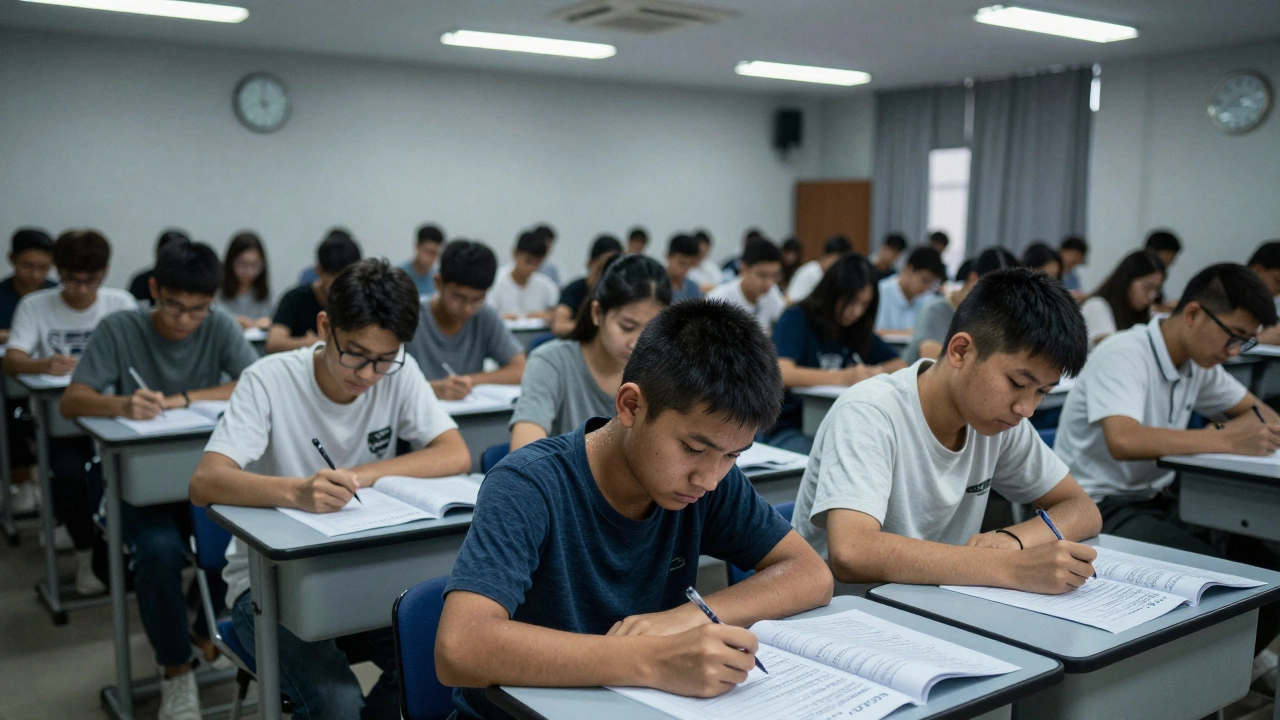
Over 1.2 million students take IIT JEE every year, with only around 20,000 securing seats in IITs. Learn the latest stats, trends, and what drives this massive exam culture in India.

Mental ability isn't tested directly in JEE Mains, but it's the key to solving unseen problems fast. Learn how pattern recognition, flexible thinking, and strategic practice separate top scorers from the rest.