



Imagine standing in front of a room full of eager students who look at you with wide eyes, hoping you will unlock the mystery of a new language. You know English well, but explaining why we say "I have been waiting" instead of "I wait" feels like trying to describe color to someone who has never seen it. This is the reality for many new teachers. Teaching English as a Second Language (ESL) is the process of instructing non-native speakers in the English language, focusing on practical communication skills rather than just grammar rules. It requires more than just fluency; it demands patience, clear structure, and the ability to break down complex ideas into bite-sized pieces.
If you are looking to start this journey, you need a solid plan. This guide walks you through the essential steps to teach English effectively, from planning your first lesson to handling common classroom challenges. We will cover specific techniques that work, tools you can use today, and how to keep your students motivated when things get tough.
Understanding Your Students' Needs
Before you write a single word on the whiteboard, you need to understand who you are teaching. Not all beginners are the same. Some might be absolute novices who don't know the alphabet. Others might speak another Germanic language and already recognize some words. Assessing their level helps you tailor your approach.
- Absolute Beginners: Focus on survival phrases like "Hello," "My name is..." and basic numbers. Use lots of visuals and gestures.
- False Beginners: These students studied English years ago but forgot most of it. They need confidence-building activities and review of basic structures.
- Specific Goals: Are they learning for travel, business, or school? Knowing this helps you prioritize vocabulary. A traveler needs airport phrases; a business person needs email etiquette.
Take time during the first few lessons to ask simple questions. Use pictures to help them answer. This builds rapport and gives you valuable data on what they already know. Remember, every student brings unique experiences to the classroom. Acknowledging these differences makes your teaching more effective and inclusive.
Creating a Simple Lesson Plan
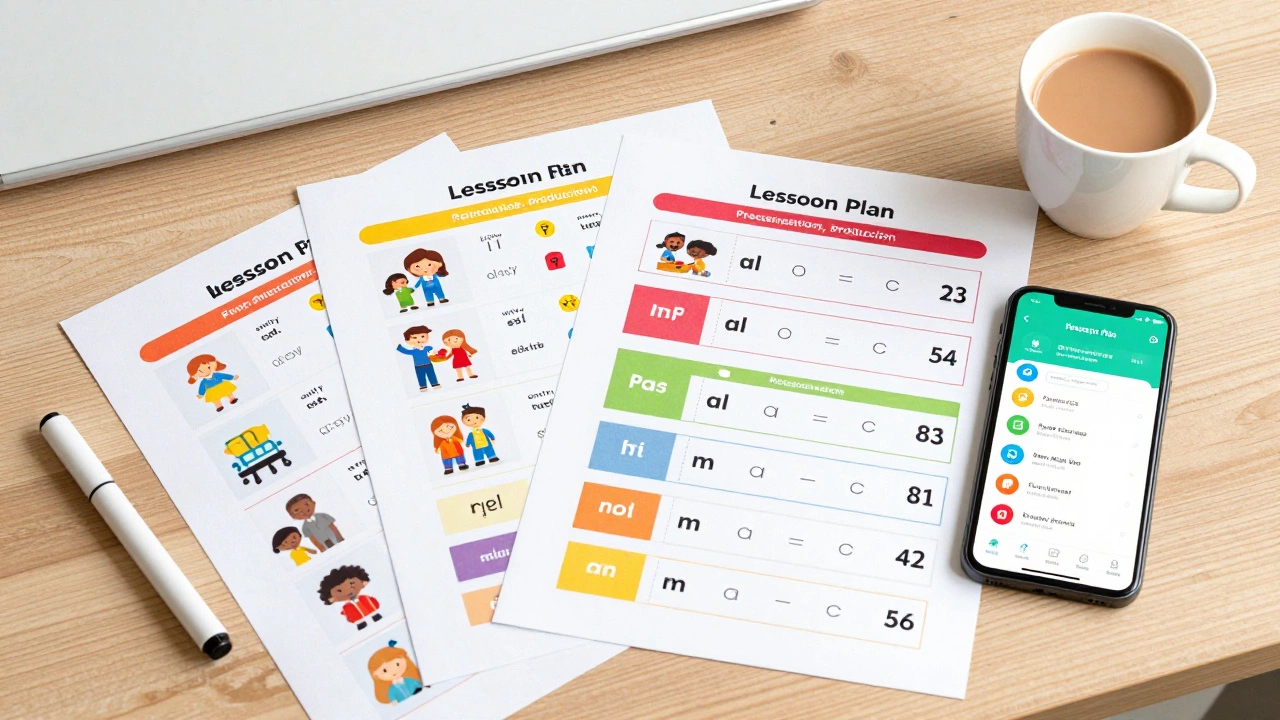
A good lesson plan is your roadmap. Without one, you might wander off track and waste precious class time. For beginners, keep it simple. The PPP model is a classic framework that works well here.
- Presentation: Introduce the new concept. If you are teaching food vocabulary, show pictures of an apple, a banana, and a carrot. Say the words clearly and have them repeat.
- Practice: Give them controlled exercises. Match the picture to the word. Fill in the blanks with the correct food item. This helps them get used to the sounds and forms without pressure.
- Production: Let them use the language freely. Ask them to make a shopping list or order food in a pretend restaurant. This is where real communication happens.
Keep each stage short. Beginners have limited attention spans. Aim for 10-15 minutes per stage in a standard hour-long class. Always include a warm-up activity to get them talking before diving into new material. A quick game or a chat about the weekend works wonders.
Essential Vocabulary and Grammar for Starters
You cannot teach everything at once. Prioritize high-frequency words and simple grammar structures. According to linguistic studies, the top 1,000 words cover about 75% of everyday conversation. Focus on these first.
| Topic Category | Example Vocabulary | Grammar Focus |
|---|---|---|
| Greetings & Introductions | Hello, Goodbye, Name, Age | To be verb (I am, You are) |
| Daily Routine | Wake up, Eat, Sleep, Work | Present Simple Tense |
| Family & Friends | Mother, Father, Sister, Brother | Possessives (My, Your, His) |
| Shopping & Money | Price, Buy, Sell, Dollar/Euro | How much is...? |
When introducing grammar, avoid long explanations. Instead of saying "The present simple tense uses the base form of the verb," show them examples. "I eat breakfast." "She eats breakfast." Highlight the pattern visually. Use color-coding on the board to distinguish subjects and verbs. This visual aid helps memory retention significantly.
Using Visuals and Realia
Beginners rely heavily on context. Abstract explanations confuse them. Concrete objects and images bridge the gap between their native language and English. Realia refers to real-life objects brought into the classroom to aid learning. Bringing in actual items like a coffee cup, a passport, or a bus ticket makes the lesson tangible.
Flashcards are still a powerful tool. Create sets for different themes. Use large, clear images. Avoid cluttered backgrounds. Digital flashcards using apps like Quizlet or Anki are also excellent for homework. Encourage students to take photos of objects around their house and label them in English. This connects learning to their daily lives.
Don't underestimate the power of body language. Mime actions when teaching verbs. Pretend to sleep when saying "sleep." Point to yourself when saying "I." This total physical response (TPR) method engages multiple senses and speeds up comprehension. It also adds fun to the lesson, reducing anxiety.
Building Speaking Confidence
The biggest hurdle for beginners is fear of making mistakes. They worry about sounding silly or being judged. Your job is to create a safe space where errors are seen as part of learning. Praise effort over accuracy in the early stages.
Start with choral repetition. Have the whole class repeat after you. This reduces individual pressure. Then move to pair work. Put students in groups of two. Give them simple prompts. "Ask your partner what their favorite color is." Pair work ensures everyone speaks, whereas whole-class discussions often dominate by confident individuals.
Role-plays are fantastic for building confidence. Set up scenarios like buying a train ticket or asking for directions. Provide script templates initially, then gradually remove support. Record their conversations if possible. Listening to themselves helps them self-correct. Celebrate small victories. When a student successfully orders a meal in English, acknowledge it publicly.

Technology Tools for Modern Classrooms
Technology can enhance your teaching, not replace it. Use it to supplement traditional methods. Online dictionaries like Cambridge Dictionary provide clear definitions and audio pronunciations. Show students how to listen to native speakers pronounce difficult words.
Video clips from YouTube are great for exposure to natural speech. Choose short, engaging videos with subtitles. Pause frequently to check understanding. Ask prediction questions before playing. "What do you think will happen next?" This keeps them active rather than passive viewers.
Language learning apps like Duolingo or Babbel can serve as supplementary homework. They offer gamified practice that students enjoy. However, remind them that app usage should complement, not substitute, live interaction. Human connection remains crucial for language acquisition.
Assessing Progress Effectively
Testing doesn't always mean written exams. For beginners, informal assessment is often more useful. Observe their participation in class activities. Can they follow instructions? Do they respond appropriately to questions?
Create simple quizzes focused on recognition rather than production. Multiple-choice questions work well. Matching exercises are also effective. Regularly review past topics to reinforce memory. Spaced repetition helps move information from short-term to long-term memory.
Encourage self-assessment. Ask students to rate their confidence in different areas: speaking, listening, reading, writing. This metacognitive awareness helps them identify personal goals. Provide constructive feedback. Be specific. Instead of "Good job," say "You pronounced 'th' correctly today." Specific praise reinforces positive behavior.
Handling Common Challenges
Teaching beginners comes with unique challenges. Mixed-ability classes can be tricky. Some students grasp concepts quickly while others struggle. Differentiate your tasks. Offer easier versions for struggling learners and extension activities for advanced ones. Grouping students strategically can also help. Pair stronger students with weaker ones for peer support.
Motivation dips are normal. After the initial excitement fades, some students lose interest. Keep lessons varied. Mix games, songs, stories, and serious practice. Relate content to their interests. If they love football, use football vocabulary. Relevance drives engagement.
Classroom management is key. Establish clear rules from day one. Be consistent. Positive reinforcement works better than punishment. Reward good behavior with stickers, points, or public acknowledgment. A calm, organized environment promotes learning.
How long does it take to become fluent in English?
Fluency is a gradual process. The Foreign Service Institute estimates that English takes about 600-750 hours of study for native speakers of similar languages to reach professional proficiency. For beginners, expect noticeable progress within 3-6 months of consistent study, but true fluency may take years. Daily practice accelerates this timeline significantly.
Should I correct every mistake my students make?
No, constant correction discourages speaking. Focus on major errors that impede communication. Minor grammatical slips can be addressed later. During fluency activities, let them speak freely. Note recurring errors and address them in a dedicated feedback session. Balance encouragement with gentle correction.
What is the best way to teach pronunciation?
Use minimal pairs (words differing by one sound, like ship/sheep). Play listening discrimination games. Use mouth diagrams to show tongue position. Encourage shadowing, where students repeat immediately after a native speaker recording. Regular practice with audio resources is essential for developing accurate pronunciation.
Can I teach English online effectively?
Yes, online teaching is highly effective with proper preparation. Use platforms like Zoom or Skype. Prepare digital materials in advance. Engage students with interactive polls and breakout rooms. Ensure stable internet connection. Clear audio is critical. Adapt your pacing slightly slower to account for potential technical delays.
How do I keep beginner students engaged?
Variety is key. Incorporate games, songs, and movement. Use relatable topics. Allow choice in assignments. Provide immediate positive feedback. Build relationships with students. Show genuine interest in their lives. An engaged student is a motivated learner. Keep lessons dynamic and interactive.