


JEE Advanced Host Institute Difficulty Analyzer
Select a host IIT to view historical trends, question styles, and preparation strategies based on student feedback.
Every year, thousands of students stare at their JEE Advanced the most challenging engineering entrance examination in India, conducted by one of the seven Indian Institutes of Technology (IITs) scorecards with a mix of relief and curiosity. The immediate question isn't just "Did I get in?" but "How hard was that paper compared to last year?" For those who struggled, finding out which institute hosted the exam can feel like discovering a hidden variable in an equation. You might wonder if the students from the previous year had it easier because they took the test at a different campus.
The short answer is complicated. There is no single "easiest" IIT in terms of permanent reputation for handing out simple papers. However, historical data and student feedback reveal distinct patterns in difficulty based on the host institute's academic culture and the specific year's curriculum alignment. Understanding these nuances doesn't help you change the past, but it provides crucial context for interpreting your rank and preparing for future attempts.
Who Actually Sets the JEE Advanced Paper?
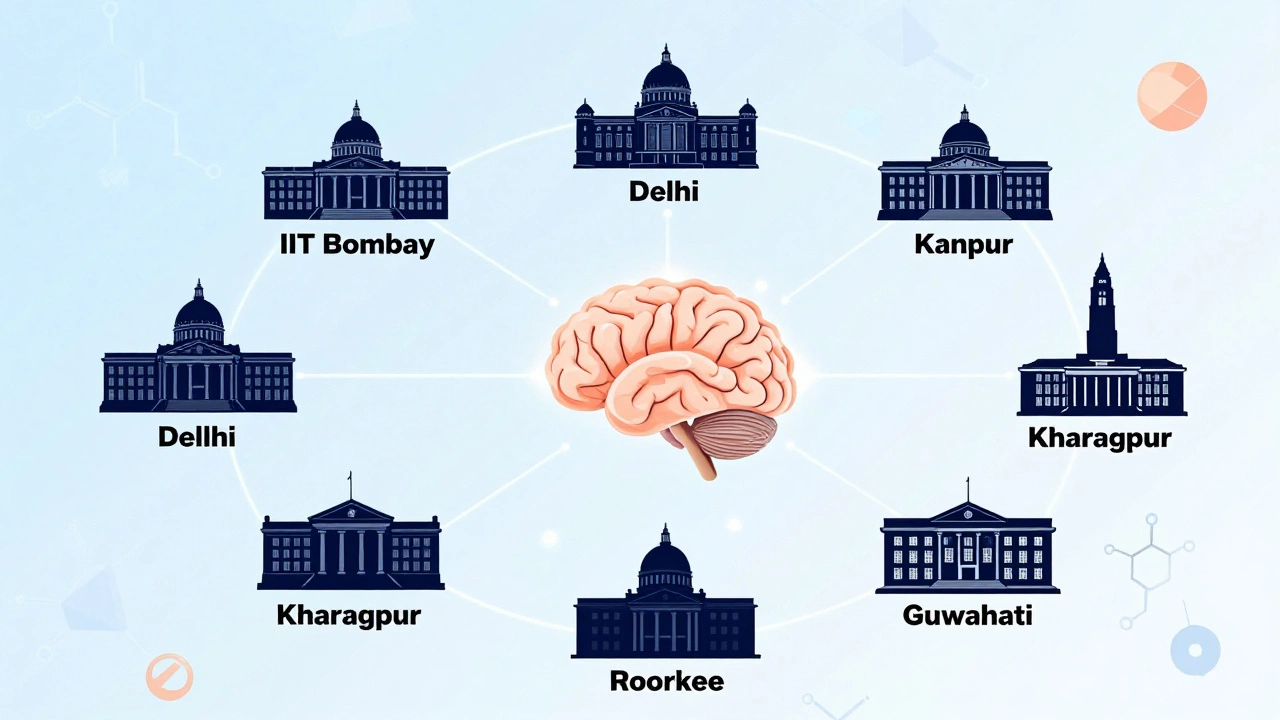
To understand why some years feel harder than others, you first need to know who holds the pen. The Joint Admission Board for JEE Advanced rotates the responsibility of conducting the exam among the seven original IITs: Bombay, Delhi, Kanpur, Kharagpur, Madras, Roorkee, and Guwahati. Each institute has its own faculty, its own teaching style, and its own definition of "rigor."
This rotation means the paper isn't static. It shifts slightly every year depending on which institute is in charge. When IIT Bombay conducts the exam, the questions often reflect the intense, problem-solving-heavy approach typical of its undergraduate curriculum. When IIT Kanpur takes over, you might see more theoretical depth and abstract reasoning. This institutional fingerprint is what creates the perception of "easy" or "hard" years.
The Myth of the "Easy" Year
Students often claim that a particular year was "easy" because the cutoff marks were higher. But this is a logical trap. If a paper is genuinely easy, everyone scores high. Consequently, the normalization process kicks in, and the percentile ranks remain competitive. The absolute marks might be higher, but the relative standing-the thing that actually gets you into an IIT-stays tight.
Conversely, a "hard" paper where everyone struggles might result in lower absolute cutoffs, but the spread between ranks becomes narrower. A difference of five marks might separate rank 100 from rank 1,000 in a tough year, whereas in an easier year, that same gap might require twenty marks. So, "easy" is relative. It depends on whether you are looking at raw scores or final ranks.
Historical Trends: Which IITs Were Perceived as Lenient?
While official difficulty indices are rarely published, we can look at student consensus and statistical outcomes from recent years to identify trends. Here is how different institutes have been perceived:
| Host Institute | Typical Question Style | Student Perception | Key Subject Focus |
|---|---|---|---|
| IIT Guwahati | Conceptual, less calculation-heavy | Often cited as "manageable" or "balanced" | Physics application, Chemistry theory |
| IIT Roorkee | Standard NCERT-aligned, clear logic | Considered "fair" and predictable | Mathematics algebra, Physics mechanics |
| IIT Bombay | High complexity, multi-concept integration | Frequently labeled "tough" or "brutal" | Advanced Calculus, Modern Physics |
| IIT Kanpur | Theoretical, abstract, time-consuming | Viewed as "challenging" due to length | Thermodynamics, Organic Chemistry mechanisms |
| IIT Madras | Balanced, emphasis on fundamentals | Moderate difficulty, consistent pattern | Inorganic Chemistry, Coordinate Geometry |
Among these, IIT Guwahati and IIT Roorkee often top the list of "easier" hosts in student forums. Why? Their papers tend to rely less on obscure tricks and more on standard concepts applied in slightly novel ways. If you have mastered the basics, you can solve these papers efficiently without getting stuck on overly complex calculations.
In contrast, years hosted by IIT Bombay or IIT Kanpur often see a dip in average scores. These institutes prioritize testing depth of understanding over speed. They include questions that require connecting three different chapters simultaneously. This filters out rote learners but rewards deep thinkers. For many students, however, this feels like an "unfair" increase in difficulty.
Why 2024 and 2025 Felt Different
Looking at the most recent cycles, the shift in difficulty is noticeable. In 2024, when the paper was structured with a heavier emphasis on integer-type answers, students reported feeling anxious about precision. Small calculation errors led to zero marks, making the paper feel "harder" even if the concepts were known.
In 2025, the trend shifted again. With a return to multiple-choice questions with negative marking, the strategy changed. Students could guess more safely, leading to higher overall scores. Many attributed this to the host institute's preference for testing breadth rather than depth. If you remember 2025 as "easier," it wasn't necessarily because the questions were simpler, but because the format allowed for strategic scoring.
Does the Host IIT Affect Your Final Rank?
This is the million-dollar question. Does taking the exam at IIT Guwahati give you an advantage over someone who took it at IIT Bombay? The answer is no, not directly. The Joint Seat Allocation Authority (JoSAA) uses a normalization process to ensure fairness across different sets of papers if multiple versions are used. Even if only one set is used, the competition is national. Everyone faces the same paper. If it's easy, everyone scores high. If it's hard, everyone scores low. Your rank depends on how you performed relative to the other 200,000+ candidates, not on the absolute difficulty of the questions.
However, there is a psychological factor. If you perceive the paper as "easy," you might become complacent and make silly mistakes. If you perceive it as "hard," you might panic and lose focus. The best performers are those who adapt to the paper's style, regardless of the host institute.
How to Prepare for Any Host Institute's Style
Since you cannot predict which IIT will host the exam next year, your preparation must be versatile. Here is how to build resilience against varying difficulty levels:
- Master Fundamentals First: Institutes like IIT Roorkee and IIT Madras test core concepts. If your basics are weak, you will struggle regardless of the host. Spend 60% of your time on NCERT-level clarity before moving to advanced problems.
- Practice Multi-Concept Problems: To handle IIT Bombay or IIT Kanpur-style questions, practice problems that combine topics. For example, mix Electrostatics with Mechanics, or Organic Chemistry with Thermodynamics. This builds the neural connections needed for complex reasoning.
- Improve Calculation Speed: Some years feature lengthy numerical problems. Regularly practice mental math and approximation techniques to save time during the exam.
- Analyze Previous Years' Papers (PYQs): Don't just solve PYQs; analyze them. Identify which years were hosted by which IITs. Notice the pattern. Did IIT Guwahati ask more diagram-based questions? Did IIT Delhi focus on assertion-reason types? Use this data to diversify your practice.
The Role of Normalization and Cut-offs
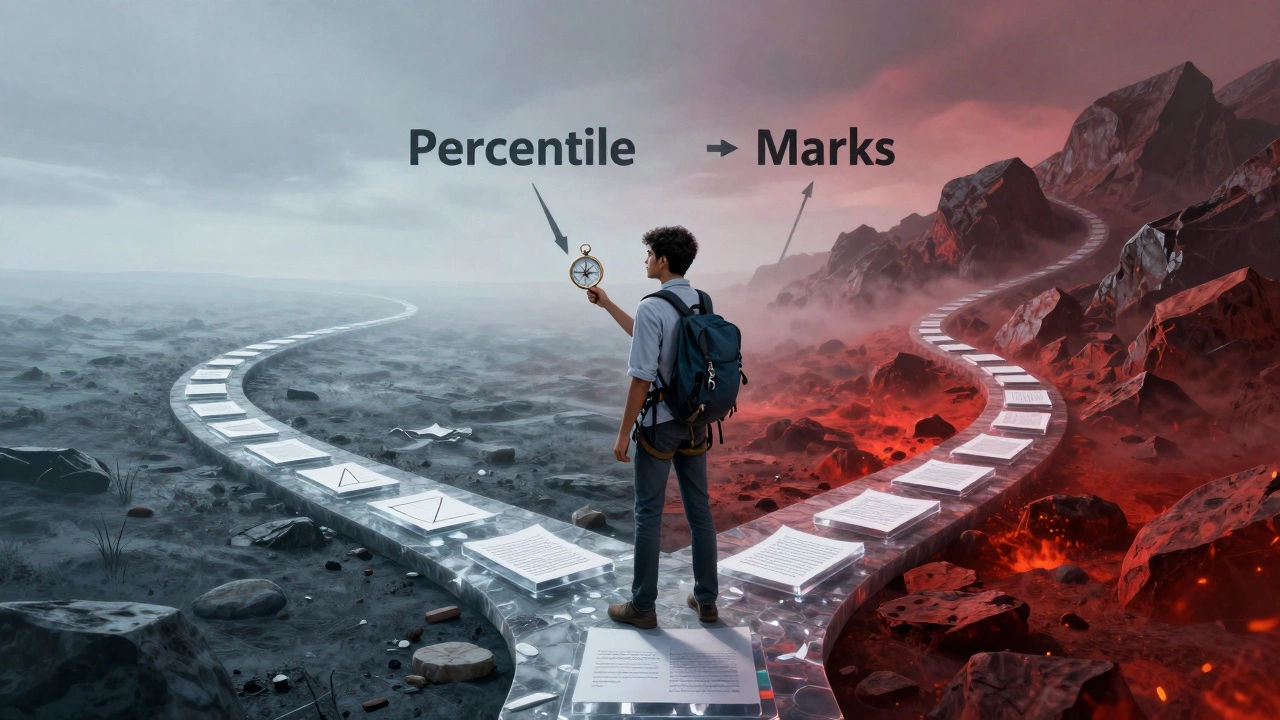
It is crucial to understand that "ease" does not guarantee admission. In years with "easier" papers, the cutoff percentiles often rise. For instance, in a year where the average score is 80%, the cutoff for a top branch at a top IIT might be 99.95%. In a tougher year with an average of 40%, the cutoff might drop to 99.5%. The percentage looks lower, but the number of seats remains the same. The competition intensifies in the top 0.1%.
This means that chasing "easy" years is a futile strategy. You cannot control the paper. You can only control your preparation. Focus on maximizing your percentile, not your raw marks.
Common Misconceptions About JEE Advanced Difficulty
Let's debunk a few myths that circulate in coaching centers and online forums:
- Myth: "IIT Bombay always makes the hardest paper." While historically true, this is not a rule. In 2018, the paper hosted by IIT Bombay was considered balanced by many toppers. The difficulty varies based on the specific panel of professors selected for that year.
- Myth: "Chemistry is always the easiest section." This depends on the host. IIT Kanpur often includes highly complex organic reaction mechanisms that stump even strong physics students. IIT Madras, on the other hand, tends to keep chemistry straightforward and factual.
- Myth: "If I score above 100, I am safe." In an "easy" year, 100 might not be enough for a top college. In a "hard" year, 80 might secure you a seat. Always refer to the percentile, not the marks.
Strategic Takeaways for Future Aspirants
If you are preparing for JEE Advanced, stop worrying about which IIT will host the exam. Instead, focus on building a robust skill set that adapts to any style. Here is your action plan:
- Diversify Your Source Material: Don't stick to one coaching module. Solve problems from various authors and institutes to expose yourself to different questioning styles.
- Simulate Exam Conditions: Take full-length mock tests under strict timing. This helps you manage stress when you encounter unexpected difficulty levels.
- Review Mistakes Thoroughly: After each mock test, analyze why you got questions wrong. Was it a concept gap? A calculation error? Or a misinterpretation of the question? Different host institutes target different weaknesses.
- Stay Updated: Follow official announcements from the Joint Admission Board. Sometimes, changes in the exam pattern (like the removal of certain question types) signal a shift in difficulty philosophy.
Ultimately, the "easiest" JEE Advanced paper is the one you are prepared for. By understanding the historical tendencies of each host institute, you can tailor your preparation to be flexible and resilient. Whether the exam comes from IIT Guwahati with its conceptual clarity or IIT Bombay with its rigorous complexity, your success depends on your ability to think critically and perform under pressure.
Which IIT hosted the easiest JEE Advanced paper in recent years?
Based on student feedback and cutoff trends, papers hosted by IIT Guwahati and IIT Roorkee are often perceived as easier or more balanced. These institutes tend to focus on fundamental concepts and standard problem-solving techniques, making them more predictable for well-prepared students. However, "easy" is relative, as higher scores lead to increased competition and higher percentile cutoffs.
Does the host IIT affect the final cutoff marks?
Indirectly, yes. If a host institute sets an easier paper, the average scores rise, which typically leads to higher absolute cutoff marks. Conversely, a difficult paper results in lower absolute cutoffs. However, the percentile ranks remain competitive regardless of the absolute marks, ensuring fairness in seat allocation.
Why is IIT Bombay's JEE Advanced paper considered tough?
IIT Bombay is known for its rigorous academic standards. Their JEE Advanced papers often feature multi-concept questions that require integrating knowledge from different chapters. They emphasize deep conceptual understanding and complex problem-solving over rote memorization, which challenges students who rely on standard formulas.
How can I prepare for varying difficulty levels in JEE Advanced?
To handle varying difficulty, focus on mastering fundamentals, practicing multi-concept problems, and improving calculation speed. Analyze previous years' papers from different host institutes to understand their unique styles. Diversify your study materials and take regular mock tests to build adaptability and stress management skills.
Is it true that Chemistry is the easiest section in JEE Advanced?
Not necessarily. While Chemistry is often seen as scoring, its difficulty varies by host institute. For example, IIT Kanpur may include complex organic mechanisms, while IIT Madras might focus on factual inorganic chemistry. Your performance depends on your specific strengths and the paper's focus, so it is important to prepare all sections comprehensively.
Who decides the difficulty level of the JEE Advanced paper?
The difficulty level is determined by the faculty members of the host IIT who form the question-setting panel. Each institute has its own academic culture and teaching philosophy, which influences the style and complexity of the questions. The Joint Admission Board oversees the process to ensure fairness and adherence to guidelines.