
JEE Self-Study Schedule Generator
Your Study Profile
Your Personalized Study Plan
Click "Generate My Schedule" to create your personalized study plan based on the Pomodoro technique.
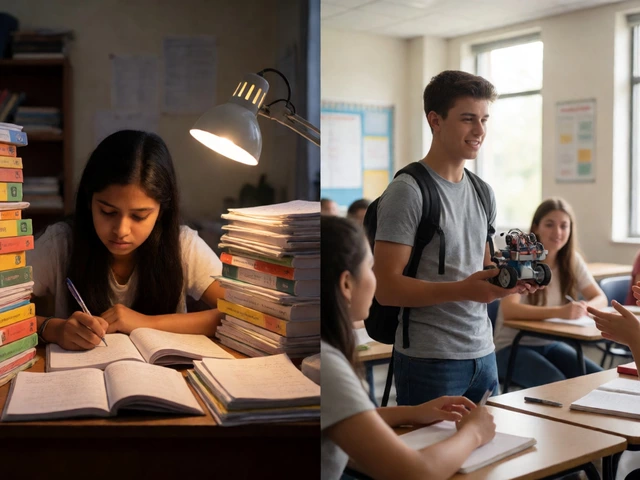
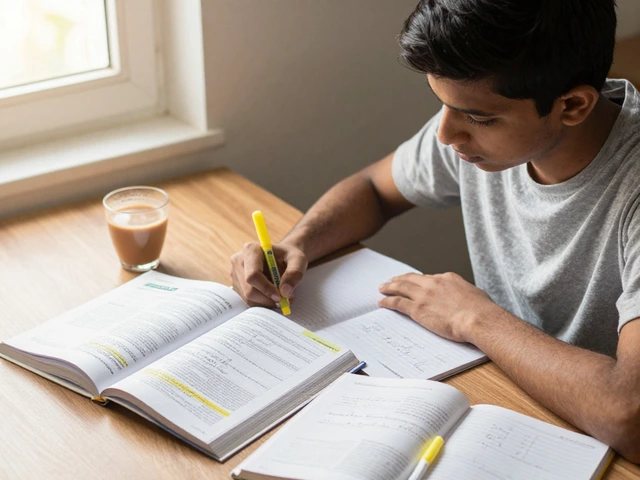
Imagine sitting in a quiet room, the only sound being the scratch of your pen on paper. No crowded classrooms, no pressure from peers rushing ahead, and no hefty monthly fees draining your parents' savings. Just you, your books, and the goal of cracking the JEE Joint Entrance Examination, one of the toughest engineering entrance exams in India. It sounds like a dream scenario for many students who feel overwhelmed by the traditional coaching culture. But here is the hard truth: can you actually crack JEE without coaching?
The short answer is yes. Thousands of students clear both JEE Main and JEE Advanced every year through self-study. However, it is not about being "lazy" or avoiding effort. It is about replacing the structure that coaching provides with a discipline that you build yourself. If you are ready to trade comfort for consistency, this guide will show you exactly how to navigate the path.
The Reality Check: Why Most Students Fail at Self-Study
Before we jump into strategies, let’s address why the success rate for self-learners appears lower than for coaching students. It isn’t because they lack intelligence. It is because they lack structure. Coaching institutes provide a timeline, peer pressure, and curated material. When you remove these, you are left with a vacuum. If you don’t fill that vacuum with your own rigid system, you will drift.
The biggest pitfall is inconsistency. In a classroom, if you miss a day, the teacher moves on, but you still have notes. At home, if you miss a day, you might miss three. The momentum breaks. Another issue is doubt resolution. In coaching, you ask a teacher. In self-study, you are stuck until you find an online forum or a solution manual, which can take hours. These friction points kill productivity if not managed.
Building Your Foundation: The Non-Negotiables
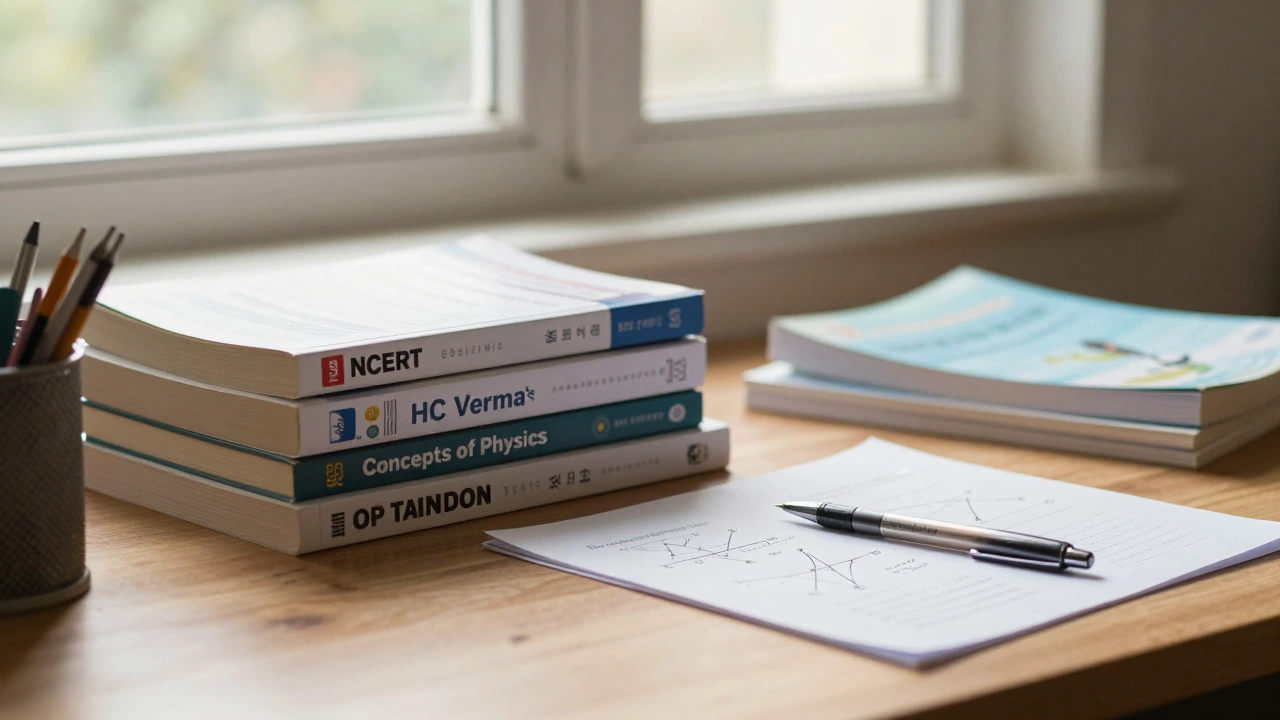
If you are skipping coaching, your textbooks become your teachers. You cannot rely on shortcut videos or summarized notes alone. You need depth. The cornerstone of any successful self-study plan for JEE is the NCERT National Council of Educational Research and Training textbooks, published by the Government of India.
For Physics and Chemistry, NCERT is not just important; it is mandatory. A significant portion of JEE Main questions are directly derived from NCERT lines, especially in Chemistry. For Mathematics, while NCERT builds concepts, you will need additional problem-solving practice. Here is a breakdown of the resources you must secure:
- Physics: Start with NCERT Class 11 and 12. Follow up with HC Verma Concepts of Physics by H.C. Verma, a standard textbook for engineering aspirants for conceptual clarity. For advanced problems, refer to Irodov or DC Pandey.
- Chemistry: NCERT is your bible. Read it line by line. For Physical Chemistry, use OP Tandon A comprehensive chemistry textbook widely used for competitive exam preparation or MS Chouhan for numerical practice. For Organic and Inorganic, stick strictly to NCERT theory and solve previous years' questions.
- Mathematics: Use RD Sharma for basics and then move to Cengage Series A set of mathematics textbooks known for extensive problem sets or Arihant publications for topic-wise practice.
Designing a Self-Discipline Routine
Coaching gives you a timetable. You have to create yours. A typical student studying full-time (after school or as a dropper) needs to dedicate 8 to 10 hours a day. This doesn't mean sitting for 10 hours straight. It means focused blocks of work.
Try the Pomodoro technique adapted for deep work: 50 minutes of intense focus followed by a 10-minute break. During those 50 minutes, your phone must be in another room. Distraction is the enemy of self-study. Structure your day by subject strength. Do your hardest subject when your brain is freshest, usually in the morning. Save revision or lighter topics for the evening.
You also need a weekly review. Every Sunday, spend two hours analyzing what you learned that week. Did you understand Rotational Motion? If not, re-watch lectures or read the chapter again before moving to Fluid Mechanics. This prevents knowledge gaps from piling up.
Leveraging Digital Resources Wisely
You don't need a physical classroom to get quality teaching. The internet has democratized education. However, the danger is endless scrolling through free content without solving problems. Treat online platforms as supplements, not replacements for active learning.
Platforms like NPTEL National Programme on Technology Enhanced Learning, offering free courses from IITs offer lectures by actual IIT professors. They are rigorous and align well with JEE Advanced level thinking. For more structured, exam-oriented content, paid platforms like Unacademy or Allen Digital can be useful, but only if you commit to their assignments. Free YouTube channels are great for specific concept clarifications, but avoid hopping between ten different teachers for the same topic. Stick to one primary source for each subject to maintain consistency in teaching style.
The Mock Test Strategy: Your True Benchmark
In a coaching center, you compete with hundreds of students in mock tests. At home, you might skip them because they are stressful. This is a fatal mistake. Mock tests are not just about checking scores; they are about training your brain for the exam environment.
Start taking full-length mock tests once you have covered at least 40% of the syllabus. Aim for one test every weekend. Analyze the results deeply. Don't just look at the rank. Look at the mistakes:
- Conceptual Error: You didn't know the formula or theorem. Go back to the book.
- Careless Mistake: You knew it but calculated wrong. Practice mental math and careful reading.
- Time Management: You ran out of time. Work on skipping low-value questions quickly.
Use NTA Abhyas app or previous years' question papers (PYQs) from the last 10 years. Solving PYQs is non-negotiable. They reveal the pattern and the recurring themes of the exam.

Comparison: Coaching vs. Self-Study
| Factor | Coaching Institute | Self-Study |
|---|---|---|
| Cost | High (₹1-3 Lakhs+) | Low (Book costs + Internet) |
| Pace | Fixed by institute | Flexible, self-determined |
| Doubt Resolution | Immediate access to teachers | Delayed (Online forums/Books) |
| Peer Pressure | High (Motivational or Stressful) | None (Requires internal motivation) |
| Material Quality | Curated, sometimes repetitive | Standard textbooks (Higher conceptual depth) |
Mental Health and Burnout Prevention
JEE preparation is a marathon, not a sprint. Self-studying isolates you. You might feel lonely or anxious seeing friends post about their coaching achievements. Remember, social media is a highlight reel, not reality. Many coaching students are stressed and sleep-deprived too.
Keep a hobby outside of studies. Whether it's playing guitar, jogging, or cooking, you need a mental outlet. Sleep 7-8 hours. A tired brain cannot retain complex physics concepts. If you feel overwhelmed, take a half-day off. Guilt-free rest is productive rest.
When to Seek Help
Self-study does not mean total isolation. If you are stuck on a topic for more than two days, seek help. Join online communities like Reddit’s r/JEE or Discord servers dedicated to JEE prep. Engage with peers who are also self-studying. Form a virtual study group where you discuss problems weekly. Accountability partners can replace the physical presence of classmates.
If you find that your foundation is weak (e.g., you struggle with basic algebra or trigonometry), consider hiring a tutor for just those specific areas. You don't need a full-time coach, but targeted help can unblock progress.
Is it possible to score 99+ percentile in JEE Main without coaching?
Yes, absolutely. Many top rankers have cleared JEE Main with 99+ percentiles through self-study. The key is consistent practice of Previous Year Questions (PYQs) and mastering NCERT Chemistry and Biology (if applicable). Discipline and regular mock tests are more critical than classroom attendance.
Which books are best for JEE Advanced self-study?
For Physics, HC Verma and IE Irodov are essential. For Chemistry, OP Tandon for Physical and MS Chouhan for Organic mechanisms. For Mathematics, Cengage series or Arihant's series provide the depth required for Advanced level problems. Always prioritize understanding concepts over rote memorization.
How many hours should I study daily for JEE without coaching?
Aim for 8 to 10 hours of focused study if you are a dropper or in a gap year. If you are in school, aim for 4-6 hours of high-quality study after school. Quality matters more than quantity. Ensure you are solving problems actively rather than just reading notes passively.
Do I need to join a test series if I am self-studying?
Yes, joining a reputable test series is highly recommended. It provides a benchmark against other students across India, helps in time management, and simulates the real exam environment. Platforms like Allen, Resonance, or even NTA Abhyas offer affordable test series options.
What is the biggest challenge in self-studying for JEE?
The biggest challenge is maintaining consistency and self-discipline. Without external deadlines or peer pressure, it is easy to procrastinate. Creating a strict routine, removing distractions, and regularly reviewing progress are crucial to overcoming this hurdle.