

IIT JEE Self-Study Readiness Checker
Based on the article "Cracking IIT JEE Without Coaching," this tool helps you evaluate if you possess the specific traits required to succeed as a self-learner. Answer honestly to get a realistic assessment.
Can you stick to a schedule when no one is watching?
Did you score >85% in boards? Do you grasp basics easily?
Do you have H.C. Verma, NCERT, Cengage/Arihant ready?
Will you take timed tests weekly and analyze errors deeply?
Adjust the sliders and click Analyze to see your potential.
Think about the last time you saw a student top in class. Did they spend every evening at a cram school? Probably not. They likely had a system. The idea that you need expensive IIT JEE coaching to crack India's toughest entrance exam is a myth that keeps many students trapped in debt and burnout. You can absolutely get into an IIT without stepping foot in a classroom for lectures. But let’s be real-it’s harder than it looks. It requires a level of discipline that most 17-year-olds haven’t developed yet. If you’re reading this, you’re probably weighing the cost against the benefit, or maybe you just hate the rigid structure of traditional institutes. Here’s the truth: self-study works, but only if you treat it like a job, not a hobby.
The Reality Check: Who Actually Succeeds Alone?
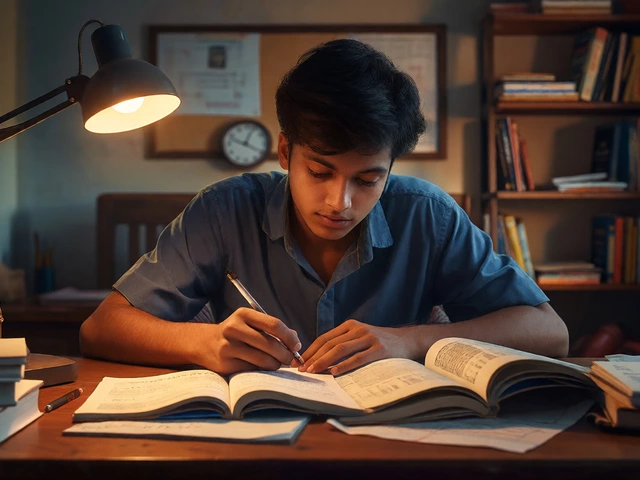
Before you drop your enrollment fee, ask yourself one brutal question: Are you disciplined enough to study when no one is watching? Most students who fail at self-study don’t fail because they lack intelligence; they fail because they lack structure. In a coaching center, the syllabus is handed to you on a silver platter. Tests are scheduled. Deadlines are enforced. When you go solo, you become your own principal, teacher, and disciplinarian. This dual role is exhausting.
Students who succeed without coaching usually share three traits: high intrinsic motivation, strong foundational knowledge from Class 11, and excellent time management skills. If you struggled with basic concepts in physics or chemistry during your first year of senior secondary education, going it alone might be risky. However, if you’ve consistently scored above 85% in board exams and have a habit of solving problems independently, you’re already ahead of the curve. Remember, Self-Study is not about studying less; it is about studying smarter with total control over your pace.
Building Your Syllabus Map
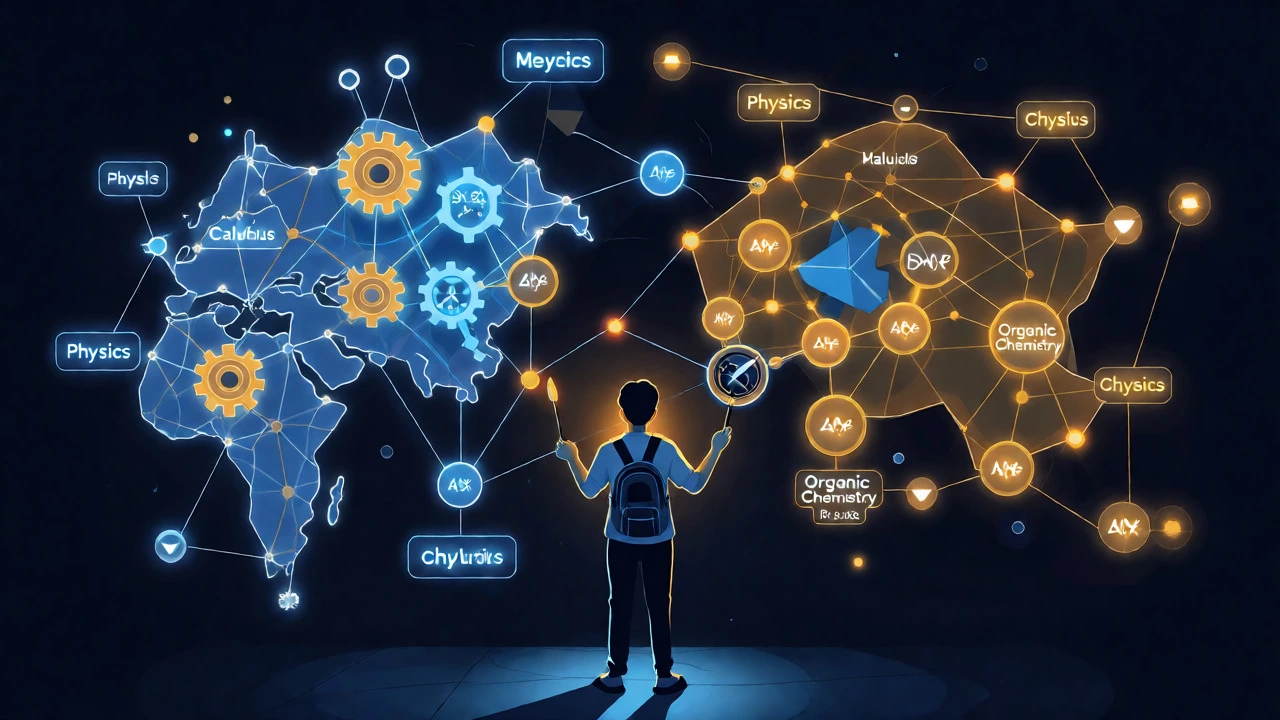
Coaching institutes provide a roadmap. Without them, you must draw it yourself. The JEE Main and Advanced syllabus is vast, covering Physics, Chemistry, and Mathematics across two years. You cannot just open a book and start reading randomly. You need a structured plan that balances theory with problem-solving.
Start by breaking down the syllabus into manageable chunks. For example, don’t just write "Study Thermodynamics." Write "Complete Chapter 6 of HC Verma, solve 20 previous year questions, and review NCERT notes." Specificity kills procrastination. Use the official NTA (National Testing Agency) syllabus as your bible. It lists every single topic that can appear in the exam. Anything outside that list is a distraction.
A common mistake self-learners make is ignoring the weightage of topics. Not all chapters are created equal. In Mathematics, Calculus and Algebra often carry more weight than Vectors. In Physics, Mechanics and Electrodynamics are heavy hitters. Spend your energy where the marks are. Analyze the last five years of question papers. Identify patterns. Which topics repeat? Which ones are rare? This data-driven approach saves hundreds of hours.
Curating Your Study Material
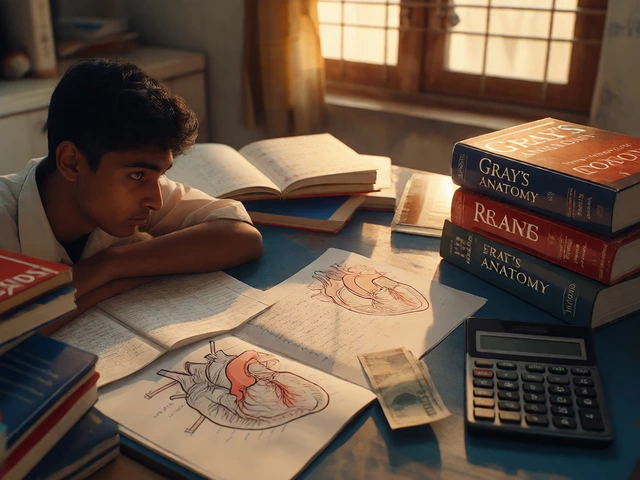
You don’t need ten different books for each subject. That’s a recipe for confusion. Stick to the classics. For Physics, H.C. Verma (Concepts of Physics) remains the gold standard for conceptual clarity. Pair it with I.E. Irodov for advanced problem-solving if you’re aiming for JEE Advanced. For Chemistry, NCERT textbooks are non-negotiable, especially for Organic and Inorganic sections. Many top rankers credit their success solely to mastering NCERT line-by-line.
For Mathematics, Cengage series or Arihant publications offer comprehensive problem sets. Avoid jumping between too many authors. Master one source thoroughly before moving to another. The goal isn’t to read everything; it’s to understand deeply. If you can solve every problem in H.C. Verma, you’ll handle 90% of JEE Main Physics questions with ease.
Don’t forget digital resources. Platforms like Khan Academy, NPTEL, and YouTube channels dedicated to JEE prep offer free video lectures. These are great for visual learners or when you’re stuck on a concept that text alone can’t explain. Just remember: watching a video is passive. Solving a problem is active. Balance both.
| Subject | Primary Resource | Advanced Practice | Focus Area |
|---|---|---|---|
| Physics | H.C. Verma (Vol 1 & 2) | I.E. Irodov / DC Pandey | Mechanics, Electrodynamics |
| Chemistry | NCERT Textbooks | M.S. Chouhan (Organic), P. Bahadur (Physical) | Organic Mechanisms, Mole Concept |
| Mathematics | Cengage Series | Arihant Skills in Mathematics | Calculus, Coordinate Geometry |
The Power of Mock Tests
Here is where self-study often falls apart. Without regular testing, you have no way to measure progress. You might feel confident after reading a chapter, but can you apply that knowledge under pressure? Regular mock tests simulate the actual exam environment. They test your speed, accuracy, and mental stamina.
Enroll in online test series. Companies like Allen, FIITJEE, and Unacademy offer affordable packages specifically for self-learners. Take these tests seriously. Treat them like the real thing. Sit in a quiet room, set a timer, and avoid distractions. After each test, spend twice as much time analyzing your mistakes as you did taking the test. Why did you get that question wrong? Was it a conceptual gap? A calculation error? Or did you run out of time? Each error type requires a different fix.
Track your scores. Look for trends. Are you improving in weak areas? Is your accuracy dropping due to haste? Data doesn’t lie. If you keep scoring low in Physical Chemistry despite studying hard, you might need to change your method, not just add more hours.

Managing Mental Health and Burnout
Studying alone can be lonely. There’s no peer group to discuss doubts with, no friends to vent to after a bad test. Isolation is the silent killer of self-study candidates. To combat this, find a community. Join online forums like Quora, Reddit’s r/JEENEETards, or Discord groups. Engage with other aspirants. Ask questions. Share your wins. Knowing you’re not alone helps maintain morale.
Burnout is real. Pushing yourself too hard leads to diminishing returns. Schedule breaks. Exercise. Sleep seven to eight hours. Your brain consolidates memory during sleep. Cutting sleep to study more is counterproductive. Listen to your body. If you’re exhausted, rest. A fresh mind solves problems faster than a tired one.
Also, involve your family. Explain your plan to them. Get their support. Parental pressure can be intense, especially if they expect coaching results. Show them your progress through test scores and consistent habits. Trust is earned through action, not promises.
When to Consider Hybrid Help
Sometimes, pure self-study hits a wall. Maybe you’re struggling with a specific topic like Rotational Motion or Chemical Bonding. In such cases, consider hybrid models. Hire a tutor for just those difficult chapters. Use online doubt-clearing apps. Attend weekend crash courses for revision. This targeted approach gives you the flexibility of self-study with the safety net of expert guidance when needed. It’s cheaper than full-time coaching and more effective than stubbornly trying to figure everything out alone.
Is it possible to get an AIR under 100 without coaching?
Yes, it is possible, though rare. Students achieving top ranks without coaching typically have exceptional problem-solving instincts and access to high-quality mentorship, even if informal. They often rely heavily on self-discipline and rigorous self-testing. However, the majority of top 100 rankers do attend some form of structured coaching or intensive short-term programs.
How many hours should I study daily if I skip coaching?
Quality matters more than quantity. Aim for 6-8 hours of focused, deep work daily. This includes time for learning new concepts, solving problems, and reviewing errors. Consistency is key. Studying 4 hours every day is better than 12 hours once a week. Include breaks to maintain focus.
What are the biggest risks of self-study for IIT JEE?
The main risks are lack of feedback, poor time management, and isolation. Without teachers, you might miss subtle conceptual errors. Without peers, motivation can dip. Without a fixed schedule, procrastination creeps in. Mitigate these by using online test series, joining study communities, and creating a strict daily routine.
Do I still need to buy books if I use online videos?
Yes. Videos are supplementary. Books provide depth and practice problems that videos often skim over. You need to solve thousands of problems to build speed and accuracy. Relying solely on videos creates an illusion of competence. Always pair video lessons with textbook exercises.
Can I switch to coaching later if self-study fails?
Absolutely. Many students start with self-study in Class 11 and join coaching in Class 12 for revision and test series. It’s never too late to seek help. Don’t let pride prevent you from asking for assistance if you’re falling behind.