

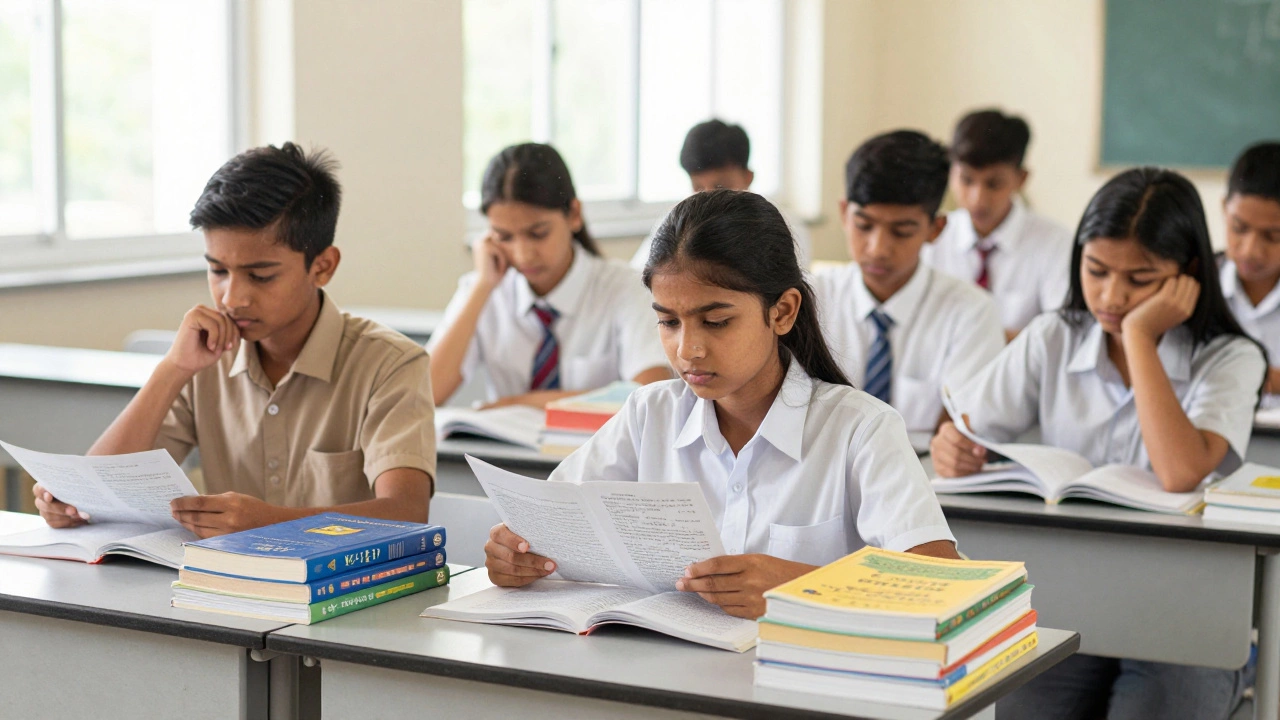

CBSE vs. ICSE: Which Board is Right for You?
Answer 3 Questions
Based on your choices:
CBSE
- National Uniformity
- JEE/NEET Aligned
- Cost Effective
ICSE
- English Proficiency
- Detailed Curriculum
- Holistic Approach
Why this recommendation?
Imagine you are moving to India with your family, or perhaps you are an expat parent trying to figure out which school system makes sense for your child. You hear the acronym CBSE thrown around constantly. It is everywhere. But what exactly does it mean? Is it just another name for a public school? Does it guarantee better grades? The short answer is no-it is much more than that.
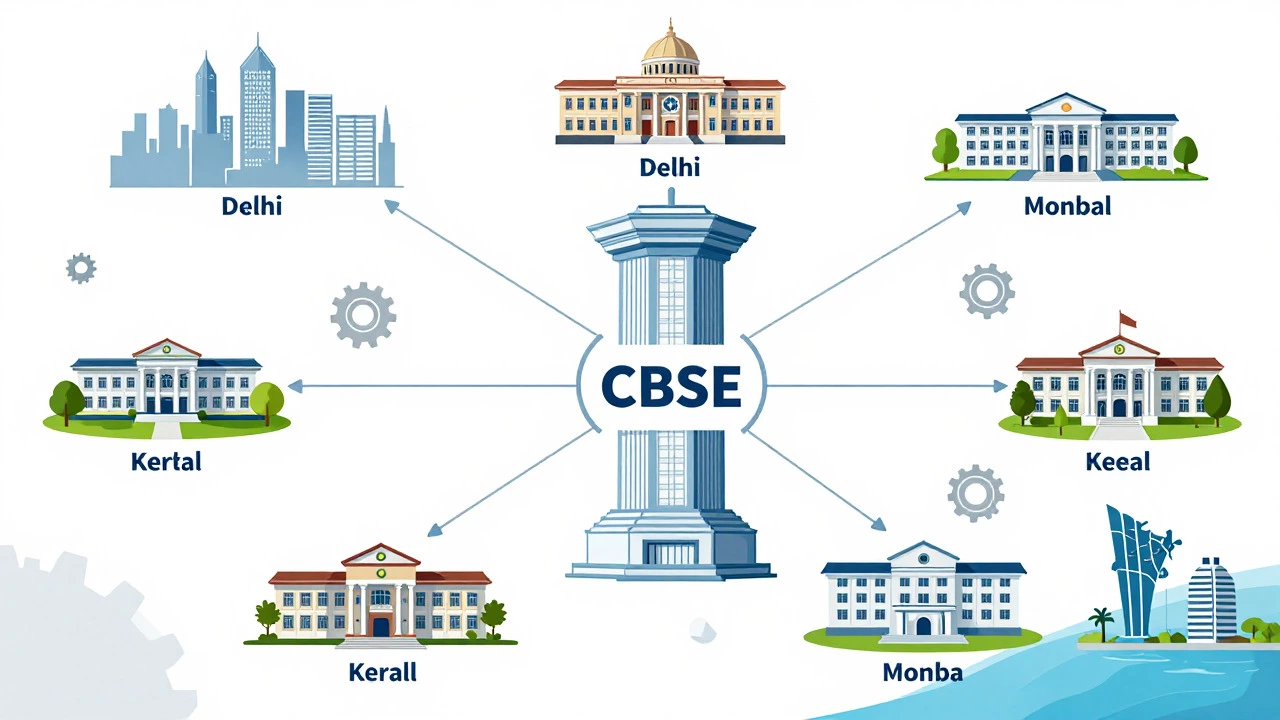
The Central Board of Secondary Education (CBSE) is not a single school. It is the governing body that sets the rules, the syllabus, and the exam standards for thousands of schools across India and abroad. Understanding how this board works is crucial if you want to navigate the Indian education landscape without getting lost in the bureaucracy.
Key Takeaways
- CBSE is a board, not a school: It creates the curriculum and conducts exams for affiliated schools.
- National Uniformity: The same syllabus applies from Delhi to Mumbai, making transfers easier for mobile families.
- Competitive Exam Focus: The curriculum aligns closely with IIT JEE and NEET entrance tests.
- Affiliation is Strict: Schools must meet specific infrastructure and faculty norms to get approved by the board.
- Global Recognition: CBSE certificates are accepted worldwide, though some Western universities may require additional standardized tests.
Understanding the Central Board of Secondary Education
To understand CBSE schools, you first have to understand the entity behind them. The Central Board of Secondary Education is an autonomous organization under the Union Ministry of Education in India. Established in 1929, it started as a small board for university scholarships but has grown into one of the largest school boards in the world.
Think of the CBSE as the architect. They design the blueprint-the syllabus, the textbook recommendations, the exam patterns, and the grading criteria. The individual schools are the builders. They hire teachers, build classrooms, and manage daily operations, but they must follow the architect’s plans strictly.
This structure creates a unique dynamic. When people ask "Is this a CBSE school?" they are really asking, "Does this school follow the national curriculum set by the government board?" This distinction matters because there are other boards in India, such as the ICSE (Indian Certificate of Secondary Education) and various State Boards, each with its own philosophy and content depth.
How CBSE Affiliation Works
Not every school can call itself a CBSE school. There is a rigorous process called affiliation. If a private trust or a government body wants to open a new school using the CBSE curriculum, they must apply to the board.
The board sends inspectors to verify several critical factors:
- Infrastructure: Classrooms must meet size requirements, laboratories must have proper equipment, and libraries must hold a minimum number of books.
- Faculty Qualifications: Teachers must have the required degrees and teaching certifications (like B.Ed).
- Syllabus Adherence: The school must promise to teach the exact subjects and topics defined by the CBSE for that academic year.
- Examination Integrity: The school must agree to conduct final exams under strict supervision, often involving external invigilators.
If a school fails these checks, it gets denied affiliation. This means it cannot award CBSE certificates. Students from unaffiliated schools cannot sit for the official Class 10 (Board Exams) or Class 12 (Higher Secondary) examinations. This gatekeeping ensures a baseline quality across all recognized institutions.
The CBSE Syllabus: Structure and Philosophy
The heart of any CBSE school is its syllabus. Unlike some international curricula that focus heavily on holistic development or creative projects, the CBSE syllabus is known for being structured, comprehensive, and exam-oriented.
The curriculum follows the National Curriculum Framework (NCF). Recently, there has been a shift towards competency-based learning, meaning less rote memorization and more application of knowledge. However, the core remains robust in science, mathematics, and languages.
| Feature | CBSE | ICSE | State Boards |
|---|---|---|---|
| Governing Body | Central Government (New Delhi) | Council for the Indian School Certificate Examinations (Private) | Respective State Governments |
| Curriculum Focus | Balanced, Science/Math heavy, Competitive exam aligned | Detailed, Literature-heavy, English proficiency focused | Varies by state; often local language focused |
| Exam Difficulty | Moderate to High (Standardized) | High (Conceptual depth) | Variable (Often perceived as easier) |
| Best For | IIT JEE, NEET, and students moving between cities | Students aiming for liberal arts or detailed academic study | Students staying within their home state |
One key attribute of the CBSE syllabus is its alignment with competitive entrance exams. In India, getting into top engineering colleges (IITs) or medical colleges (AIIMS) requires passing extremely difficult entrance tests like JEE Main/Advanced and NEET. The CBSE syllabus overlaps significantly with these exams. This makes CBSE schools the preferred choice for parents who want their children to be academically prepared for these high-stakes tests from an early age.
Who Chooses CBSE Schools?
You might wonder why parents choose this path over others. The demographic is quite specific. First, there is the government servant community. Civil servants, military personnel, and police officers in India are frequently transferred across states. Since the CBSE syllabus is identical in Kerala, Punjab, and Tamil Nadu, a child can switch schools mid-year without missing critical topics. This portability is a massive advantage.
Second, there is the expatriate community. Many foreign companies operating in India send employees’ children to CBSE schools because the curriculum is rigorous and recognized globally. While British or American international schools exist, they are often prohibitively expensive. CBSE-affiliated private schools offer a middle ground-high-quality education at a fraction of the cost of international alternatives.
Third, aspirants for competitive exams. As mentioned, the direct link between the CBSE physics, chemistry, and biology syllabus and the NEET/JEE preparation makes it the logical starting point for future engineers and doctors.
The Examination System: Class 10 and 12
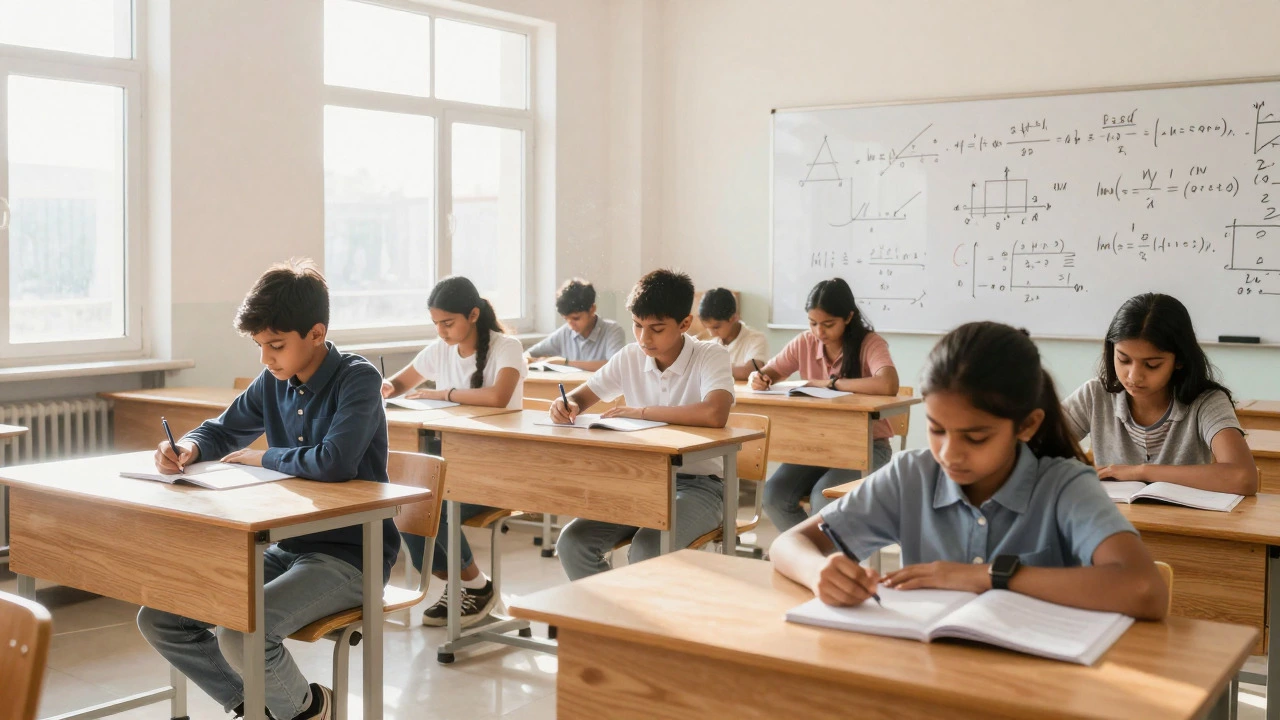
In most educational systems, final exams are conducted by the school itself. In the CBSE system, this changes at two critical junctures: Class 10 and Class 12.
For Classes 1 through 9, assessments are internal. Teachers create tests, grade homework, and evaluate projects. However, once a student reaches Class 10, the stakes rise. The annual board examination is conducted simultaneously across the country by the CBSE headquarters in New Delhi. Question papers are printed in secure locations and distributed to centers nationwide.
This standardization eliminates bias. A student in a rural school in Bihar faces the same paper as a student in a premium school in Bangalore. The grading is done centrally, ensuring fairness. The results are published online, and certificates are issued directly by the board, not the school.
Class 12 is even more significant. These results determine college admissions. The marks obtained in PCB (Physics, Chemistry, Biology) or PCM (Physics, Chemistry, Mathematics) are often used as cutoff criteria for university entry. Therefore, the pressure in CBSE schools peaks during these two years.
Pros and Cons of the CBSE System
No system is perfect. Understanding the trade-offs helps you decide if a CBSE school is right for your child.
The Advantages:
- National Mobility: Seamless transition between schools in different states.
- Strong Foundation in STEM: Excellent preparation for science and math-based careers.
- Cost-Effective: Generally cheaper than IB or Cambridge International schools.
- Wide Availability: Thousands of options, from elite private institutions to affordable government-aided schools.
The Challenges:
- Rote Learning Tendency: Despite reforms, many schools still emphasize memorizing answers to score well in board exams.
- Pressure Cooker Environment: The focus on board results can lead to high stress levels for teenagers.
- Limited Creativity Scope: Compared to the IB (International Baccalaureate), there is less emphasis on interdisciplinary projects and critical thinking exercises outside the core subjects.
- English Proficiency Variance: While English is a compulsory subject, the level of fluency developed can vary widely depending on the school's resources and peer group.
CBSE vs. International Curricula
If you are considering moving your child abroad after schooling in India, you need to know how CBSE stacks up against international standards.
CBSE certificates are recognized by universities in the US, UK, Canada, and Australia. However, admission is rarely based solely on CBSE marks. Top universities in the US will still require SAT scores and essays. UK universities may look at predicted grades and personal statements. The CBSE provides the academic baseline, but you often need supplementary credentials to compete globally.
In contrast, the IB Diploma is designed specifically for global mobility. It is universally understood by admissions officers. If your plan is to move countries frequently before university, IB might be smoother. If you plan to stay in India for higher education or return to India after studying abroad, CBSE offers a stronger cultural and academic bridge.
Finding the Right CBSE School
Since "CBSE" only guarantees the syllabus, the quality of education depends entirely on the individual school. Here is how to evaluate them:
- Check Affiliation Status: Visit the official CBSE website and use their search tool to verify the school is currently affiliated. Unaffiliated schools risk losing status, which could disrupt your child’s exams.
- Look Beyond Academics: Visit the campus. Are there sports facilities? Art rooms? Psychology counselors? A good CBSE school balances academics with co-curricular activities.
- Talk to Parents: Current parents will tell you about the hidden realities-homework load, teacher accessibility, and administrative responsiveness.
- Review Past Results: Look at the percentage of students scoring above 90% in board exams. Consistent performance indicates strong teaching practices.
Choosing a CBSE school is a decision that shapes your child’s academic trajectory. It offers stability, rigor, and a clear path to professional careers in India. By understanding the board’s role, the syllabus structure, and the examination process, you can make an informed choice that aligns with your family’s goals.
Is CBSE better than ICSE?
It depends on your goals. CBSE is generally better for students aiming for engineering or medical entrance exams like JEE and NEET due to syllabus alignment. ICSE is often considered better for developing strong English language skills and a broader general knowledge base. CBSE offers more uniformity across India, while ICSE is more detailed in content.
Are CBSE schools only for Indians?
No. CBSE schools accept students of all nationalities. Many expatriates choose CBSE schools because the curriculum is rigorous and recognized globally. Some CBSE schools also offer sections for foreign nationals with slightly modified assessment methods.
Can I switch from an international school to CBSE?
Yes, but it requires careful planning. You need to ensure your previous grades match the CBSE grade level. The biggest challenge is adapting to the exam-oriented style of CBSE compared to the project-based approach of many international schools. Tutoring may be needed to bridge gaps in specific subjects like Physics or Chemistry.
How difficult are CBSE board exams?
The difficulty varies by subject. Mathematics and Physical Sciences are considered challenging and require consistent practice. Humanities and Commerce subjects are often seen as manageable if you understand the concepts. The board aims for a bell curve distribution, so scoring very high requires precision and adherence to marking schemes.
Do CBSE schools teach in English?
Most reputable CBSE schools, especially private ones, conduct instruction primarily in English. However, Hindi or a regional language is usually a compulsory second language subject. Some schools offer French or Sanskrit as optional third languages.