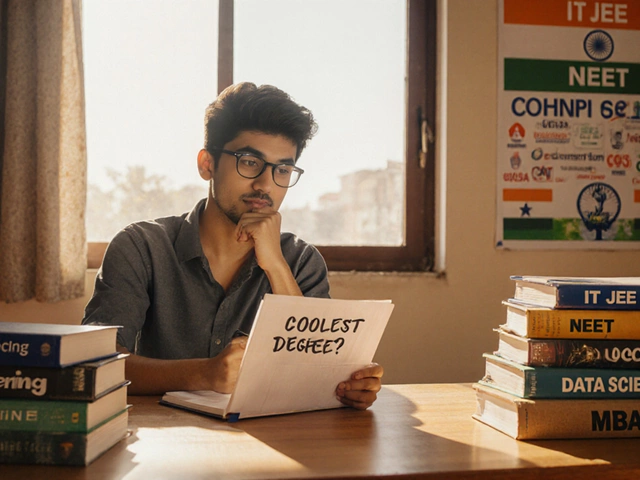

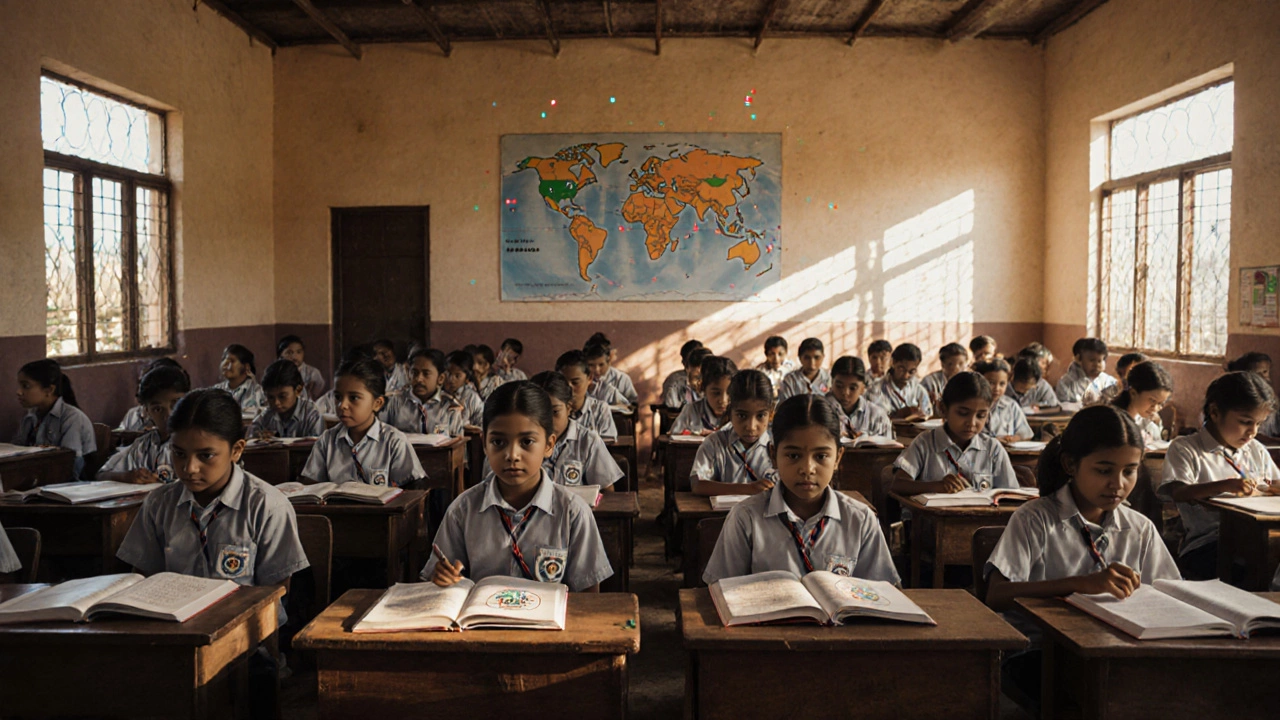
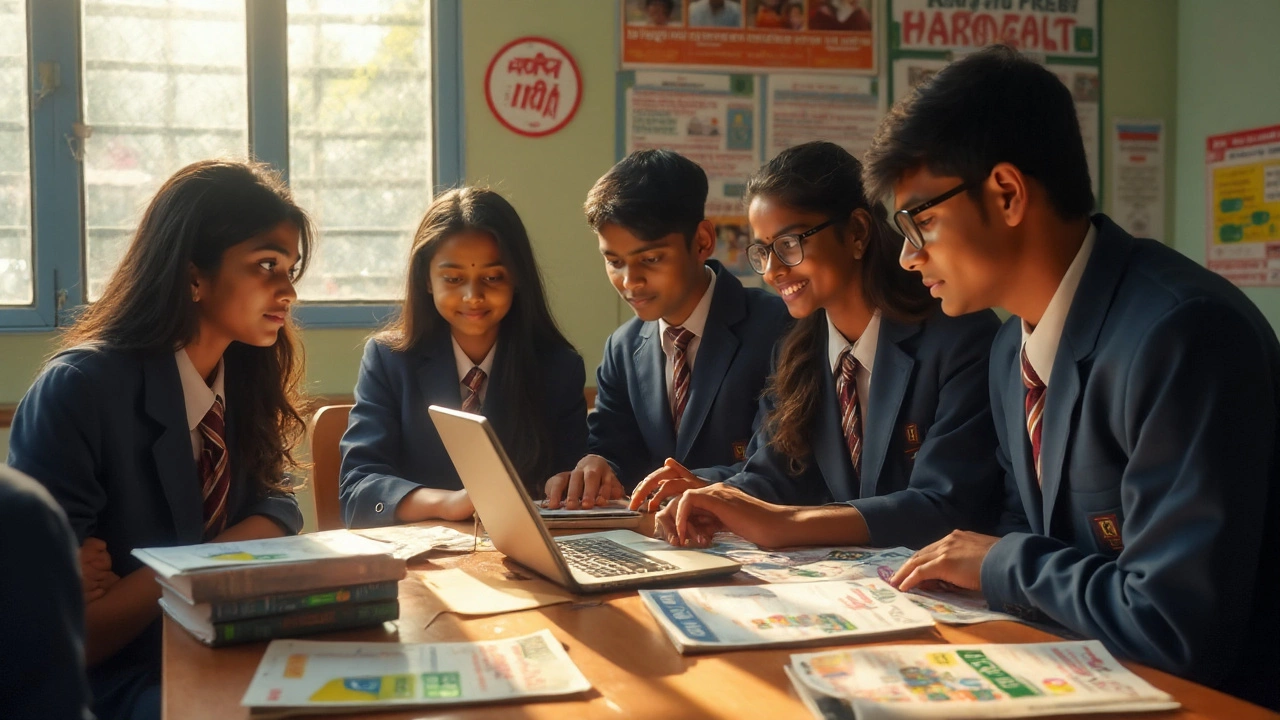
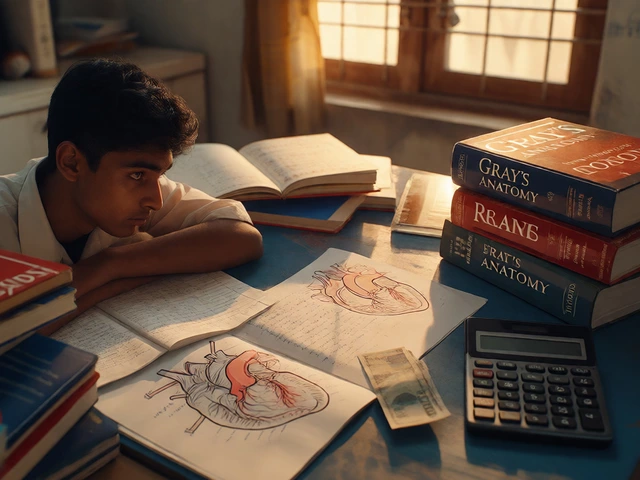
When people ask what the hardest board in the world is, they’re usually talking about the CBSE board-the Central Board of Secondary Education in India. It’s not just the syllabus that’s tough; it’s the entire system built around it. Millions of students prepare for years, not just to pass exams, but to compete for a handful of seats in top engineering and medical colleges. The pressure doesn’t come from the content alone-it comes from how much is expected, how little room there is for error, and how the results shape futures.
Why CBSE is considered the hardest
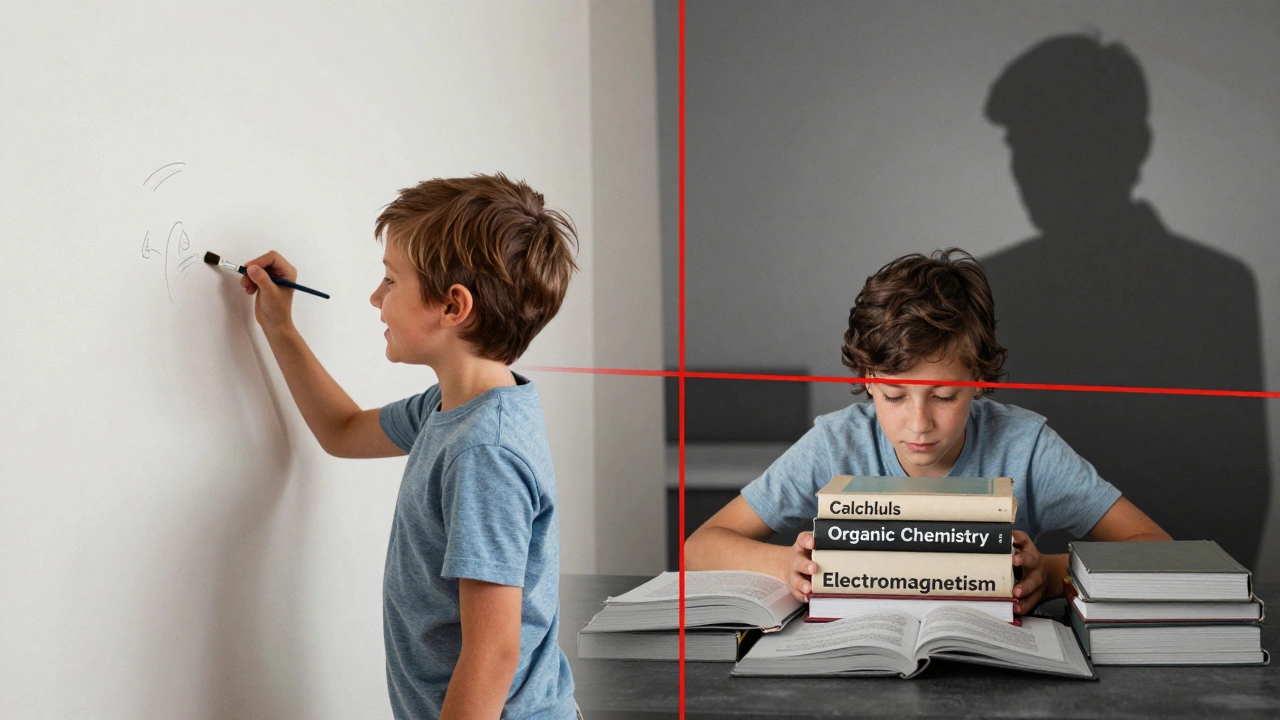
The CBSE syllabus covers a massive amount of material across science, math, and social studies. By Class 12, students are expected to master topics like calculus, organic chemistry reactions, electromagnetism, and complex political theories-all in a single academic year. Unlike some boards that focus on understanding, CBSE emphasizes precision, speed, and memorization. A single mark can mean the difference between getting into IIT Delhi or missing out entirely.
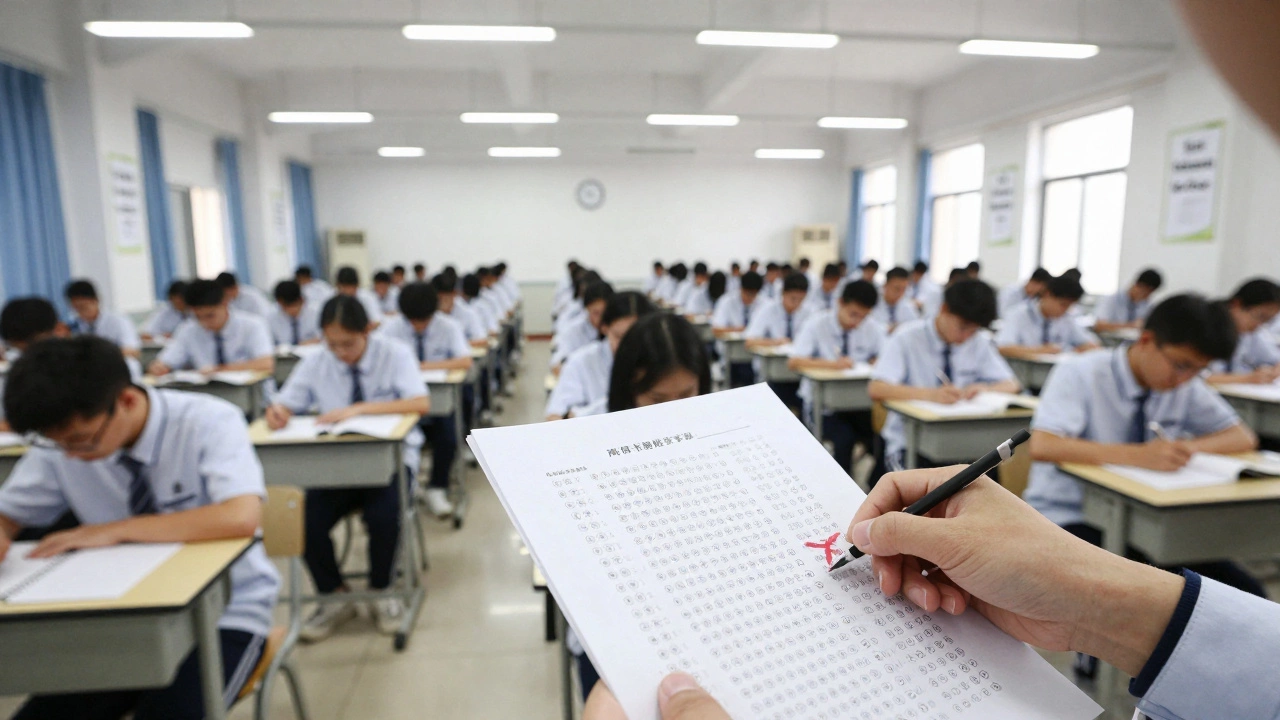
The exam pattern doesn’t help either. Multiple-choice questions (MCQs) with negative marking force students to be 95% accurate. One wrong guess can erase the benefit of five correct answers. Practical exams in physics and chemistry are conducted under strict supervision, with grading based on exact procedures. There’s no room for creativity-only correctness.
How CBSE compares to other boards
Let’s look at how CBSE stacks up against other major Indian boards. The ICSE (Indian Certificate of Secondary Education) has a broader curriculum with more emphasis on English and internal assessments. State boards like Maharashtra or Tamil Nadu cover less content and have easier grading scales. Even the IB (International Baccalaureate) and Cambridge A-Levels, often seen as rigorous, give students more flexibility in choosing subjects and time to complete projects.
But CBSE? It’s a gauntlet. Students take the same national-level exams as hundreds of thousands of others. There’s no curve. No moderation. Just raw scores. And those scores determine whether you get into a medical college with 0.01% acceptance rates.
| Board | Subject Depth | Exam Pressure | Grading Flexibility | Competition Level |
|---|---|---|---|---|
| CBSE | Very High | Extremely High | Low | Extremely High |
| ICSE | High | High | Medium | Medium |
| State Boards (e.g., Maharashtra) | Medium | Medium | High | Low to Medium |
| IB / Cambridge A-Levels | High | Medium | High | Low |
The hidden cost of CBSE’s difficulty
Behind every top ranker is a child who skipped birthdays, lost sleep, and spent 12 hours a day studying. Parents invest savings into coaching centers that promise results. Many students never get to explore hobbies, travel, or even just relax. The system doesn’t reward curiosity-it rewards repetition.
And it’s not just about academics. The emotional toll is real. Depression, anxiety, and burnout are common among CBSE students. A 2023 study by the National Institute of Mental Health and Neurosciences (NIMHANS) found that 68% of Class 12 CBSE students reported severe stress levels, compared to 32% in state board students. The numbers don’t lie: the pressure isn’t imagined. It’s systemic.
Why it still dominates
Despite the cost, CBSE remains the most popular board in India. Why? Because it’s the gateway. Almost every national-level competitive exam-JEE Main, NEET, NTSE, Olympiads-is designed around the CBSE syllabus. Coaching institutes build entire curriculums around it. Colleges use CBSE marks as the baseline for admissions.
If you want to crack JEE Advanced, you need to master the exact topics CBSE teaches in Class 11 and 12. If you’re aiming for NEET, your biology chapters must match CBSE’s depth. There’s no workaround. The board doesn’t just set the curriculum-it sets the rules of the game.
What makes it harder than other systems?
Here’s what sets CBSE apart:
- High-stakes exams: A single exam determines your future, not cumulative performance.
- Zero tolerance for error: Negative marking punishes guessing, and there’s no partial credit.
- Uniform standard: Every student, from Mumbai to Manipur, takes the same paper. No regional leniency.
- Time pressure: You have 3 hours to answer 90+ questions in math and science-some requiring multi-step solutions.
- Coaching dependency: Schools alone can’t prepare you. Most students attend 5-6 hours of extra coaching daily.
Compare that to the UK’s A-Levels, where students take 3-4 subjects over two years with coursework, or the US’s AP exams, which allow retakes and emphasize critical thinking over rote memorization. CBSE doesn’t offer second chances.
Is it worth it?
For many, yes. The discipline, rigor, and problem-solving skills built through CBSE training are unmatched. Graduates from CBSE schools dominate top global universities and engineering firms. The system produces some of the most resilient learners on the planet.
But it’s not for everyone. Students with creative strengths, slow learners, or those who thrive in project-based environments often struggle. The system doesn’t adapt-it expects you to adapt to it.
What comes after CBSE?
After Class 12, CBSE students enter a new battlefield: JEE, NEET, CUET, or other entrance exams. The difficulty doesn’t drop-it escalates. Coaching centers now become full-time jobs. Study schedules are broken into hourly blocks. Sleep becomes optional.
And yet, those who survive it often say the same thing: "It made me stronger." Not because they loved it, but because they had no choice. The hardest board in the world doesn’t just test knowledge. It tests endurance.
Is CBSE harder than ICSE?
Yes, CBSE is generally considered harder than ICSE. While ICSE has a broader curriculum with more emphasis on English and internal assessments, CBSE is more focused, faster-paced, and designed for competitive exams like JEE and NEET. CBSE’s negative marking, strict grading, and higher volume of content make it more demanding for students aiming for top national colleges.
Why do so many students choose CBSE if it’s so hard?
Most students choose CBSE because it’s the standard for national competitive exams. JEE Main, NEET, and other entrance tests are based entirely on CBSE syllabus content. Coaching institutes, textbooks, and online resources are all built around CBSE. Choosing any other board puts you at a disadvantage if you want to compete for seats in IITs, AIIMS, or top government colleges.
Does CBSE have a higher failure rate than other boards?
No, CBSE doesn’t have a higher failure rate-it actually has one of the lowest. Pass rates are over 90% because the board designs exams to be passable with adequate preparation. The real challenge isn’t failing-it’s scoring high enough to compete. The difference between 80% and 95% can mean the difference between a state college and IIT.
Are CBSE students better prepared for engineering and medicine?
Yes, by design. The CBSE syllabus for Class 11 and 12 is structured to align exactly with the JEE and NEET syllabi. Topics like thermodynamics, genetics, calculus, and coordinate geometry are covered in far greater depth than in other boards. Students who follow CBSE have a direct, uninterrupted path to these exams, giving them a significant advantage over peers from other systems.
Can international students handle the CBSE syllabus?
It’s challenging. International students often find the pace overwhelming because CBSE compresses years of content into two. Topics like quantum physics in Class 12 or organic reaction mechanisms are rarely taught in depth outside India. Many international schools offer IB or Cambridge instead because they’re more balanced. But for students targeting Indian universities, CBSE remains the only viable path.