

Find Your Perfect English Learning Channel
1
2
3
4
Most people think watching YouTube is just a way to kill time. But if you are serious about improving your spoken English, it might be the most powerful tool in your arsenal. The problem isn't that there aren't enough resources; it's that there are too many. You scroll through hundreds of videos, see thumbnails with big promises like "Speak Fluent English in 7 Days," and get overwhelmed. Which one do you pick? Do you follow the channel with millions of subscribers or the one with the quiet teacher who explains grammar clearly?
The truth is, no single channel fits every learner. Your goal dictates your choice. If you are preparing for an IELTS exam, you need structured lessons on band scores and writing tasks. If you want to sound more natural in casual conversations, you need slang, idioms, and listening practice. Let’s cut through the noise and look at which channels actually deliver value based on what you need.
Understanding Your Learning Goal First
Before subscribing to any channel, ask yourself: What is my biggest barrier? Is it vocabulary? Pronunciation? Confidence? Or maybe understanding fast native speakers? YouTube channels specialize differently. Some focus heavily on academic English, while others prioritize cultural nuance and everyday chat. Mixing these up can lead to confusion. For instance, trying to learn business negotiation tactics from a channel focused on teen slang won't help you much in a boardroom.
We can categorize the best channels into three main buckets:
- Structured Education: Channels that act like online classrooms with clear curricula.
- Natural Exposure: Content created by native speakers for native audiences, helping you tune your ear.
- Specific Skill Builders: Channels dedicated to pronunciation, intonation, or specific accents.
Top Picks for Structured Lessons
If you prefer a teacher-led approach where concepts are explained step-by-step, these channels are gold mines. They break down complex rules into digestible bites.
| Channel Name | Focus Area | Best For | Teaching Style |
|---|---|---|---|
| English with Lucy | Vocabulary & Grammar | British English learners | Visual, high-production value |
| BBC Learning English | News-based language | Intermediate to Advanced | Short, daily updates |
| MmmEnglish | Pronunciation & Confidence | All levels | Conversational, empathetic |
English with Lucy is famous for its polished videos on vocabulary differences between British and American English. She covers common mistakes that non-native speakers make, such as confusing "make" and "do." Her content is visually engaging, which helps memory retention. However, her accent is distinctly Received Pronunciation (RP), so if you are aiming for a neutral or American accent, this might not be your primary source.
BBC Learning English offers something unique: real-world context. Their "6 Minute English" series discusses current topics while introducing relevant vocabulary. This is excellent for keeping your language skills fresh and connected to global events. It’s less about dry grammar rules and more about how language is used in professional and social settings today.
MmmEnglish, hosted by Emma, focuses heavily on the physical aspect of speaking. She breaks down tongue positions for difficult sounds and explains the rhythm of English sentences. If you feel shy about speaking, her encouraging tone makes you feel like you’re learning with a friend rather than a strict professor.

Channels for Natural Listening Practice
You cannot speak well if you don’t listen well. Many learners stick to ESL (English as a Second Language) channels because they feel safe. But to truly improve, you need to expose yourself to content made for native speakers. This forces your brain to process faster speech, interruptions, and overlapping conversations.
I recommend starting with podcasts available on YouTube. Shows like The Daily or This American Life provide rich audio experiences. You’ll hear different accents, speeds, and emotional tones. At first, it might be frustrating. That’s normal. Don’t try to understand every word. Focus on the gist. Over time, your ears will adjust, and you’ll start picking up phrasal verbs and idioms naturally.
Another great option is vloggers. Watching someone like MrBeast or lifestyle creators gives you exposure to casual, unscripted English. Notice how they shorten words ("wanna" instead of "want to") and use filler words ("like," "you know"). Mimicking these patterns makes your speech sound less robotic and more authentic.
Focusing on Pronunciation and Accent
Many learners have good grammar but struggle to be understood due to unclear pronunciation. Rachel’s English is arguably the best resource for this. Rachel provides detailed mouth diagrams showing exactly where to place your tongue and lips for each sound. She also analyzes movie clips to show how Americans speak in real life versus textbook English.
If you prefer an Australian accent, Aussie English by Emma checks all the boxes. She explains the vowel shifts that confuse many learners and dives into Australian slang, which is often absent from standard textbooks. Understanding local slang helps you connect better when traveling or working with international teams from Australia.
For those targeting the General American accent, Accent’s Way offers practical drills. He focuses on stress-timing, a key feature of English that determines whether you sound fluent or halting. Practicing these drills daily can significantly boost your clarity.
How to Use These Channels Effectively
Watching passively won’t work. You need active engagement. Here is a simple routine to maximize your learning:
- Select One Channel: Pick one educational channel and one native-content channel. Stick to them for a month to build consistency.
- Shadowing Technique: Play a short clip (30 seconds). Listen once. Then, pause and repeat what the speaker said, mimicking their speed and intonation. Record yourself and compare it to the original.
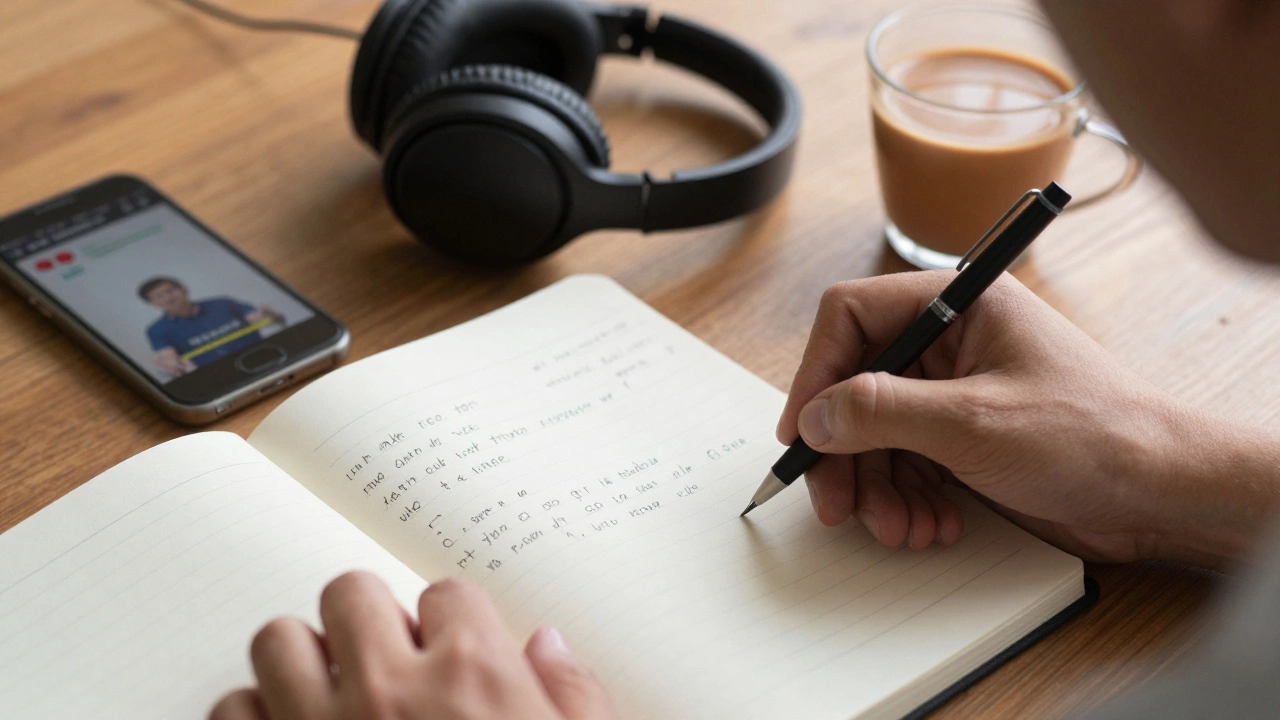
- Note New Phrases: Keep a notebook handy. Write down phrases, not just single words. Context matters. Instead of writing "run," write "run out of time."
- Summarize Out Loud: After watching a video, spend two minutes summarizing what you learned in English. Speak slowly if needed, but keep going without stopping.
Avoid jumping between ten different channels. Consistency beats variety. It’s better to watch five videos from one teacher who builds on previous lessons than fifty random videos from various sources.
Common Mistakes to Avoid
One major mistake is relying solely on subtitles. While subtitles help initially, they can become a crutch. Try turning them off after a few weeks. If you can’t understand without them, re-watch the segment. Another error is neglecting output. You can watch hours of content, but if you never speak, your muscles won’t learn the movements required for English sounds. Speaking must be part of your routine, even if it’s just talking to yourself in the mirror.
Also, beware of "quick fix" promises. Fluency takes time. Channels claiming you’ll be fluent in a week are misleading. Real progress happens in months, not days. Be patient with yourself. Celebrate small wins, like understanding a joke or correcting a friend’s grammar gently.
Is free YouTube content enough to become fluent?
Yes, absolutely. YouTube offers high-quality instruction that rivals paid courses. The key is discipline. You must create your own study plan and actively practice speaking. Free resources lack personalized feedback, so consider joining online communities or finding a language partner to check your progress.
Should I choose British or American English channels?
Choose based on your personal preference or professional needs. Both are mutually intelligible. Mixing both can be confusing initially due to vocabulary differences (e.g., "lift" vs. "elevator"). Pick one style to master first, then expand later.
How often should I watch these videos?
Aim for 15-30 minutes daily. Short, frequent sessions are more effective than long weekly marathons. This keeps the language fresh in your mind and builds a habit without overwhelming you.
Can I improve my accent using only YouTube?
You can significantly improve clarity and reduce strong native influences. However, achieving a perfect native-like accent requires nuanced feedback. Use YouTube for self-study and shadowing, but supplement with occasional feedback from a tutor or AI pronunciation tools.
What if I don't understand the native speaker content?
Start with slower-paced content like educational channels before moving to native vlogs. Use transcripts if available. Don't aim for 100% comprehension immediately. Focus on grasping the main idea. As your exposure increases, your understanding will naturally deepen.