


If you’ve ever compared your salary to a friend working in the private sector, you might have wondered: Why are GS salaries so low? It’s a question that comes up often among candidates preparing for government services - especially when you see headlines about tech startups offering six-figure packages right out of college. But the truth isn’t as simple as ‘government underpays.’ There’s a system behind it, and understanding it helps you make smarter career choices.
GS Doesn’t Mean ‘Low Pay’ - It Means ‘Different Pay Structure’
First, let’s clear up a common misunderstanding. GS stands for Government Service, not Low Salary. In countries like the UK, US, India, and others, GS refers to the standardized pay scale for civil servants, police officers, tax officials, and other public roles. These positions aren’t designed to compete with Silicon Valley bonuses or hedge fund payouts. They’re built for stability, long-term security, and public service.
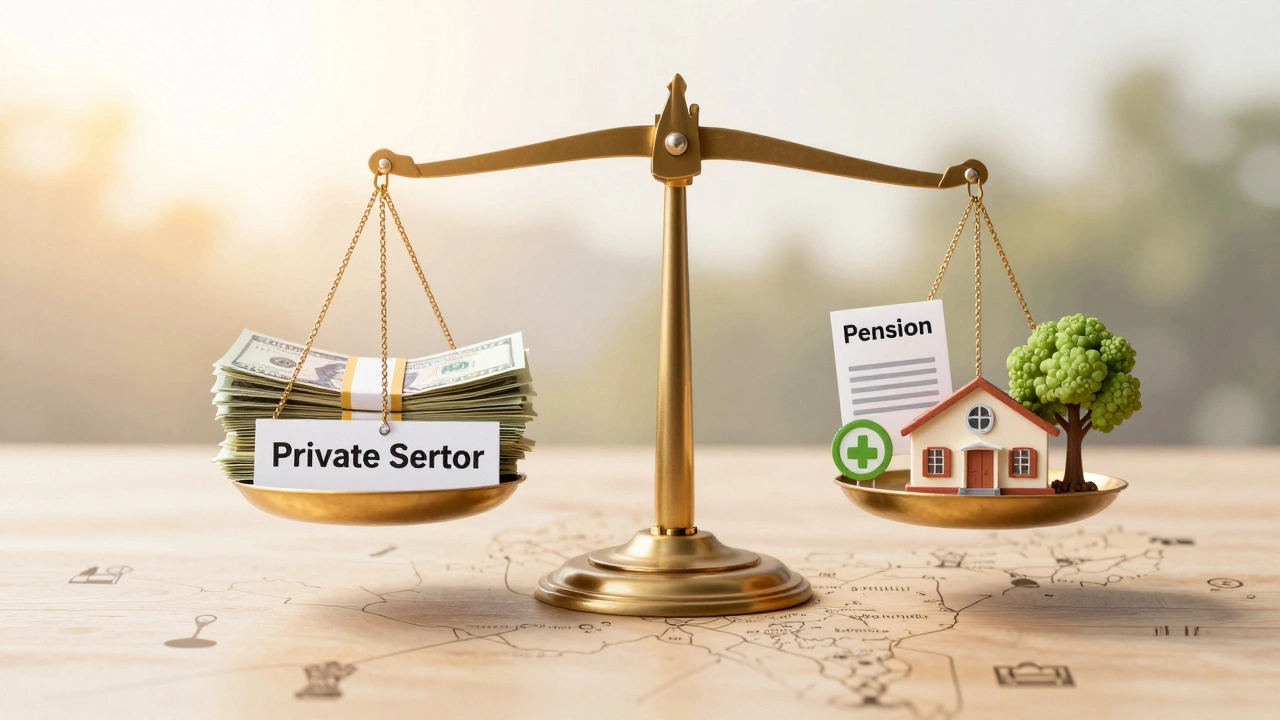
Take the UK’s Civil Service Pay Scale. A Grade 7 officer (equivalent to a junior manager) starts at around £35,000. That might seem low next to a software engineer earning £70,000. But that £35,000 comes with a guaranteed pension, 25 days of annual leave, free healthcare through the NHS, job security through tenure, and no risk of sudden layoffs. Private sector jobs rarely match that package - even if the base salary looks higher.
Why the Pay Gap Feels So Big
When people say GS salaries are low, they’re usually comparing starting salaries to early-career private sector roles. That’s misleading. Let’s look at the numbers over time.
In India, an IAS officer starts at ₹56,100 per month (Level 10 of the 7th Pay Commission). After 15 years, with promotions and allowances, they can reach over ₹2,25,000 per month. That’s not just a raise - that’s a 400% increase. Meanwhile, a software engineer in Bangalore might start at ₹8 lakh per year and hit ₹25 lakh after 15 years. The gap narrows significantly over time.
In the UK, a GS officer entering at Grade 6 (£30,000) can reach Grade 3 (£80,000+) after two decades. That’s not fast money, but it’s predictable, inflation-adjusted, and secure. Private sector roles often plateau earlier or require constant upskilling just to keep pace.
Public Service Isn’t About Money - It’s About Impact
Government jobs aren’t designed to make you rich. They’re designed to make society work. A postal worker, a school inspector, a public health officer - these roles don’t generate profit. They prevent crises. They ensure clean water, safe roads, and fair elections.
Think about it: Would you rather have a doctor who got paid £120,000 a year to run a private clinic, or one who gets £55,000 but serves 500 patients a week in a rural NHS clinic? The latter isn’t paid more, but their impact is wider.
That’s why many GS roles offer non-monetary rewards: authority, respect, influence, and the chance to shape policy. A tax inspector in the UK doesn’t get stock options, but they help recover £2.5 billion in unpaid taxes every year. That’s tangible, measurable impact.

The Hidden Costs of Private Sector Pay
Let’s not pretend private sector jobs are all sunshine. High salaries often come with trade-offs:
- Zero job security - layoffs happen fast during downturns
- No pension - you’re on your own for retirement
- High stress - constant pressure to hit quarterly targets
- Long hours - 60-hour weeks are common in tech and finance
- Benefits cut - health insurance premiums rise, paid leave shrinks
A 2023 study by the UK Civil Service Commission found that 78% of GS employees reported higher life satisfaction than their private-sector peers with similar incomes. Why? Because they had control over their time, predictable workloads, and confidence in their future.
GS Pay Is Indexed - Private Pay Isn’t
One of the biggest advantages of GS pay is automatic adjustment. Salaries are reviewed every 1-2 years based on inflation, cost of living, and public sector wage benchmarks. In the UK, the Independent Review Body on Senior Salaries adjusts pay annually. In India, the Pay Commission does the same.
Private companies? They decide pay based on quarterly earnings, investor pressure, or market trends. If the economy dips, your raise vanishes. If your boss doesn’t like your last presentation, you get frozen out. With GS, your raise is guaranteed - even if the country’s in a recession.
Why Some People Still Think GS Pay Is Low
There are real reasons the perception exists:
- Visibility bias: You hear about the CEO making £10 million - not the mid-level civil servant making £60,000.
- Early-career comparison: GS roles pay less at entry, but catch up later.
- Regional differences: In London, £40,000 feels tight. In rural Wales, it’s comfortable.
- Media distortion: News focuses on corruption scandals or union strikes - not the quiet majority doing their job well.
Also, many people don’t realize how much in-kind benefits add up. Free healthcare, subsidized housing (in some countries), transport allowances, education benefits for children, and even free legal services in emergencies - these are worth thousands per year.
Who Should Choose GS? Who Shouldn’t?
GS jobs aren’t for everyone. Here’s who they’re perfect for:
- You value stability over speed
- You want to work without constant pressure to ‘perform’
- You’re okay with slower financial growth for lifelong security
- You care about public impact more than personal wealth
They’re not for you if:
- You want to get rich before 35
- You hate bureaucracy and slow decision-making
- You’re okay with no pension or health coverage
- You thrive on high-risk, high-reward environments
There’s no shame in choosing the private sector. But if you’re choosing GS because you think it’s ‘easier’ or ‘better pay,’ you’re misinformed. Choose it because you want to build something lasting - not because you’re running from a tough job market.
What’s Changing? The Future of GS Pay
GS pay isn’t frozen. In the UK, the government has committed to raising starting salaries for new entrants by 10% over the next three years. In India, the 8th Pay Commission is expected to increase pay scales by 25-30% by 2027. These aren’t random decisions - they’re responses to recruitment crises.
Many governments are now struggling to attract talent. With AI and automation changing public service, they need skilled people - not just loyal ones. So while GS pay won’t match Amazon or Goldman Sachs, it’s getting closer to competitive levels - especially for technical roles like data analysts, cybersecurity officers, and digital service designers.
The message? Don’t look at GS pay as ‘low.’ Look at it as value - measured not in pounds or rupees, but in security, dignity, and impact.
Are GS salaries really lower than private sector jobs?
At entry level, yes - often by 20-40%. But over 15-20 years, the gap narrows significantly due to guaranteed raises, pensions, and benefits. In many cases, lifetime earnings are comparable - with far less risk.
Why do people still want GS jobs if the pay is low?
Because they offer job security, pensions, healthcare, paid leave, and the chance to influence public policy. Many find meaning in serving society - something money can’t buy. The stability outweighs the slower pay growth for millions.
Do GS jobs have bonuses or incentives?
Not like private companies. There are no stock options or performance bonuses tied to profit. But there are allowances - housing, transport, medical, and hardship allowances - that can add 15-30% to your take-home pay depending on location and role.
Can you switch from private sector to GS later?
Absolutely. Many engineers, lawyers, and doctors enter government service mid-career. They often start at higher grades based on experience. In the UK, the Civil Service Fast Stream accepts applicants with 3+ years of professional experience. Your private sector skills are valued - even if your salary resets.
Is GS pay the same across all countries?
No. Pay varies widely. A GS officer in Switzerland earns over £100,000. In India, starting pay is around ₹56,000/month. In the UK, it ranges from £25,000 to £80,000 depending on grade. But all systems prioritize long-term security over short-term pay spikes.