


College Credit Cost Calculator
Choose Your Path
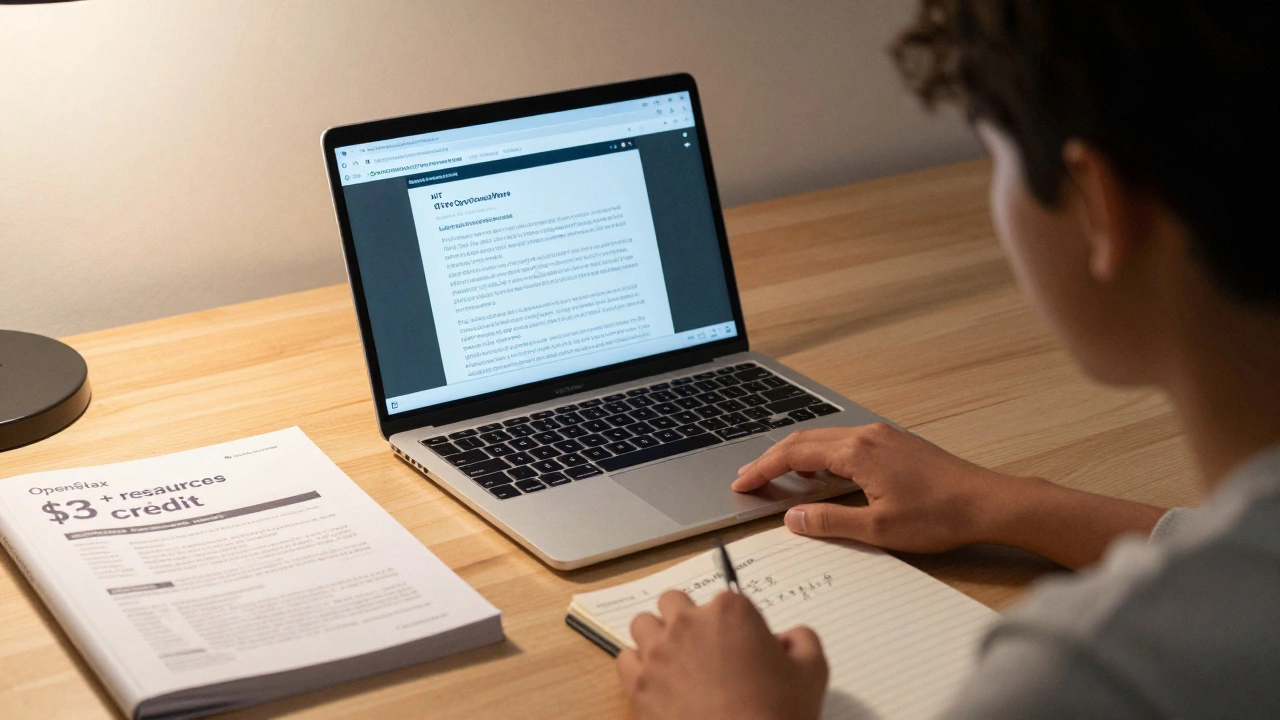
Tip: Using free resources like OpenStax, MIT lectures, and YouTube can help you prepare for exams at no cost.
Your Results
Choose your options above to see cost calculations
If you're looking to get a college-level education without breaking the bank, you're not alone. Rising tuition fees have made traditional degrees unaffordable for millions. But here’s the truth: you can earn real college credit - sometimes even a full certificate - for next to nothing. The cheapest college course isn’t a myth. It’s out there, and it’s often free.
Free courses that count as college credit
Many public universities and nonprofit platforms offer free online courses that award college credit. The most well-known is University of the People is a tuition-free, accredited online university offering associate and bachelor’s degrees in business administration, computer science, and health science. Founded in 2009, it’s the first non-profit, accredited online university that charges no tuition. Instead, students pay a $60 assessment fee per course. That’s it. No textbooks, no lab fees, no hidden charges. You can complete a full bachelor’s degree for under $5,000 - less than 10% of what a public university in the U.S. or UK would charge.
Another option is MIT OpenCourseWare is a free online repository of course materials from over 2,500 MIT classes, including full lecture notes, exams, and video lectures. While MIT doesn’t award formal credit, many colleges accept its materials for transfer credit if you pass an external exam like CLEP or DSST. For example, if you study MIT’s Introduction to Computer Science and then pass the CLEP exam, you can earn 3 college credits at hundreds of U.S. and UK universities.
Community college equivalents online
If you’re looking for something closer to a traditional associate degree, check out Coursera’s Guided Projects is a collection of short, hands-on courses from top universities like Yale and Duke, often priced under $50 per course. Many of these are designed to mirror the first year of college. For instance, the University of London’s “Introduction to Psychology” course on Coursera costs $49 and is equivalent to a 100-level college course. You can take five of these courses and earn a certificate that’s accepted by many employers and transferable to degree programs.
Another standout is edX is a nonprofit platform founded by Harvard and MIT, offering free audit access to college-level courses from 140+ institutions. While you pay for a verified certificate ($50-$200), you can access all lectures, readings, and assignments for free. If you’re disciplined, you can learn everything you’d learn in a $1,000 community college class - for zero dollars.
The hidden gem: CLEP and DSST exams
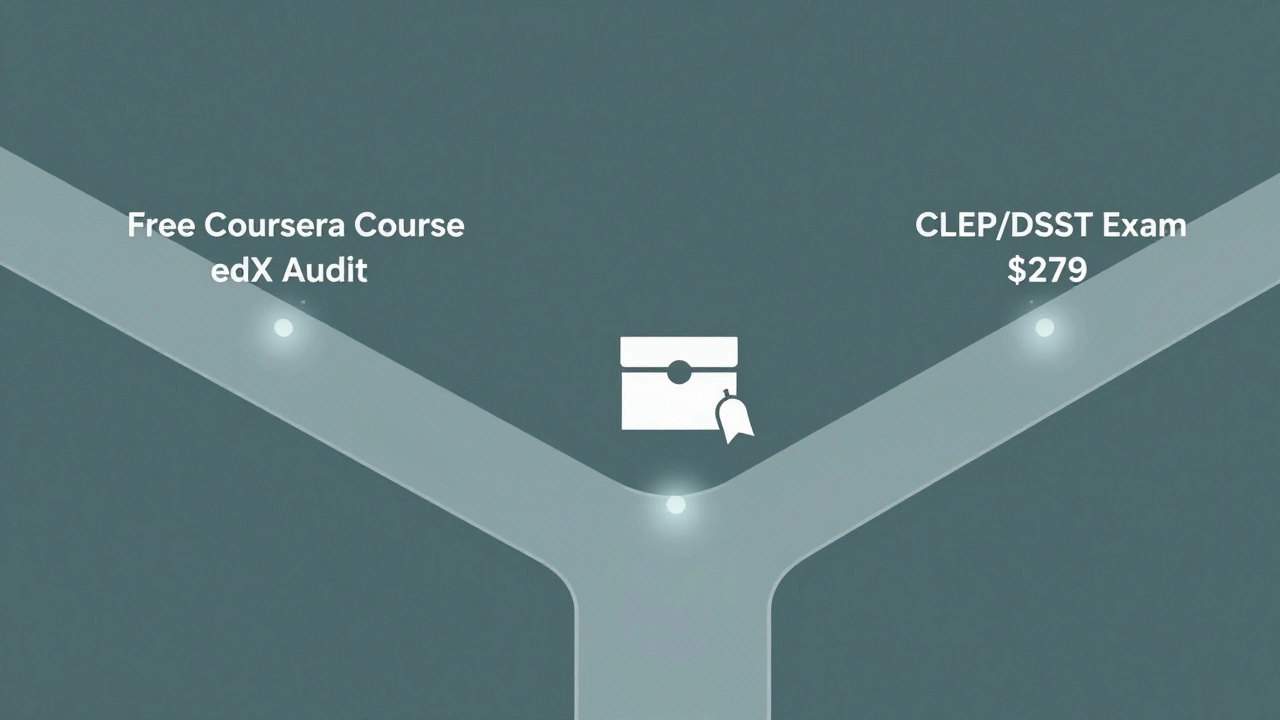
One of the most overlooked ways to get college credit cheaply is through standardized exams. The College Level Examination Program (CLEP) is a series of 34 standardized tests that let you earn college credit by passing an exam, without taking a class. Each CLEP exam costs $93. That’s less than the price of a single textbook. You can study for it using free resources from Khan Academy, OpenStax, or YouTube.
For example, if you pass the CLEP exam in Principles of Macroeconomics, you earn 3 credits. You can do the same for English Composition, History, or Calculus. Most colleges accept up to 30-60 credits this way. That means you could complete half your degree before ever stepping into a classroom.
DSST (DANTES Subject Standardized Tests) is a similar program, often used by military personnel and adult learners, with exams in 38 subjects. DSST exams cost $85 each. Many community colleges accept DSST credits, and they’re easier to pass than CLEP in some cases because they’re more focused on real-world knowledge.
What you can learn for under 0
Here’s a realistic roadmap for building college-level skills on a budget:
- Computer Science: Take MIT’s free “Introduction to Programming” course on edX, then pass the CLEP Computer Science exam ($93). Total cost: under $100.
- Business: Complete the University of the People’s free Business Fundamentals course (free audit), then take the CLEP Principles of Management exam ($93). Total: $93.
- Psychology: Audit the Yale Psychology course on Coursera (free), then pass the DSST Social Psychology exam ($85). Total: $85.
- Writing: Use OpenStax’s free College Writing textbook, then take the CLEP English Composition exam ($93). Total: $93.
These aren’t just skills - they’re transferable credits. Many online universities accept them as part of a degree. For example, Excelsior College is a U.S. institution that specializes in accepting CLEP, DSST, and other prior learning credits. You can build a full associate degree using just exams and free courses.
Why most people overlook the cheapest options
The biggest barrier isn’t money - it’s awareness. Most people assume college means paying tuition, living on campus, and taking 15 credit hours a semester. But that’s just one path. The cheapest college courses are often invisible because they don’t come with a campus, a student ID, or a graduation ceremony.
They’re hidden in plain sight:
- Free textbooks from OpenStax is a nonprofit that provides peer-reviewed, openly licensed college textbooks for free download.
- YouTube lectures from Stanford, Harvard, and Oxford
- Public domain syllabi from universities that let you follow their exact course schedule
One student in Birmingham, UK, completed her first year of a business degree by studying OpenStax materials, watching MIT lectures, and passing three CLEP exams. She paid $279 total - and got credit accepted by a U.S. university. She didn’t need a laptop upgrade, a study abroad loan, or a credit card. She just needed discipline.
What’s not worth it
Not all "cheap" courses are equal. Avoid platforms that:
- Charge for "certificates" but don’t offer credit transfer
- Require monthly subscriptions ($20-$50/month) just to access basic materials
- Promise "degree equivalents" without accreditation
For example, some Udemy courses claim to be "equivalent to college" - but no university accepts them for credit. Same with LinkedIn Learning. They’re great for skills, but not for transcripts.
Stick to accredited institutions, CLEP/DSST, and free audit options from top universities. Anything else is a marketing trap.
How to start today
If you want the cheapest college course possible, here’s your 3-step plan:
- Choose a subject you’re curious about - say, psychology, economics, or programming.
- Find the free course: Use edX or Coursera to audit it. Download OpenStax textbooks.
- Take the CLEP or DSST exam. Register at clep.collegeboard.org or dssttest.org.
You’ll spend less than $100. You’ll learn real college material. And if you pass, you’ll have credit that counts toward a degree.
This isn’t about shortcuts. It’s about smart choices. The cheapest college course isn’t the one with the lowest price tag - it’s the one that gets you credit, credibility, and a real step forward.
Can I get a degree for free online?
Yes - but not from every school. University of the People is the only tuition-free, accredited online university that offers full bachelor’s degrees. You still pay $60 per course for assessments, but no tuition. Other schools like MIT and Harvard offer free courses, but you won’t get a degree unless you transfer credits through CLEP, DSST, or another accredited program.
Are free online courses recognized by employers?
It depends. Employers value skills more than certificates. If you can show you completed a Coursera course from Stanford and passed a CLEP exam, that’s credible. But if you just have a "certificate of completion" from a platform like Udemy with no credit or exam, it won’t carry much weight. Always pair free courses with verifiable credentials like CLEP, DSST, or accredited certificates.
Do I need to be in the U.S. to take CLEP or DSST?
No. CLEP and DSST exams are offered internationally at authorized test centers. Many UK universities accept CLEP credits, and you can take the exam in cities like London, Manchester, or Birmingham. You’ll need to register online and find a nearby testing center through the official websites.
Can I use free courses to skip the first year of college?
Absolutely. Many students use CLEP and DSST exams to earn 30-60 credits before enrolling in a degree program. That’s enough to skip the first year entirely. Some UK and U.S. universities allow you to enter as a second-year student if you’ve passed enough exams. Check with your target school’s transfer credit policy.
What’s the fastest way to get college credit for under $50?
Take the DSST Social Psychology exam ($85) after studying free YouTube lectures and OpenStax materials. Or, audit the Harvard "Justice" course on edX, then take the CLEP Introduction to Psychology exam ($93). Both can be completed in 4-6 weeks with 5-10 hours of study per week. The key is using free resources to prepare for the exam - not paying for the course itself.