


Teacher Training Salary Calculator
Calculate Your Teacher Training Salary
Your Expected Salary
£0
Based on your location:
Training route:
Bursary Available
£30,000
Note: These figures are indicative and may vary based on individual circumstances, school policies, and specific bursary requirements.
Salaries are typically based on the 2024-2025 academic year rates.
A teacher in training isn’t just someone who wants to teach - they’re someone actively learning how to do it, under supervision, with real students, and with a clear path to certification. In the UK, this role is formalized through programs like Initial Teacher Training (ITT), which prepares people to become qualified teachers in state schools. It’s not a theory-only course. It’s hands-on, demanding, and structured to turn someone with subject knowledge into someone who can manage a classroom, plan lessons, and support student growth.
What Does a Teacher in Training Actually Do?
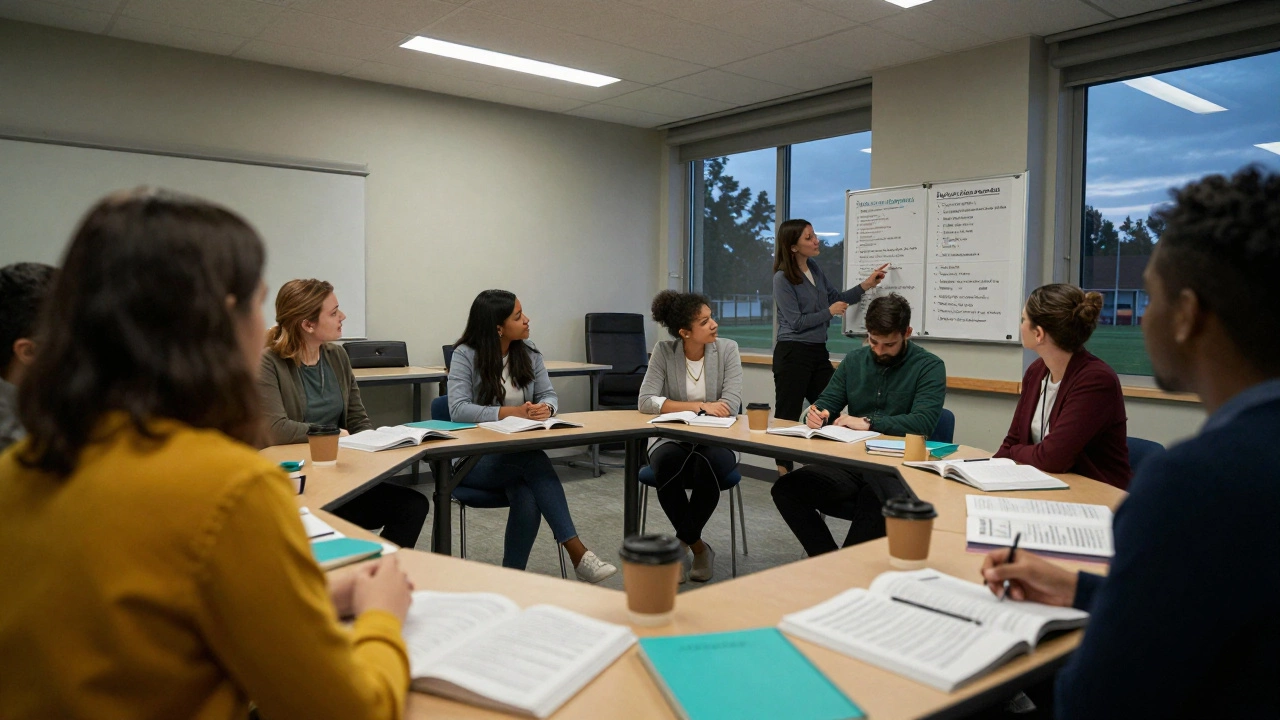
A trainee teacher spends about 60% of their time in classrooms, working directly with pupils. The rest is spent planning lessons, marking work, meeting with mentors, and attending training sessions. You might start by observing experienced teachers, then move to leading small group activities, and eventually take full responsibility for a class - often for several weeks at a time.
For example, a trainee in a secondary school might teach Year 9 English for six weeks straight, preparing lesson plans, assessing student progress, and attending parent-teacher meetings. Meanwhile, they’re also attending weekly seminars on behaviour management, differentiation, or assessment strategies. It’s a full-time job with added study.
How Do You Become a Teacher in Training?
To start, you need a bachelor’s degree - any subject, but it must be relevant to what you want to teach. If you’re aiming to teach maths in secondary school, your degree should be in maths or a closely related field. For primary teaching, your degree can be in any subject, but you’ll need strong skills in literacy and numeracy.
You also need to pass the Skills Tests in English and maths (though these are being phased out in favour of degree-level evidence). Then you apply through one of the approved training routes:
- University-led ITT: You enroll in a PGCE course at a university. This gives you a teaching qualification and sometimes credits toward a master’s degree.
- School-Centred Initial Teacher Training (SCITT): Training is based in schools, with less university time. Great if you want to learn by doing.
- Teach First: A two-year program for graduates with leadership potential. You teach in under-resourced schools and get a salary while training.
- School Direct: Schools recruit trainees directly and partner with universities or SCITT providers.
Most routes last one year full-time. Part-time options exist but take two years. You’ll need to pass a Disclosure and Barring Service (DBS) check and prove you’re physically and mentally fit to teach.
What’s the Difference Between a Trainee Teacher and a Qualified Teacher?
The key difference is status. A teacher in training is still learning. They’re not yet qualified to teach independently across all settings. They’re supervised, assessed, and supported by a mentor - usually an experienced teacher in the school.
Once you complete your training and meet all the Department for Education’s Teachers’ Standards, you earn Qualified Teacher Status (QTS). That’s the official credential that lets you teach in state schools in England and Wales. Scotland and Northern Ireland have their own systems, but QTS is widely recognized.
Without QTS, you can still work as a teaching assistant or supply teacher, but you can’t be the lead teacher in a class in a state-funded school. QTS isn’t just paperwork - it’s proof you can deliver the curriculum, manage behaviour, and support every child’s learning.
What Are the Biggest Challenges for Trainee Teachers?
Many people think the hardest part is lesson planning. It’s not. It’s the emotional load.
Trainees often face:
- Workload: 60-70 hour weeks are common, especially early on. Planning, marking, meetings, and training don’t stop after school hours.
- Behaviour management: Handling disruptive students without losing control is one of the most stressful skills to develop.
- Self-doubt: It’s normal to feel overwhelmed. Many trainees question if they’re cut out for it - especially after a tough day.
- Work-life balance: With so much to do, personal time often disappears. Burnout is real.
But support systems exist. Most training programs assign you a mentor. Schools have pastoral care teams. Trainee networks - both online and in-person - are full of people going through the same thing. You’re not alone.
What Do You Learn in Teacher Training?
It’s not just about subject knowledge. You learn how to make that knowledge stick for students with different needs. Core areas include:
- Lesson planning and delivery: How to structure a lesson so students understand, retain, and apply what they learn.
- Assessment: Formative and summative methods. How to use feedback to improve learning, not just grade it.
- Differentiation: Teaching the same concept to students at different ability levels - from those struggling to those ahead.
- Inclusion: Supporting children with special educational needs and disabilities (SEND), including EAL learners.
- Classroom management: Setting routines, building relationships, and handling disruptions without raising your voice.
- Professional conduct: Ethics, boundaries, safeguarding, and working with parents and colleagues.
These aren’t abstract ideas. You’ll be assessed on them in real classrooms. Your mentor will observe you, give feedback, and help you improve.
What Happens After You Finish Training?
Once you get QTS, you’re not done. The first two years as a newly qualified teacher (NQT) are still supported - now under the Early Career Framework (ECF). This is a two-year programme with reduced teaching hours, mentorship, and targeted training.
Most trainees get hired by the school where they trained. Schools prefer to keep teachers they’ve seen in action. But if you don’t, you’ll still have the qualifications to apply anywhere in England and Wales.
After five years, you can apply for the Master’s in Teaching and Learning (MTL) or go for leadership roles - head of department, pastoral lead, or even headteacher.

Is Teacher Training Worth It?
It’s physically and emotionally draining. But for those who care about shaping young minds, it’s one of the most rewarding careers you can choose.
Salaries start at £30,000 in England (outside London) and go up to £45,000+ with experience. In London, the starting salary is higher - around £35,000. There are also bursaries of up to £30,000 for high-demand subjects like physics, maths, and languages.
And the impact? A teacher in training might not see it right away. But ten years from now, they might hear from a former student who became a doctor, an engineer, or just someone who finally believed they could learn. That’s why people stick with it.
Who Should Consider Becoming a Teacher in Training?
If you:
- Love working with young people
- Have patience, resilience, and a sense of humour
- Are willing to learn from mistakes
- Want a career with purpose, not just a paycheck
Then this path could be for you. You don’t need to be perfect. You don’t need to have grown up wanting to be a teacher. Many trainees come from corporate jobs, the military, or the arts. What matters is your commitment to learning how to teach - and your willingness to put students first.
Can you become a teacher in training without a degree?
No. In the UK, you must have a bachelor’s degree to start Initial Teacher Training. If you don’t have one, you can take a top-up course like an Access to HE Diploma, then apply for a degree. Some alternative routes exist for overseas-trained teachers or those with professional experience, but a degree is still required for QTS.
Do you get paid during teacher training?
It depends on the route. University-led ITT (like PGCE) usually doesn’t pay - you pay tuition and may get a student loan. But School Direct (salaried) and Teach First offer a salary from day one. Trainees on these routes earn between £22,000 and £28,000 depending on location and subject.
Can you train to teach part-time?
Yes. Many providers offer part-time Initial Teacher Training over two years. This is ideal for people with caring responsibilities or those working while training. The workload is spread out, but the requirements - classroom hours, assessments, and teaching standards - are the same.
What subjects are in highest demand for trainee teachers?
Physics, maths, chemistry, computing, and modern foreign languages are consistently in short supply. Trainees in these subjects often get larger bursaries - up to £30,000 - and have better job prospects after qualification. Primary teaching also has a high demand, especially in urban areas.
Is teacher training hard if you’re not a natural speaker?
Absolutely not. Many of the best teachers are quiet, thoughtful, and deliberate. Teaching isn’t about being the loudest person in the room - it’s about clear communication, listening, and building trust. Training programs help you find your voice, whether that’s through calm authority, engaging questions, or creative activities.
Next Steps If You’re Considering Teacher Training
Start by visiting the Department for Education’s Get Into Teaching website. Use their eligibility checker. Then, attend an open day at a local university or school offering ITT. Talk to current trainees. Shadow a teacher for a day. Read a few lesson plans. Try teaching a small group - even just your nephew or niece - and see how it feels.
Teacher training isn’t for everyone. But for those who feel the pull to make a difference in education, it’s one of the most meaningful journeys you can take. The classroom doesn’t need more perfect teachers. It needs more real ones - people willing to learn, adapt, and care.