

License Difficulty Comparison Tool
Compare the World's Hardest Licenses
See how these high-stakes professional licenses stack up based on real-world pass rates and training demands
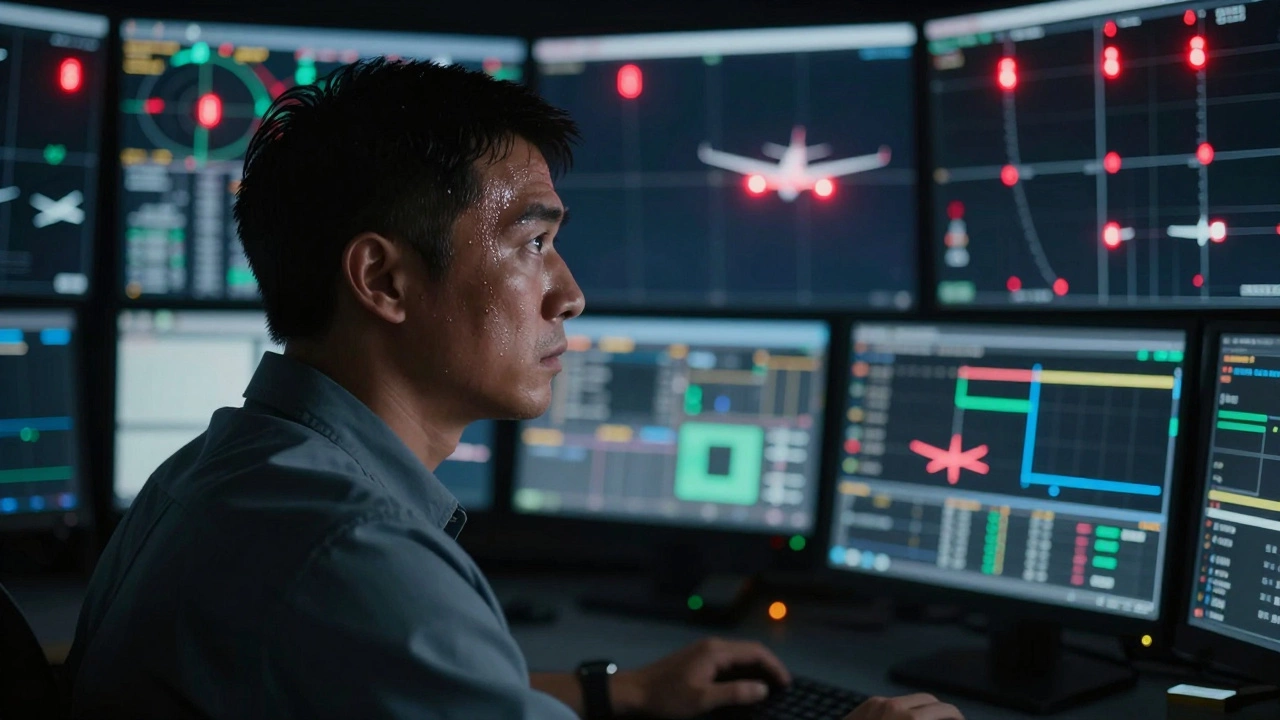
Air Traffic Controller License
Pass Rate: 20-30% (U.S. FAA program completion)
Training Duration: 2-5 years
Key Challenge: Mental endurance under extreme pressure
Cost: $20,000-$50,000+
The FAA program has a 75% dropout rate. Candidates must handle 20+ aircraft simultaneously while simulating mid-air collisions, equipment failures, and weather chaos.
Medical License (PLAB/USMLE)
Pass Rate: 58% (PLAB 2)
Training Duration: 1-3 years
Key Challenge: Emotional intelligence under life-or-death situations
Cost: $1,500-$5,000
International doctors must demonstrate empathy and clinical accuracy in high-stress scenarios like breaking bad news or managing diabetic emergencies. One misstep in communication can result in failure.
California Bar Exam
Pass Rate: 41% (2025)
Training Duration: 400-600 hours
Key Challenge: Legal reasoning under extreme time pressure
Cost: $1,000-$3,000
Tests 14 subjects including obscure topics like community property. Requires drafting legal documents from scratch in a 3-hour performance test. Only 41% of first-timers pass.
Nuclear Power Plant Operator
Pass Rate: 40%
Training Duration: 18-24 months
Key Challenge: Decision-making during simulated catastrophic events
Cost: $10,000-$25,000
Candidates face 10-hour simulators with meltdowns, coolant leaks, and control rod failures. Must maintain composure while handling scenarios that could cause actual nuclear incidents.
Airline Transport Pilot License
Pass Rate: 70% (written), 30% (checkride)
Training Duration: 3-5 years
Key Challenge: Precision under extreme environmental stress
Cost: $100,000+
Requires 1,500 flight hours before application. Checkride includes emergency landings, thunderstorm navigation, and spin recovery over 4-6 hours. Failure means 30-day wait before retake.
Key Takeaways
Common themes among hardest licenses:
- Failure means life-or-death consequences
- Test conditions mimic real-world crises
- Emotional control is as critical as technical knowledge
- Training costs range from $1,000 to over $100,000
- Pass rates consistently below 50%
Some licenses aren’t just paperwork. They’re gauntlets. You train for years, fail multiple times, sacrifice sleep, and still might not make it. The hardest licenses to get aren’t about driving a car or flying a drone-they’re about holding human lives in your hands. And the exams? They’re designed to break you.
The Air Traffic Controller License
Forget the myth that air traffic controllers just push buttons. The FAA’s training program for air traffic controllers in the U.S. has a dropout rate above 75%. You need perfect spatial awareness, lightning-fast decision-making, and the ability to handle 20+ aircraft simultaneously while under extreme pressure. The training lasts 2-5 years. You’ll sit in simulators that replicate mid-air collisions, equipment failures, and weather chaos. The final exam? A 6-hour computer-based test with 100+ live scenarios. If you miss one critical call, you’re out. Only 20-30% of candidates finish the program. And it’s not just the U.S.-countries like Canada, Australia, and the UK have near-identical failure rates. This isn’t a test of knowledge. It’s a test of mental endurance.
The Medical License (USMLE Step 2 CS / PLAB 2)
Passing the U.S. Medical Licensing Exam (USMLE) Step 2 Clinical Skills (CS) was once considered the toughest hurdle for foreign-trained doctors. Though it was discontinued in 2021, its replacement-the Step 2 Clinical Knowledge (CK) combined with OSCE-style assessments-remains brutal. The PLAB 2 exam in the UK, used by international doctors to practice medicine there, has a pass rate of just 58% as of 2025. You don’t just memorize facts. You walk into a room with a standardized patient, diagnose a stroke, break bad news to a grieving family, or manage a diabetic emergency-all while being scored on communication, empathy, and clinical accuracy. One misstep in tone or timing, and you fail. Thousands of doctors from India, Nigeria, and Pakistan re-take this exam year after year. The emotional toll is as heavy as the academic load.
The Bar Exam (California, USA)
The California Bar Exam is the most difficult bar exam in the United States. In February 2025, only 41% of first-time takers passed. Compare that to New York’s 75% pass rate. Why? California tests 14 subjects, including obscure ones like community property and professional responsibility. The exam spans two days: 1,000 multiple-choice questions and six 90-minute essay prompts. Then comes the performance test-you’re handed a fake case file and asked to draft a motion, a brief, or a client letter from scratch in three hours. No outside resources. No internet. No help. Many candidates spend 400-600 hours studying. Some work full-time while preparing. The failure rate isn’t just high-it’s punishing. California doesn’t just test knowledge. It tests whether you can think like a lawyer under fire.

The Nuclear Power Plant Operator License (NRC)
If you think piloting a plane is intense, try controlling a nuclear reactor. The U.S. Nuclear Regulatory Commission (NRC) requires operators to pass a two-part licensing exam: a written test and a 10-hour simulator evaluation. You’ll face simulated meltdowns, coolant leaks, and control rod failures. One wrong move, and the simulator triggers a partial meltdown. The exam isn’t just technical-it’s psychological. Candidates are monitored for stress responses, decision fatigue, and communication under pressure. The average pass rate? 40%. Most candidates train for 18-24 months before even sitting for the exam. And once licensed? You’re on 12-hour shifts, 7 days a week, with zero room for error. A single mistake could cost lives. There’s no second chance.
The FAA Airline Transport Pilot License (ATPL)
Getting your private pilot’s license is one thing. Getting your Airline Transport Pilot license? That’s a different world. The FAA requires 1,500 hours of flight time before you can even apply. Most pilots spend 3-5 years building that experience. The written exam has 80 questions covering meteorology, navigation, aerodynamics, and FAA regulations. But the real test is the checkride. You’ll fly with an FAA examiner for 4-6 hours. You’ll perform emergency landings with engine failure, navigate through thunderstorms, execute precision instrument approaches in zero visibility, and recover from spins-all while maintaining calm, clear communication. The failure rate? 30%. And if you fail, you can’t retake it for 30 days. Many pilots spend over $100,000 and lose years of their lives trying to get this license. It’s not just skill. It’s perfection under pressure.

Why These Licenses Are So Hard
What do these five licenses have in common? They’re not about memorizing facts. They’re about performance under extreme conditions. The FAA, NRC, medical boards, and bar associations don’t care how many hours you studied. They care whether you can hold up when everything’s falling apart. These exams test:
- Decision speed-you have seconds to act
- Emotional control-you can’t panic, even when lives are at stake
- Attention to detail-one missed step means failure
- Endurance-you’re tested for hours without breaks
There’s no shortcut. No cramming. No lucky guess. You either train like your life depends on it-or you don’t make it.
What Happens When You Fail
Failing one of these exams doesn’t mean you’re not smart. It means you’re human. Air traffic control candidates often retry 3-5 times. Medical graduates from abroad sometimes spend over a decade trying to pass the PLAB. The California Bar has a 20% repeat failure rate. Each time you fail, you lose money, time, and confidence. But here’s the truth: those who eventually succeed aren’t the smartest. They’re the most persistent. They review their mistakes. They find mentors. They adjust their strategy. They sleep less, study smarter, and never quit.
Is There a Pattern?
Yes. The hardest licenses are always in fields where:
- A single error can kill
- Training is long and expensive
- Regulators have zero tolerance for risk
- There’s no room for automation
If you’re thinking about pursuing one of these, prepare for the long haul. Save money. Build a support system. Accept that failure is part of the process. And never underestimate the mental game.
Which license has the lowest pass rate in the world?
The U.S. Nuclear Regulatory Commission’s Nuclear Power Plant Operator license has one of the lowest pass rates-around 40%-but the California Bar Exam has the lowest among major professional licenses, with only 41% passing in 2025. The FAA Air Traffic Controller training program has an even lower success rate, with over 75% of candidates not completing the program. Each of these exams is designed to filter out anyone who isn’t ready for life-or-death responsibility.
Can you retake these exams if you fail?
Yes, but with restrictions. The California Bar allows retakes after 30 days, but you pay the full fee again. The FAA ATPL checkride requires a 30-day wait. The NRC nuclear operator exam lets you reapply after 90 days. Medical licensing exams like PLAB 2 require a full year between attempts if you fail twice. Most of these exams limit retakes to three or four times total. Each failure costs thousands of dollars and years of your life.
Is the pilot license harder than the medical license?
It depends on what you mean by "harder." The FAA Airline Transport Pilot license requires more time and money to qualify-often over $100,000 and 5 years of training. But the medical license (like PLAB 2 or USMLE Step 2) demands emotional precision under pressure. You’re not just flying a plane-you’re diagnosing a patient while they’re crying. Both are brutal, but in different ways. Pilots are tested on skill and endurance. Doctors are tested on empathy and judgment.
Why is the California Bar so much harder than other state bars?
California tests 14 subjects, including rare ones like community property and fiduciary duty. Other states test 6-8. California also uses a unique performance test where you must draft legal documents from scratch under time pressure. The grading is stricter, and the exam is longer. The state has no interest in increasing lawyer numbers-it wants only the most rigorous candidates. That’s why it’s known as the "bar exam from hell."
Are there any licenses harder than these?
Some military and intelligence roles have even tougher selection processes-like becoming a Navy SEAL or a CIA operative. But those aren’t "licenses" in the traditional sense. Among civilian, publicly regulated licenses, the five listed here are the most difficult. Others, like becoming a certified public accountant (CPA) in some states or a professional engineer (PE) in structural fields, are challenging-but they don’t carry the same life-or-death stakes.