Traditional vs Distance Education: Key Differences Explained
Explore how traditional and distance education differ in delivery, interaction, cost, technology, and accreditation, and learn how to choose the best fit for your goals.
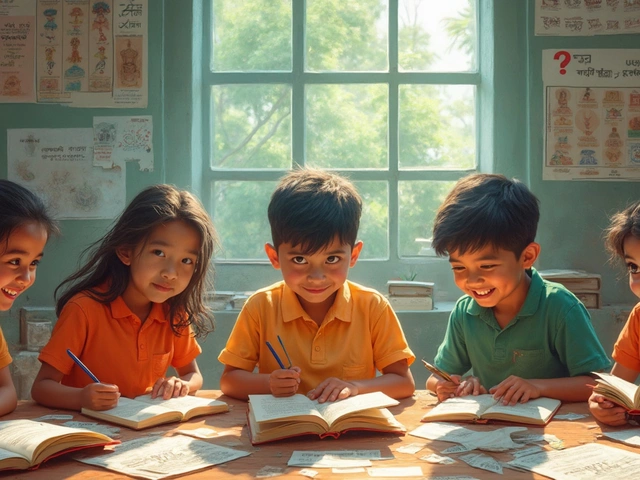
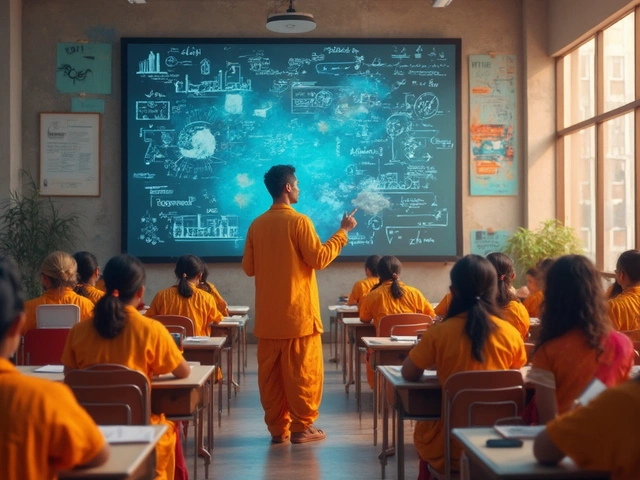
When we talk about traditional education, a structured, teacher-led system focused on classroom instruction, memorization, and standardized testing. Also known as formal education, it’s the model most schools in India still follow—where students sit in rows, listen to lectures, take notes, and are tested on what they’ve been told to remember. This system isn’t new. It’s been around for over a century, and even today, it’s what parents trust, teachers rely on, and exam boards design around.
Traditional education isn’t just about textbooks and blackboards. It’s built on rote learning, the practice of memorizing facts through repetition. This method works because it builds a strong foundation—especially in subjects like math, science, and history, where core concepts need to be internalized before you can apply them. In India, where competitive exams like JEE, NEET, and UPSC demand precision and recall, rote learning isn’t a flaw—it’s a feature. And while critics say it kills creativity, the truth is, it gives students the tools to solve complex problems quickly under pressure. The classroom itself is another key part. Unlike online courses or self-paced apps, traditional education forces discipline. You show up at 8 a.m. You follow a schedule. You answer to a teacher. That structure matters—especially for students who don’t have quiet spaces at home or access to reliable internet.
It’s also deeply tied to the Indian education system, a vast, layered network of boards like CBSE, ICSE, and state councils, all built on uniform syllabi and centralized exams. This system ensures consistency. A student in Rajasthan and one in Tamil Nadu study the same chapters for Class 10. That’s why CBSE dominates—it’s predictable, scalable, and aligned with national exams. Even when new tech tools appear, most coaching centers still teach using chalkboards and printed notes. Why? Because they work. For millions, traditional education is the only path to a government job, an engineering seat, or a medical degree. It’s not perfect. It doesn’t always teach critical thinking or emotional intelligence. But it does teach resilience, time management, and how to perform under stress—skills that show up in real life long after the exams are over.
What you’ll find in the posts below isn’t a rejection of traditional education. It’s a look at how it fits into today’s world. Some posts show how it shapes the toughest exams in India. Others compare it to vocational training or modern e-learning. You’ll see why some degrees are seen as useless for competitive exams, why mental ability matters more than memorization in JEE, and how CBSE became the most popular board in the world. This isn’t about choosing sides. It’s about understanding what works, why it still works, and how to use it to your advantage—whether you’re a student, parent, or teacher navigating India’s education landscape.
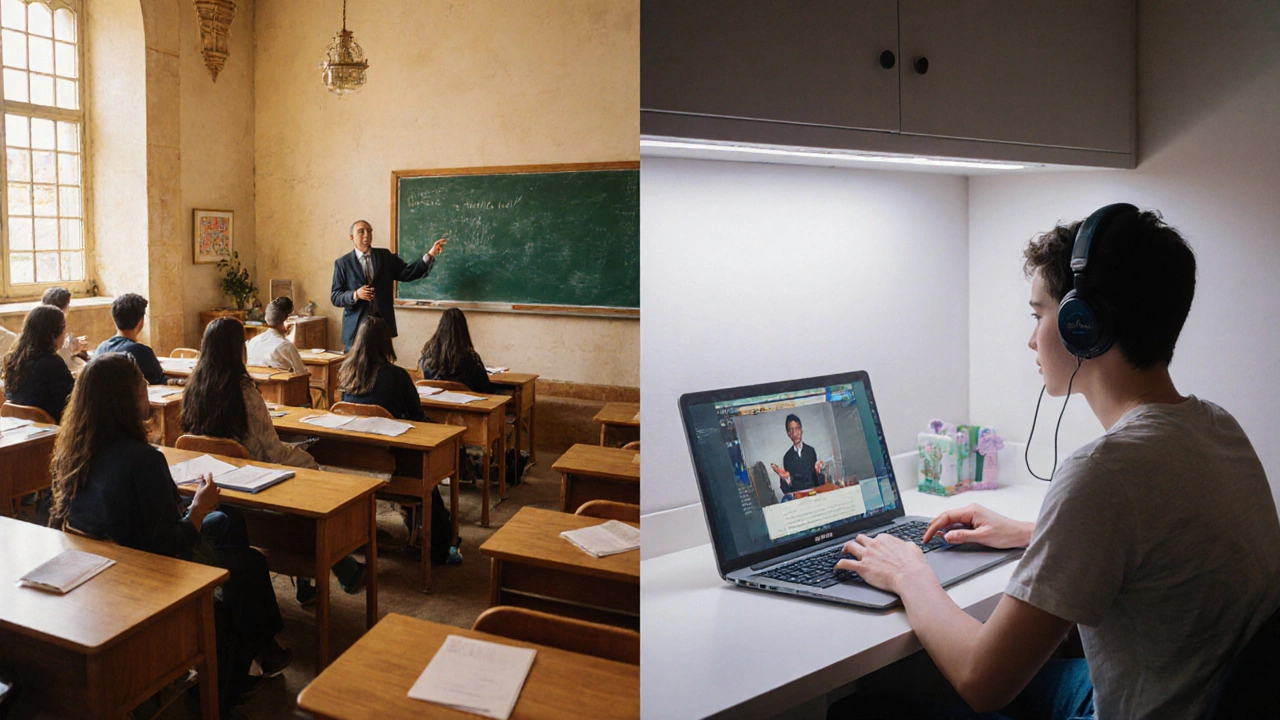
Explore how traditional and distance education differ in delivery, interaction, cost, technology, and accreditation, and learn how to choose the best fit for your goals.