
Daily English Speaking Practice Tracker
Daily Practice Log
Your Progress
Current Streak
0 days
Weekly Goal
200 minutes
Want to speak English fluently but don’t want to spend money on classes or apps? You’re not alone. Millions of people around the world are learning to speak English at home - for free - and they’re getting results. The secret isn’t expensive software or private tutors. It’s consistency, smart habits, and using what you already have: your phone, the internet, and your own voice.
Stop memorizing. Start speaking.
Most people waste months memorizing grammar rules and vocabulary lists, then freeze when they try to speak. That’s because speaking isn’t about knowing words - it’s about using them. Your brain needs to build muscle memory for English, just like learning to ride a bike. You don’t become a cyclist by reading about pedals. You get on the bike and fall a few times.
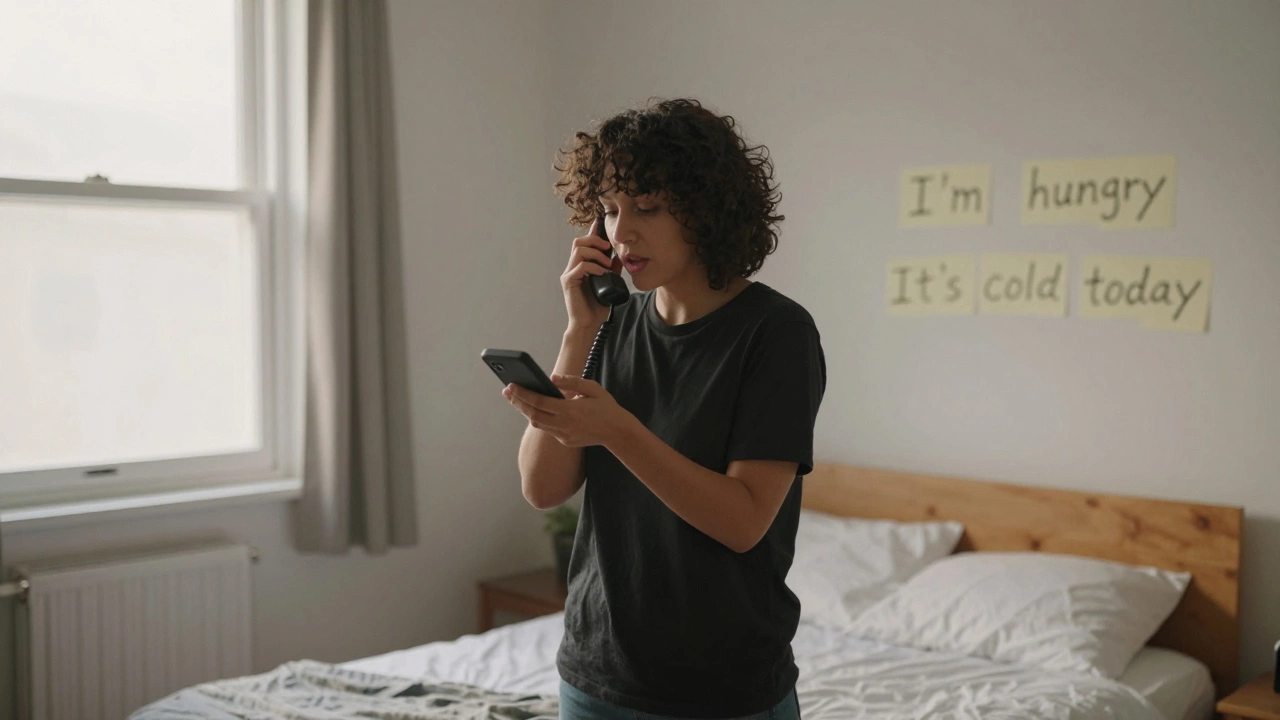
Start today by saying simple sentences out loud. Not in your head. Not quietly. Aloud. Even if you’re alone. Say: “I’m making coffee.” “The weather is cold today.” “I want to go for a walk.” Do this for five minutes every morning. Don’t worry about mistakes. Just get your mouth used to forming English sounds. After a week, you’ll notice your tongue doesn’t feel so stiff.
Use free podcasts and YouTube channels designed for learners
There are hundreds of free English learning channels on YouTube that focus on real conversations - not textbook dialogues. Try English Addict with Mr Steve. He speaks slowly, repeats key phrases, and uses everyday situations like ordering food or asking for directions. Or watch Learn English with Emma. She breaks down how native speakers actually talk - including contractions, fillers like “um,” and natural rhythm.
Listen while you cook, walk the dog, or commute. Don’t just listen passively. Pause every 30 seconds and repeat what you heard. Mimic the tone, the speed, the pauses. This is called shadowing. It trains your ears and your mouth at the same time. After a month, you’ll start recognizing phrases you’ve heard before - and using them without thinking.
Find free speaking partners online
Language exchange apps like Tandem and HelloTalk connect you with native English speakers who want to learn your language. You talk for 15 minutes in English, then 15 minutes in your language. No cost. No pressure. Just real conversation.
Don’t wait until you’re “ready.” You’ll never feel ready. Show up messy. Say: “I’m still learning. Can we talk about your day?” Most native speakers love helping. They’ve been learners too. If you’re shy, start with text chats. Then move to voice messages. Then video calls. Each step builds confidence.
Record yourself - and listen critically
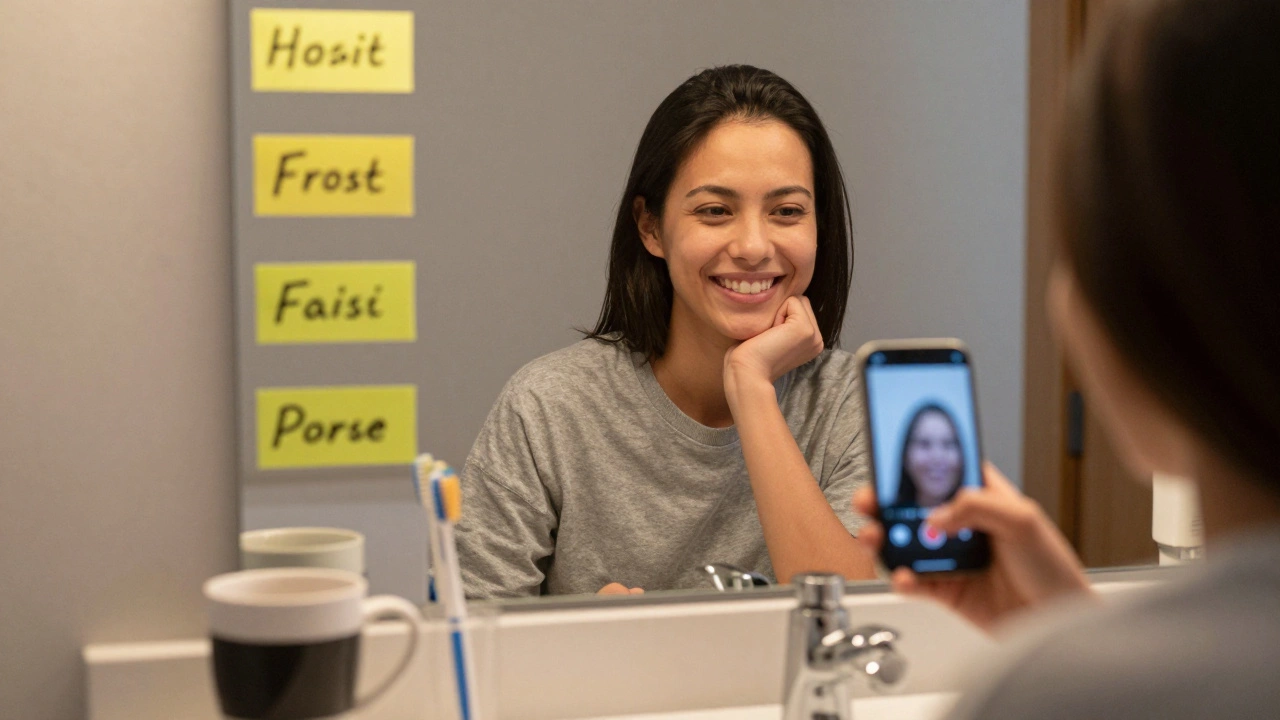
Here’s a game-changer: record yourself speaking for one minute every day. Use your phone’s voice memo app. Talk about your day, your favorite movie, or what you ate for breakfast. Then listen back. Don’t cringe. Analyze.
Ask yourself:
- Did I pause too much?
- Did I mispronounce any words?
- Did I sound nervous or unsure?
Compare your recording from Week 1 to Week 4. You’ll hear progress - even if it feels slow. You’ll also catch habits you didn’t know you had, like saying “uh” every two seconds. Fixing those small things makes you sound more fluent than someone who uses fancy words but sounds robotic.
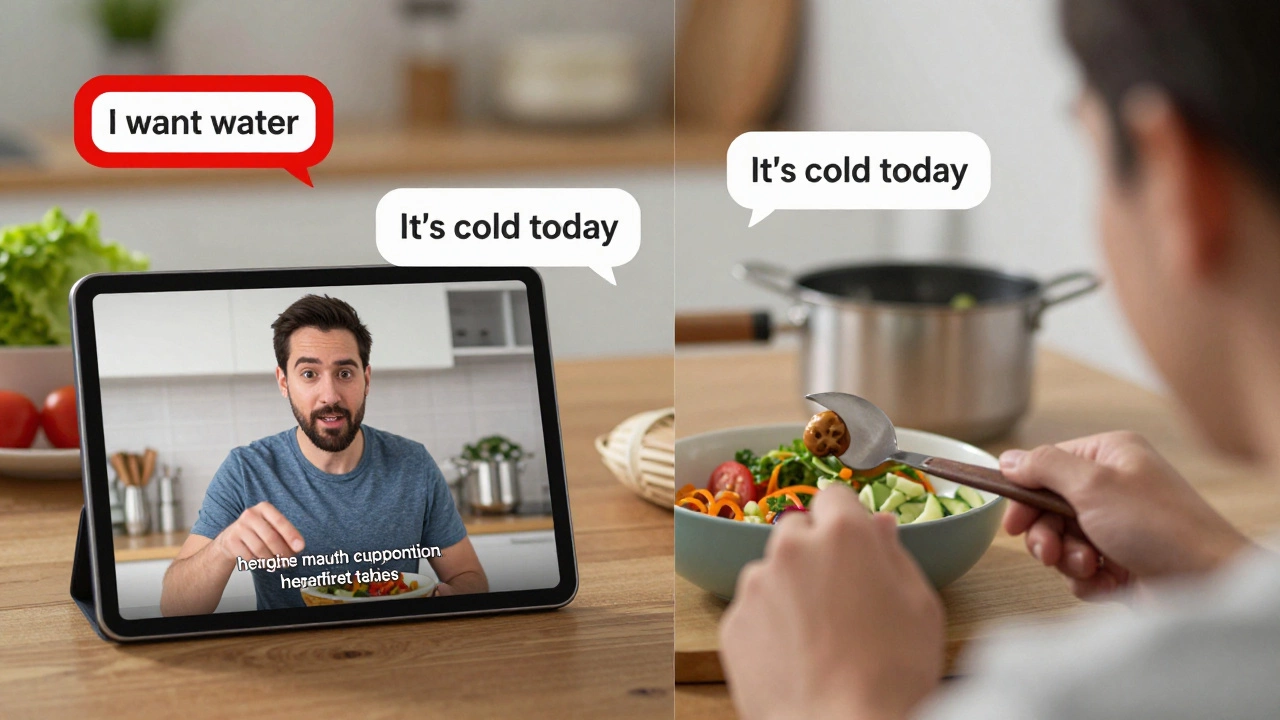
Think in English - not in your native language
Most learners translate in their heads: “I want water” → “Yo quiero agua” → “I want water.” That slows you down. Fluency happens when you stop translating.
Start small. When you see a coffee cup, think “coffee cup” - not the word in your language. When you feel tired, think “I’m exhausted,” not “estoy cansado.” Label things around you in English. When you’re brushing your teeth, think “toothbrush,” “sink,” “mirror.” Make your brain work in English, not as a translator.
After a few weeks, you’ll catch yourself thinking full sentences in English. That’s when fluency clicks. You’re no longer learning the language - you’re living in it.
Watch TV shows with English subtitles - then without
Choose a show you already like - comedy, drama, crime - anything that keeps you hooked. Start with English subtitles. Then rewatch the same episode without subtitles. Then watch without subtitles and pause every 20 seconds to repeat what was said.
Shows like Friends, The Office, or Stranger Things are perfect. They use everyday language, clear pronunciation, and repeat key phrases. You’ll pick up slang, idioms, and how people react emotionally - not just what they say.
Don’t try to understand every word. Focus on the meaning. If you hear “I’m beat,” you don’t need to know it means “tired” - you’ll figure it out from context. That’s how native speakers learn too.
Create a daily speaking routine (no exceptions)
Fluency doesn’t come from one-hour weekly lessons. It comes from 10 minutes a day, every day. Build a simple routine:
- 6:30 AM - Speak out loud for 5 minutes (your daily sentence)
- 12:30 PM - Listen to a 10-minute English podcast while eating
- 7:00 PM - Talk to a language partner or record yourself
That’s 25 minutes total. No app subscription. No tuition fee. Just your time.
If you miss a day, don’t quit. Just restart the next day. Consistency beats perfection. Even if you only speak for 3 minutes, do it. Your brain remembers the rhythm.
Why most people fail - and how to avoid it
The biggest reason people don’t become fluent? They wait for confidence. They think they need to know 1,000 words before speaking. Or they fear sounding stupid.
Here’s the truth: native speakers don’t care if you make mistakes. They care if you’re trying. Most of them remember being learners too.
Another trap: switching resources every week. You download 10 apps, watch 5 YouTube channels, join 3 groups - then feel overwhelmed. Pick one podcast. One app. One routine. Stick with it for 30 days. Then adjust.
Fluency isn’t about knowing everything. It’s about being understood. And you can be understood with 300 words if you use them well.
What fluency really looks like
Fluency isn’t speaking like a news anchor. It’s not perfect grammar. It’s not knowing every verb tense.
Fluency is:
- Asking for help without panicking
- Laughing when you mess up and keeping going
- Understanding someone even if they speak fast
- Expressing your opinion without translating in your head
- Feeling calm, not nervous, when someone asks you “How was your weekend?”
That’s the real goal. Not perfection. Progress.
Start today. Speak out loud. Even if it’s just one sentence. Keep going. In three months, you’ll look back and wonder why you waited so long to begin.
Can I really learn to speak English fluently for free?
Yes. Thousands of people have done it. You don’t need paid courses. You need consistent practice using free tools: YouTube, podcasts, language exchange apps, and your own voice. The key is daily speaking - not memorizing.
How long does it take to speak English fluently at home?
Most people notice real progress in 3 to 6 months with daily practice. Fluency doesn’t mean perfection - it means you can hold a 10-minute conversation without stopping to think. If you speak for 15-20 minutes a day, you’ll see results faster than someone taking weekly classes.
What if I’m too shy to speak with native speakers?
Start by recording yourself. Then talk to a language partner through text or voice messages. Most people on apps like Tandem are also learners and understand nervousness. You don’t need to be perfect - just show up. Say, “I’m practicing. Can we talk about movies?” That’s enough to start.
Do I need to learn grammar to speak fluently?
You don’t need to memorize rules. You need to hear how English works in real life. Watch shows, listen to podcasts, and repeat phrases. Your brain will pick up grammar naturally - just like you learned your first language as a child. Focus on communication, not correction.
What’s the best free app to practice speaking English?
Tandem and HelloTalk are the best free apps for real speaking practice. They connect you with native speakers who want to learn your language. You get feedback, conversation, and cultural context - all for free. Avoid apps that only test you with quizzes. Speak, don’t just answer.
Can I become fluent without living in an English-speaking country?
Absolutely. Many fluent English speakers live in countries where English isn’t the main language. What matters isn’t location - it’s exposure and practice. Fill your day with English: listen, speak, think, watch. Create your own English environment at home.
Next steps: Your 7-day challenge
Here’s what to do this week:
- Day 1: Record yourself saying, “My name is ___. I’m learning English because ___.”
- Day 2: Watch one 10-minute YouTube video and repeat 3 phrases out loud.
- Day 3: Text a language partner on Tandem or HelloTalk. Ask: “What did you eat today?”
- Day 4: Listen to a podcast while walking. Pause and say what you heard.
- Day 5: Think of 5 things around you and say their names in English.
- Day 6: Record yourself again. Compare to Day 1.
- Day 7: Celebrate. You’ve spoken English every day. That’s more than most people do in a year.
Fluency isn’t a destination. It’s a habit. Start small. Stay consistent. And never wait for perfect.