How to Set Up an Effective Learning Station at Home
Learn how to create a functional learning station at home with step‑by‑step guidance on space, furniture, lighting, tech, and organization for any age.
When you hear kids learning station, a dedicated space at home or school designed to support a child’s early learning through hands-on activities and structured play. Also known as a learning corner, it’s not just a table with crayons—it’s a carefully planned environment that builds focus, curiosity, and problem-solving skills from age two onward. Think of it like a mini classroom tailored for tiny hands and big questions.
A good kids learning station includes tools that match a child’s development stage. For toddlers, that might mean chunky wooden puzzles, sensory bins with rice and hidden toys, or alphabet magnets on the fridge. For preschoolers, it could shift to simple counting games, storybooks with interactive flaps, or tracing sheets that build fine motor control. These aren’t random toys—they’re learning devices. Research from India’s National Council of Educational Research and Training (NCERT) shows that children who engage with structured play spaces daily develop language and math skills 30% faster than those who don’t. And it doesn’t need to be expensive. A shoebox with buttons to sort, a chalkboard on the wall, or a shelf with labeled bins can work wonders.
What makes a learning station stick is consistency and connection. It’s not about filling a room with gadgets. It’s about creating a routine. A child who knows where to find their coloring books, who sees their name on a hook for their backpack, who hears the same gentle prompt—"Let’s read one story before snack time"—starts to understand order, responsibility, and the joy of discovery. Parents in Delhi, Bangalore, and small-town Rajasthan are using this approach more now, especially after the pandemic. Many schools in CBSE-affiliated institutions now include a learning station as part of their kindergarten curriculum because it reduces anxiety and builds independence.
Related tools like educational toys for kids, physical objects designed to teach specific skills like counting, colors, or cause-and-effect through play and preschool learning tools, structured resources such as flashcards, workbooks, and interactive apps meant for children aged 2 to 6 are part of the ecosystem. But the real magic happens when these tools are used in a calm, predictable space where a child feels safe to explore without pressure. A learning station isn’t about pushing kids to read early or solve equations—it’s about letting them ask, "Why?" and then giving them the space to find their own answers.
Below, you’ll find real stories and practical guides from parents and teachers who’ve built effective learning stations on tight budgets, in small homes, and even without fancy tech. Some use recycled materials. Others rely on free apps. A few have turned their balconies into mini science labs. What they all share is one belief: learning doesn’t need a classroom. It just needs a little space, a little time, and a lot of patience.
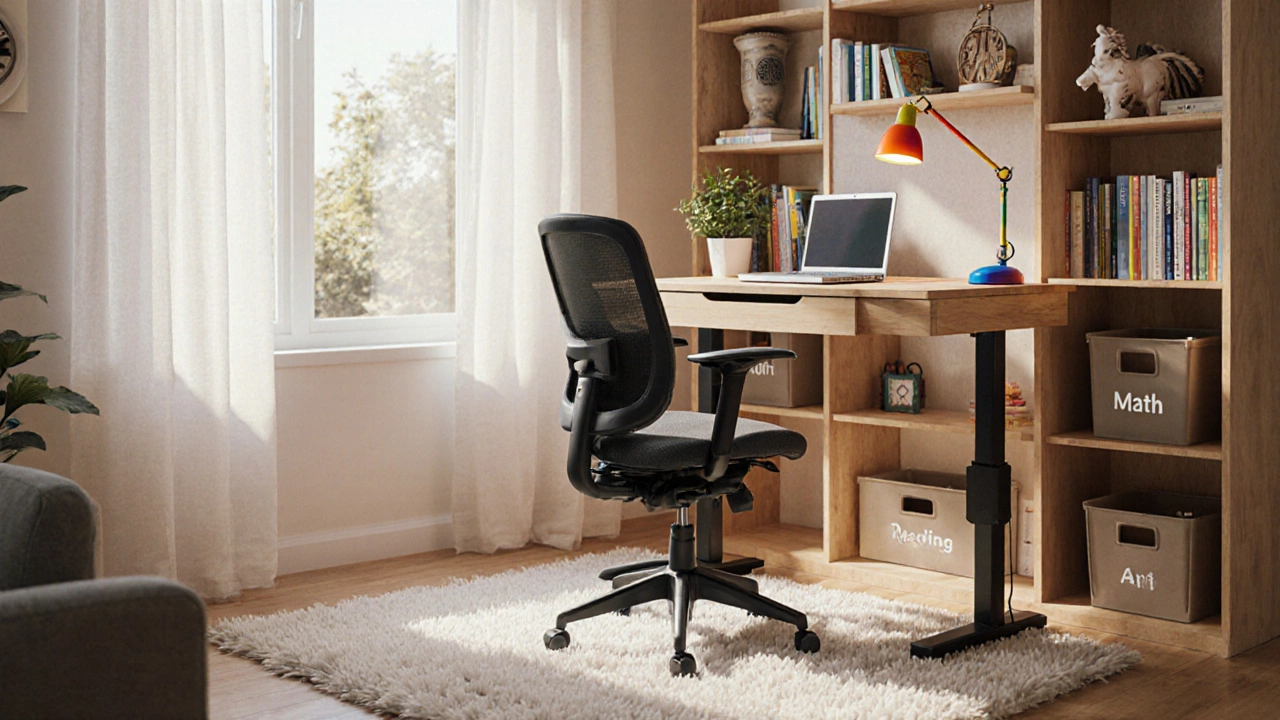
Learn how to create a functional learning station at home with step‑by‑step guidance on space, furniture, lighting, tech, and organization for any age.