


Not all coding classes are created equal. Some promise to turn you into a developer in six weeks. Others give you a deep foundation but take months to get through. If you’re wondering which coding classes are best, the answer isn’t one-size-fits-all. It depends on what you already know, what you want to build, and how you learn best.
What Do You Actually Want to Build?
Before you pick a class, ask yourself: what’s the end goal? Do you want to make websites? Build mobile apps? Automate boring tasks? Create AI tools? The type of coding you need changes based on that.
If you want to make websites, you’ll need HTML, CSS, and JavaScript. That’s the core trio. No class skips these. But some teach them fast, others drag it out. If you want to build apps for Android or iPhone, you’ll need Swift or Kotlin. For data work or automation, Python is the go-to. It’s simple, readable, and used everywhere from startups to NASA.
There’s no point in taking a class that teaches C++ if your dream is to create a simple Shopify store. Pick your path first. Then find the class that matches it.
Best Coding Classes for Absolute Beginners
If you’ve never written a line of code, start with something gentle. Avoid classes that throw you into terminal commands and complex syntax on day one. Look for ones that use visual tools or real-world examples.
freeCodeCamp is one of the most trusted free options. It’s entirely project-based. You don’t just watch videos-you build a calculator, a tribute page, a survey form. By the end, you’ve got a portfolio of real work. No certificates mean much, but the projects do. Employers care more about what you’ve built than what you’ve paid for.
Codecademy’s Learn Python 3 is another solid pick. It’s interactive. You type code right in the browser. Mistakes are shown immediately. The lessons are short, under 10 minutes each. It’s perfect for people with a busy schedule. You can do one during lunch or while waiting for the bus.
Scrimba stands out because it lets you pause videos and edit the code live. Most platforms show you code. Scrimba lets you play with it. That makes the learning stick. It’s great for visual learners who need to see how changing one line affects the whole program.
Best Coding Classes for People with Some Experience
If you’ve done a few tutorials, maybe built a personal website or automated a spreadsheet, you’re past beginner level. Now you need depth.
Udemy’s The Complete Web Developer in 2025: Zero to Mastery is a top choice. It covers HTML, CSS, JavaScript, React, Node.js, and even databases. It’s 45 hours long, but you don’t have to finish it all at once. The content is updated yearly, so you’re not learning outdated tools. The instructor, Andrei Neagoie, explains things like he’s talking to a friend-not a textbook.
CS50 by Harvard (edX) is the gold standard for structured learning. It’s free to audit. It’s tough. You’ll spend 10-20 hours a week. But if you finish it, you’ll understand how computers really work-memory, algorithms, data structures. This isn’t just about writing code. It’s about thinking like a developer. Many tech companies in the UK and US actively recruit from CS50 graduates.
Frontend Masters is for those who want to go deep into JavaScript frameworks. It’s not cheap, but if you’re aiming for a job at a tech firm, this is where you level up. Courses on React, TypeScript, and performance optimization are taught by engineers who work at companies like Google and Meta.
What to Avoid in Coding Classes
Not all coding classes are worth your time. Here’s what to watch out for:
- Classes that promise ‘job guarantee’-if they’re pushing you to pay £2,000+ for a ‘guaranteed job,’ run. No one can guarantee a job. Good classes teach skills. They don’t make promises they can’t keep.
- Too much theory, no practice-if you’re watching 3-hour lectures on ‘object-oriented programming’ without writing code, you’re not learning. You’re memorizing terms.
- Outdated tech stacks-if a course still teaches jQuery as a primary tool or uses Python 2, it’s obsolete. Python 2 was retired in 2020. jQuery is mostly replaced by modern JavaScript.
- No community or feedback-learning to code alone is hard. The best classes have forums, live Q&A, or peer review. If you’re stuck for days with no help, you’ll quit.
How to Pick the Right Class for Your Budget
There’s no need to spend hundreds-or thousands-on coding classes. Many high-quality options are free or low-cost.
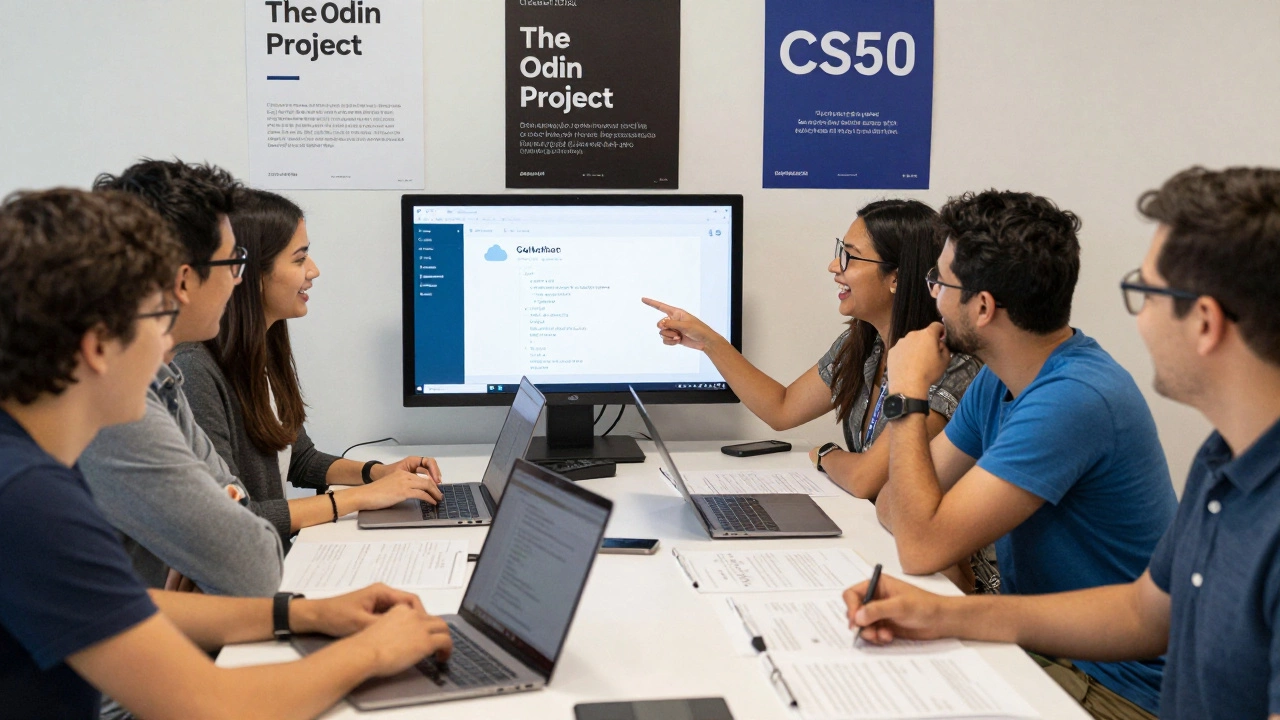
Free: freeCodeCamp, CS50, The Odin Project, Khan Academy. These are full curriculums. You can land a job with just these if you build strong projects.
Low cost (£10-£30): Udemy courses on sale. They often drop to £10 after promotions. Buy one, finish it, then move to the next. Don’t hoard courses. Finish what you start.
Mid-range (£50-£150): Frontend Masters, Scrimba Pro. These are worth it if you’re serious about getting hired. You get better projects, mentor feedback, and up-to-date content.
High cost (£1,000+): Bootcamps like General Assembly or Le Wagon. These can work-if you’re ready to quit your job, move cities, and commit 40+ hours a week. For most people, they’re overkill. You can get the same skills cheaper and on your own schedule.
Real Results: Who Actually Gets Hired?
I’ve talked to hiring managers at Birmingham tech firms-small agencies and mid-sized SaaS companies. They don’t care where you learned. They care about what you’ve built.
One developer I met started with freeCodeCamp. He built a local food delivery app for small restaurants. He didn’t have a degree. He didn’t pay for a bootcamp. He just coded every evening after work. Six months later, he got hired by a startup in Digbeth.
Another person took CS50 and spent 8 months building a weather app that pulled data from public APIs. She posted it on GitHub. A recruiter found her. Now she works remotely for a London-based fintech company.
It’s not about the class. It’s about what you do after the class ends.
What to Do After You Finish a Class
Finishing a course is just the beginning. The real learning starts when you build something on your own.
- Build one small project every week. Start with a to-do list. Then a calculator. Then a weather app.
- Put everything on GitHub. Even if it’s messy. Employers want to see your process.
- Join a local coding group. Birmingham has active meetups at The Hub and CodeBase. You’ll learn faster with others.
- Contribute to open source. Fix a typo in a README. That’s a real first step. You’ll get feedback and learn how real teams work.
- Apply for junior roles after 6 months. Don’t wait until you feel ‘ready.’ No one ever feels ready.
Final Thought: It’s Not About the Class, It’s About the Code
The best coding class is the one you stick with. The one where you keep going even when you’re stuck. The one where you build something you’re proud of.
There’s no magic course. No secret formula. Just consistent effort. Pick a path. Pick a class that fits your style. Start building. And don’t stop.
Are free coding classes good enough to get a job?
Yes, absolutely. Many developers hired in the UK started with free resources like freeCodeCamp, CS50, or The Odin Project. What matters isn’t how much you paid-it’s what you built. Employers care about your GitHub profile, your projects, and how you solve problems. A free course can give you the same skills as a £10,000 bootcamp-if you put in the work.
Should I learn Python or JavaScript first?
If you want to build websites or apps that run in browsers, start with JavaScript. It’s the language of the web. If you want to work with data, automate tasks, or get into AI, start with Python. Python is easier to read and write. It’s also widely used in research, finance, and government. Both are great. Choose based on what you want to create, not what’s trendy.
How long does it take to learn coding well enough to get hired?
Most people get hired after 6 to 12 months of consistent learning-about 10-15 hours a week. That’s not about how many courses you finish. It’s about how many projects you build. If you spend 3 months building 10 small apps, you’ll be ahead of someone who took 5 courses but never coded outside the classroom.
Do I need a degree to work as a coder?
No. Many tech companies in the UK, including those in Birmingham, Manchester, and London, hire based on skills, not degrees. Your portfolio, problem-solving ability, and communication during interviews matter far more than your academic background. Some startups don’t even ask for a CV-they just want to see your GitHub.
What’s the most common mistake beginners make in coding classes?
They switch courses too often. One day they’re on Codecademy, the next on Udemy, then YouTube, then a bootcamp. They never finish anything. The key isn’t finding the perfect course. It’s sticking with one, building something real, and learning from mistakes. Depth beats breadth every time.