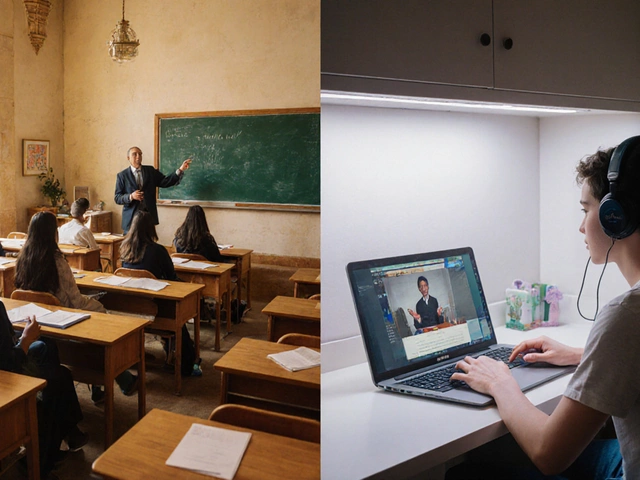
Dubai vs India Education: Which System Is Better for Students?
Compare Dubai's modern, international schools with India's massive, diverse system. Learn about curriculum, cost, quality and global pathways to decide which education fits your goals.
When you talk about Indian schooling, the structured, exam-driven education system that begins in primary grades and shapes career paths long before college. Also known as school education in India, it’s not just about textbooks—it’s about survival in a system where performance at 10th and 12th grade can decide your future. Unlike many countries where school is a place to explore, Indian schooling is a pipeline: early pressure, standardized boards, and a heavy focus on competitive exams like JEE and NEET start as early as class 5.
At the center of this system is the CBSE board, the most widely used school board in India and globally, with over 20 million students. Also known as Central Board of Secondary Education, it’s the default choice for families aiming for engineering, medicine, or government jobs because its syllabus lines up directly with national entrance tests. But CBSE isn’t the only player—ICSE, state boards, and IB schools exist, each with different pacing, depth, and expectations. Yet, CBSE dominates because it’s predictable, affordable, and aligned with what the system rewards.
Indian schooling doesn’t just teach math and science—it trains students to handle pressure. The competitive exams, high-stakes tests like JEE Advanced, NEET, and UPSC that determine access to top colleges and careers. Also known as entrance exams in India, they’re not just tests of knowledge—they’re endurance challenges. A student preparing for JEE might spend 12 hours a day for years, sacrificing hobbies, sleep, and sometimes mental health. And it’s not just the student: parents, tutors, and coaching centers all become part of the machine. The system works, but it’s brutal.
What gets overlooked is how much of Indian schooling is about navigation, not just learning. Choosing the right board, finding the right coaching, managing time between school and prep—all of it is part of the curriculum no one talks about. Parents often don’t know the difference between CBSE and ICSE until their child hits 8th grade. Students don’t realize how much their 10th-grade marks matter until they’re applying for 11th-grade streams. The system doesn’t hand you a map—you have to find it yourself.
And yet, there’s a reason this system survives. It’s the only path that gives a child from a small town a real shot at a top engineering college or a government job. It’s unfair, yes—but it’s also the only ladder many have. The posts below break down what actually works: which board gives you the edge, how to survive the pressure, why some degrees don’t help with exams, and what separates those who make it from those who burn out. You won’t find fluff here. Just real talk about what Indian schooling demands—and how to meet it without losing yourself.
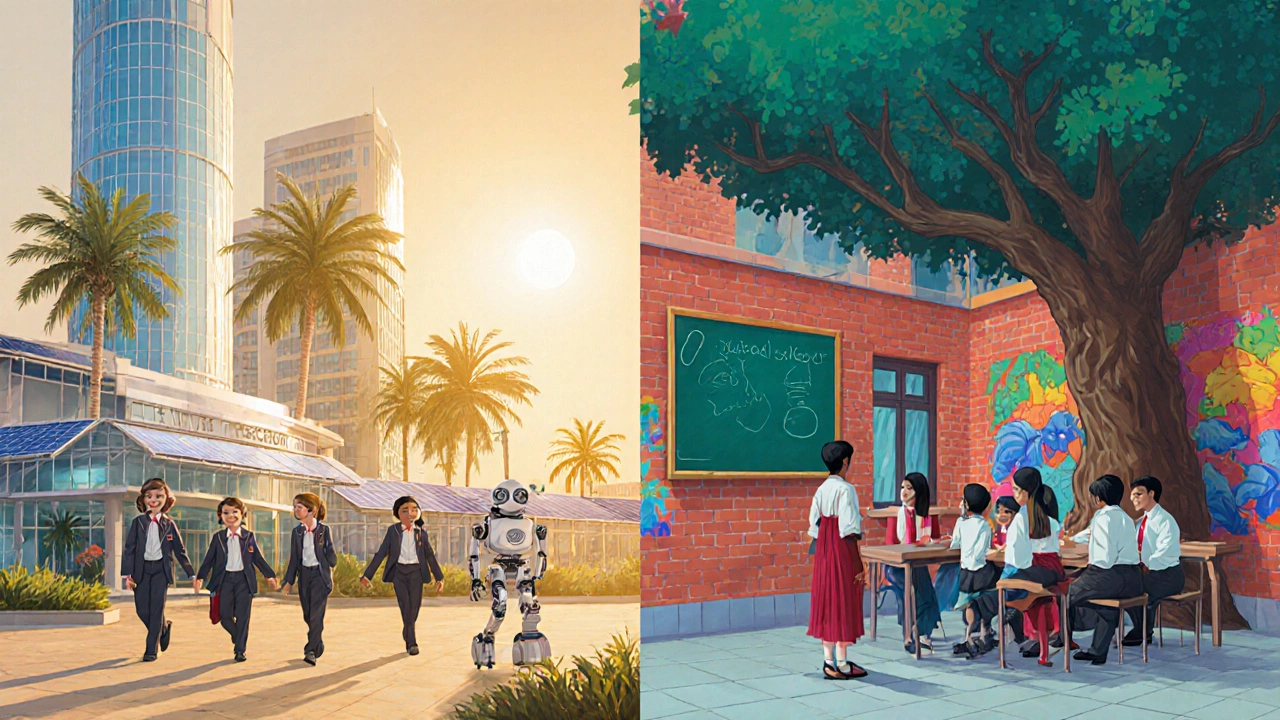
Compare Dubai's modern, international schools with India's massive, diverse system. Learn about curriculum, cost, quality and global pathways to decide which education fits your goals.