


Self-Taught Developer Path Finder
Not sure where to start? Answer these questions to find your optimal learning strategy and recommended first language.
1. What do you want to build?
2. Resources Available
Your Recommended Strategy
Personalized Plan
First Language Recommendation
Estimated Timeline to Job Ready
Learning Method
Key Focus Areas
💡 Pro Tip from the Article:
You stare at the blinking cursor. It’s 11 PM on a Tuesday. You’ve just spent three hours trying to make a button change color when clicked, and it still doesn’t work. The internet is full of conflicting advice: some say you need a university degree, others swear by $20 Udemy courses, and a few claim you can master Python in two weeks if you just grind hard enough.
The truth? Yes, you absolutely can learn coding on your own. But that simple "yes" hides a messy reality. Most people who try fail not because they lack intelligence, but because they lack structure. They bounce between five different languages, watch tutorials without building anything, and quit when the first real bug appears. If you want to be in the minority who actually makes it to a junior developer role, you need more than just free videos. You need a strategy.
The Myth of the "Natural Coder"
Let’s kill this one right now. There is no gene for JavaScript. You don’t need to be good at math (unless you’re doing machine learning or game physics). You don’t need a computer science background from Oxford or MIT. What you do need is patience and the ability to tolerate being confused for long periods.
Self-teaching works because programming is fundamentally about problem-solving and pattern recognition. These are skills anyone can build. The barrier isn’t talent; it’s consistency. According to data from Stack Overflow’s annual developer survey, nearly half of all professional developers have some form of self-taught experience. That’s not a niche group-that’s half the industry. They didn’t get there by magic. They got there by showing up every day, even when they wanted to throw their laptop out the window.
Picking Your First Language: Stop Overthinking
This is where most beginners waste months. They spend weeks debating whether to start with C++, Java, or JavaScript. Here’s the rule of thumb: pick the language based on what you want to build, not what sounds coolest.
- Want to build websites? Start with HTML, CSS, and JavaScript. This path gets you visual feedback fast, which keeps motivation high.
- Interested in data or AI? Go with Python. Its syntax reads like English, and libraries like Pandas and TensorFlow are industry standards.
- Want mobile apps? Choose Swift for iOS or Kotlin for Android. Or look at Flutter (Dart) if you want to target both platforms.
- Curious about how computers work? Try C or Rust. These are harder, but they teach you memory management and low-level logic.
Don’t switch languages every time you hit a difficult concept. Struggling through a complex topic in one language teaches you transferable concepts like loops, functions, and object-oriented programming. Once you know one language well, picking up a second one takes weeks, not years.
Building Your Curriculum Without a Syllabus
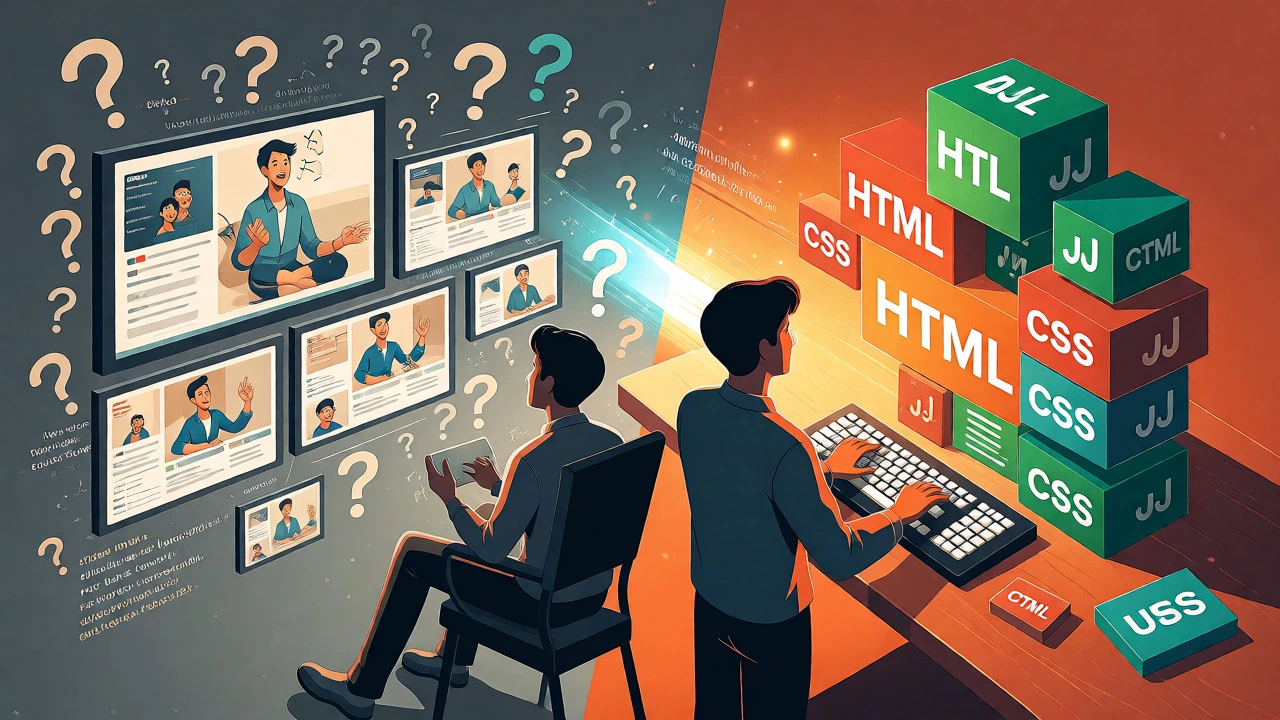
Schools give you a syllabus. When you’re self-taught, you are the school administrator, the teacher, and the student. If you don’t create a plan, you’ll end up in "tutorial hell"-watching endless YouTube videos without ever writing original code.
Here’s a proven framework for structuring your learning:
- Foundations (Weeks 1-4): Variables, data types, control flow (if/else, loops), and functions. Do not move on until you can write these from memory.
- Data Structures & Algorithms (Weeks 5-8): Arrays, lists, dictionaries, basic sorting. You don’t need to memorize Big O notation yet, but understand why searching a list is slower than looking something up in a dictionary.
- The Toolbelt (Weeks 9-10): Git for version control, the command line, and an IDE like VS Code. Learn how to commit changes and push them to GitHub. This is non-negotiable for getting hired.
- Project Phase (Ongoing): Build three projects. One small, one medium, one large. For example: a To-Do app, a weather dashboard using an API, and a personal portfolio site.
Use free resources like freeCodeCamp or The Odin Project. They offer structured paths that mimic bootcamps. Supplement them with specific documentation when you get stuck. Reading official docs is a skill in itself-it’s faster than waiting for someone to answer your question on Reddit.
| Learning Method | Cost | Time to Job Ready | Best For | Risk Factor |
|---|---|---|---|---|
| Free Online Courses | $0 - $50/month | 6 - 12 months | Disciplined learners with spare time | High dropout rate due to lack of accountability |
| Paid Bootcamps | $5,000 - $20,000 | 3 - 6 months | Career switchers needing speed and support | Debt risk; quality varies wildly |
| University Degree | $20,000 - $100,000+ | 3 - 4 years | Long-term career depth and networking | Opportunity cost of time away from workforce |
| Mentorship Programs | $100 - $500/month | Variable (often faster) | People who need personalized feedback | Finding a good mentor can be difficult |
The Importance of Building Things (Not Just Watching)
You cannot learn to swim by watching Olympic divers. Same goes for coding. You must write code. And not just copy-pasting from tutorials. You need to break things.
Start with "clone" projects. Look at a simple website like Twitter or Netflix. Try to rebuild just the front-end layout using HTML and CSS. Then add interactivity with JavaScript. Don’t worry about making it perfect. Worry about making it work. When you get stuck, resist the urge to immediately Google the solution. Spend 15 minutes debugging on your own. That struggle is where the actual learning happens.
Once you’re comfortable, build something unique to you. Maybe you’re into football? Build a tracker for your local league stats. Into cooking? Create a recipe scaler. Personal projects show employers that you can take an idea and turn it into a working product. That’s what they hire for.
Overcoming the Imposter Syndrome
About six months in, you’ll feel like a fraud. You’ll see other self-taught devs on LinkedIn posting about their "easy" job offers, while you’re still struggling with asynchronous JavaScript. This is normal.
Imposter syndrome hits everyone, including senior engineers with ten years of experience. The difference is that experienced devs have learned to ignore it. They know that feeling "stupid" is just the sensation of learning something new. Keep a log of what you’ve learned. Write down every bug you fixed. When you doubt yourself, read that log. It proves you’re moving forward, even if it feels slow.
Also, join communities. Discord servers, Reddit threads, or local meetups in Birmingham (or wherever you are). Talking to other coders helps you realize that everyone is figuring it out as they go. You aren’t alone in the confusion.
When Self-Teaching Isn’t Enough
Self-teaching has limits. If you find yourself unable to stick to a schedule, or if you keep quitting after two weeks, you might need external structure. That’s okay. It doesn’t mean you failed; it means you need a different tool.
Consider a part-time online course with live instructors. Platforms like Coursera or edX offer university-backed certificates. Or look for a local coding club. Sometimes, just having a weekly meetup forces you to stay accountable. The goal isn’t to avoid self-study; it’s to use whatever support system keeps you consistent.
Another sign you need help is if you’re stuck on a technical concept for more than a week despite multiple attempts. At that point, hiring a tutor for a single hour on a platform like Superprof can save you twenty hours of frustration. Think of it as buying back your time.
Landing Your First Job Without a Degree
So, you’ve built projects. You know Git. You can explain what a REST API is. Now what?
Your portfolio is your resume. Make sure your GitHub profile looks active. Green squares on the contribution graph matter less than having clean, commented code in your repositories. Write README files for each project explaining what it does, how to run it, and what tech stack you used.
Apply widely. Don’t just apply to "Junior Developer" roles. Look for titles like "Web Developer," "Frontend Engineer," or even "Technical Support Specialist" if you need a foot in the door. Many companies care more about your ability to solve problems than your diploma. Prepare for technical interviews by practicing common algorithms on LeetCode or HackerRank, but focus heavily on explaining your thought process. Interviewers want to see how you think, not just if you know the answer.
Networking is underrated. Attend tech events. Talk to recruiters on LinkedIn. Send polite messages asking for advice, not jobs. People love helping those who are eager and respectful. In the UK tech scene, especially outside London, many hires come through referrals rather than cold applications.
How long does it take to learn coding on my own?
It typically takes 6 to 12 months of consistent study (15-20 hours per week) to become job-ready for a junior role. If you treat it like a full-time job, you could shorten this to 3-4 months. However, mastery is a lifelong process, so view this timeline as reaching a baseline competency.
Is Python better than JavaScript for beginners?
Both are excellent choices. Python has simpler syntax and is great for data science, automation, and backend development. JavaScript is essential for web development and allows you to see results instantly in the browser. Choose Python if you prefer logical clarity and data; choose JavaScript if you want to build interactive websites quickly.
Do I need a computer science degree to get a coding job?
No, many tech companies no longer require degrees. They prioritize practical skills, portfolios, and problem-solving abilities. However, a degree can sometimes help bypass automated HR filters or provide deeper theoretical knowledge. A strong portfolio often outweighs the lack of a degree for entry-level positions.
What are the biggest mistakes self-taught coders make?
The top mistakes include staying in "tutorial hell" (passively watching videos without coding), switching languages too frequently, neglecting soft skills like communication, and failing to build a visible portfolio. Also, ignoring version control (Git) early on is a major hurdle for collaboration later.
Can I learn coding while working a full-time job?
Yes, many successful developers started this way. It requires strict discipline. Dedicate specific blocks of time (e.g., evenings or weekends) and protect them. Progress may be slower than full-time students, but the diversity of experience gained from another job can be a unique asset in your career narrative.