Traditional vs Distance Education: Key Differences Explained
Explore how traditional and distance education differ in delivery, interaction, cost, technology, and accreditation, and learn how to choose the best fit for your goals.
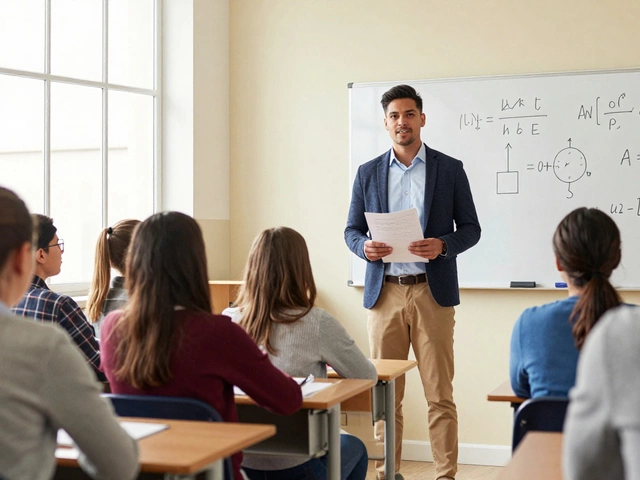
When you think of face-to-face learning, a direct, real-time educational experience where students and teachers interact physically in a classroom. Also known as in-person education, it’s the backbone of India’s school and college system, even as online courses surge in popularity. It’s not just about sitting in a room—it’s about reading body language, asking questions on the spot, getting immediate feedback, and building relationships that stick. For students preparing for JEE, NEET, or UPSC, this kind of learning isn’t optional—it’s essential.
Classroom learning, a structured form of face-to-face education where teachers guide groups through curriculum in real time works because it forces discipline. You can’t pause a lecture to scroll through your phone. You can’t mute your teacher when the topic gets hard. That pressure? It builds focus. And in India, where competition for top colleges is fierce, that focus makes the difference between passing and excelling. Schools like those under CBSE and ICSE still rely on this model because it delivers results—especially in subjects like math, physics, and biology, where understanding comes from watching a problem be solved live.
Even in cities with high-speed internet, traditional education, the long-standing system of physical classrooms, printed books, and teacher-led instruction remains the most trusted path. Why? Because it’s human. A teacher notices when a student’s eyes glaze over. A peer’s question sparks a discussion no video can replicate. A handwritten note passed during class? That’s not distraction—it’s connection. And for parents in small towns, where digital access is spotty, face-to-face learning is the only reliable option.
Some say online learning is the future. But in India, the future still walks into a classroom at 7 a.m. Whether it’s a student in Varanasi trying to crack IIT or a teacher in Bhopal coaching 50 kids for SSC, the rhythm of live instruction—questions answered, doubts cleared, encouragement given—is hard to replace. The posts below show you how face-to-face learning shapes exam prep, builds mental resilience, and even affects salary outcomes down the line. You’ll see why top coaching centers still fill up fast, why parents pay extra for in-person classes, and how this old-school method still wins when the stakes are highest.
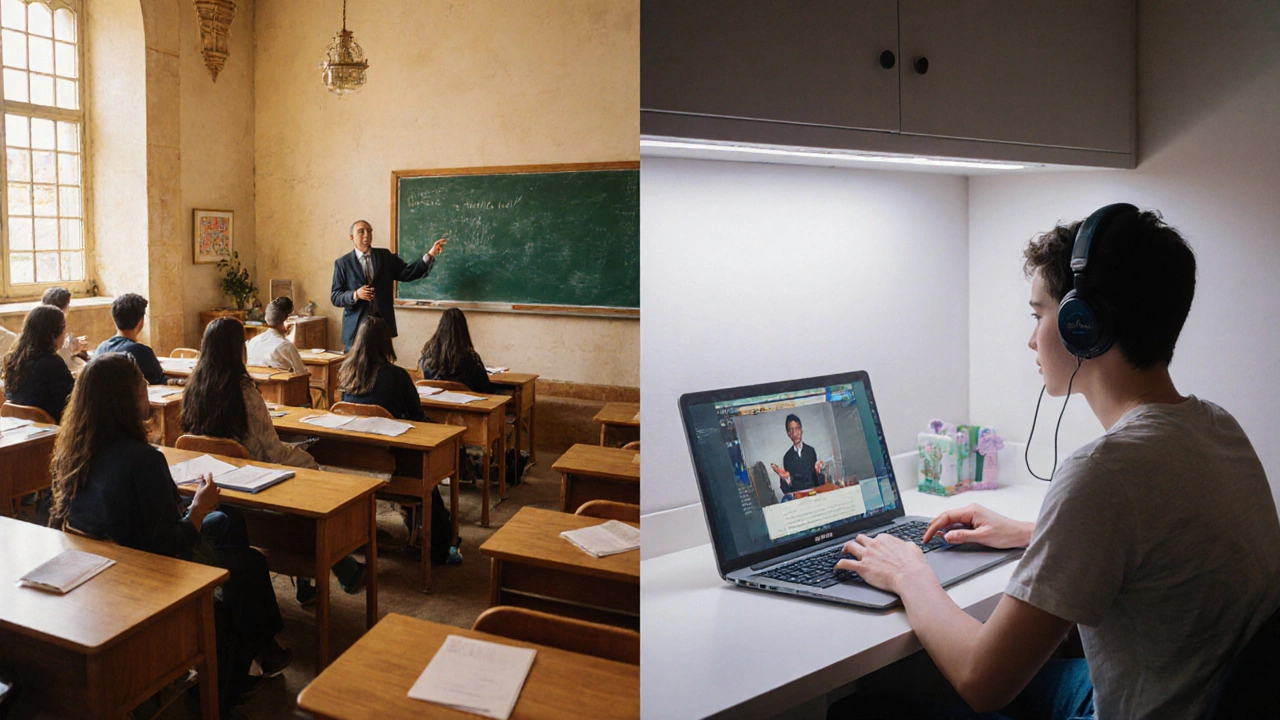
Explore how traditional and distance education differ in delivery, interaction, cost, technology, and accreditation, and learn how to choose the best fit for your goals.