

Global Exam Difficulty Analyzer
Select an exam to view its specific difficulty profile and metrics.
Exam Profile Hidden
Choose an exam from the list on the left to reveal its difficulty statistics.
There is no single answer to the question, "Which is the toughest exam?" Difficulty is subjective. It depends on your background, your country, and what you value most. For some, it is the sheer volume of syllabus. For others, it is the heart-stopping pressure of a single day that decides your career for the next forty years.
In 2026, millions of students around the world sit for high-stakes tests. Some have acceptance rates lower than top Ivy League universities. Others require years of specialized coaching. This article breaks down the most notoriously difficult exams globally, comparing their formats, pass rates, and the specific skills they test.
The Indian Civil Services Examination (UPSC CSE)
UPSC Civil Services Examination is
the recruitment test for the Indian Administrative Service (IAS) and other central government services in India.
Also known as UPSC CSE, it is widely regarded by many educators and candidates as the most comprehensive exam in the world due to its three-stage process spanning an entire year.
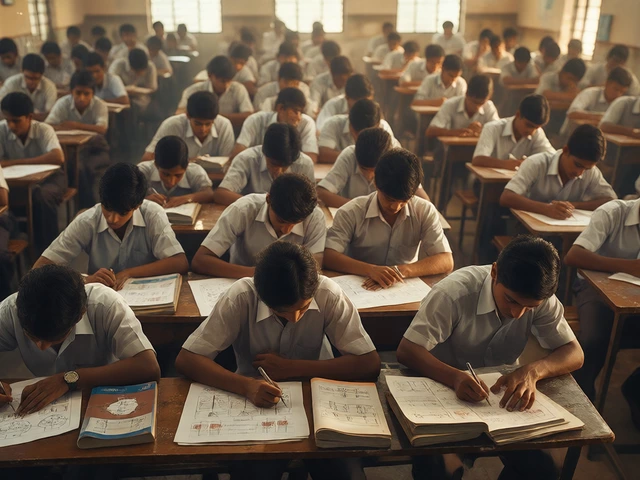
If you are looking for breadth and endurance, the Union Public Service Commission (UPSC) Civil Services Examination in India often takes the crown. It is not just one test; it is a marathon consisting of three stages: Preliminary, Mains, and Personality Test (Interview).
The syllabus is famously undefined. Candidates must read everything from ancient history and international relations to basic science and current affairs. The Preliminary stage alone filters out over 95% of applicants. Only about 1,000 to 1,100 vacancies exist for hundreds of thousands of aspirants. The success rate hovers around 0.2% to 0.4%, making it statistically harder to clear than getting into Harvard or Oxford.
What makes the UPSC CSE uniquely tough is the mental stamina required. You spend months preparing for the Mains, which involves writing nine essays and subject-specific papers. Then comes the interview, where panelists probe your character, ethics, and decision-making abilities under pressure. It tests general knowledge, analytical depth, and leadership potential simultaneously.
The Chinese College Entrance Examination (Gaokao)
Gaokao is
the national higher education entrance examination in mainland China.
Also known as National College Entrance Examination, it determines university admission for millions of students and is characterized by intense memorization and extreme time pressure.
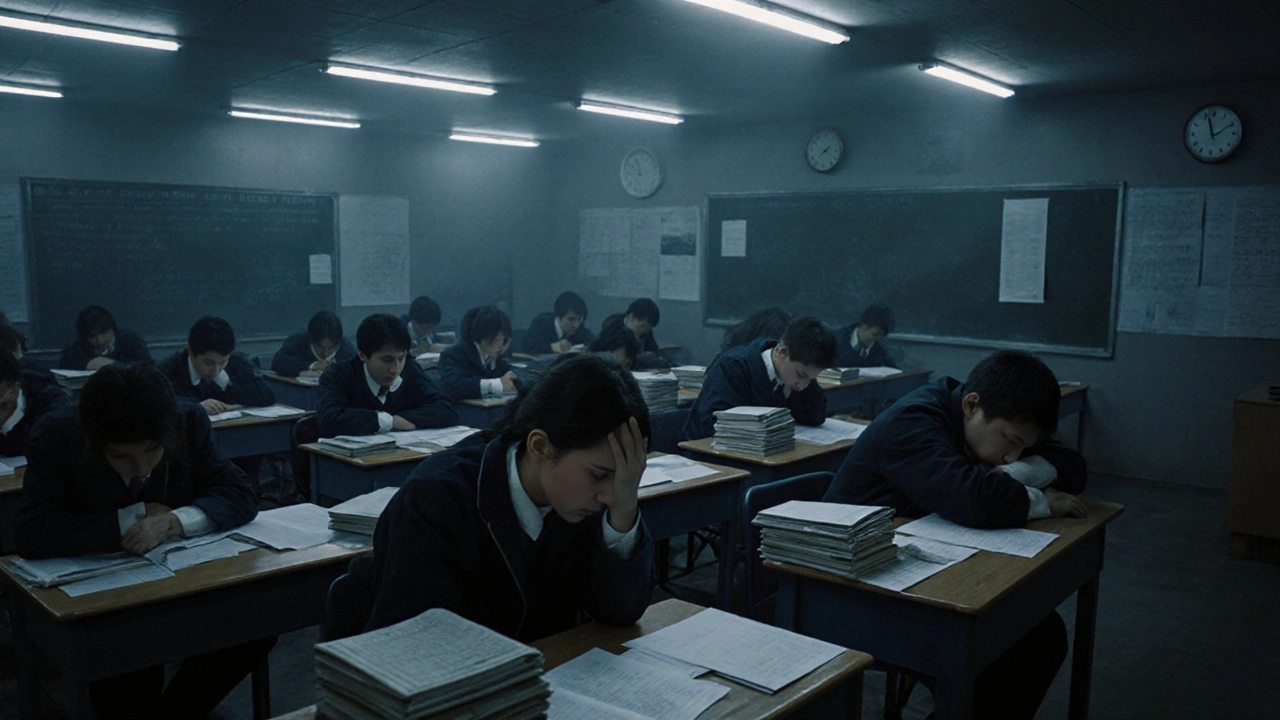
While the UPSC tests breadth, the Gaokao tests intensity and precision. Held annually in June, this two-to-three-day exam dictates the future of over ten million students. In China, the cultural weight of this exam is immense. Families often move cities to ensure better preparation conditions, and cafes go silent during the exam hours out of respect.
The difficulty lies in the competition density. Top universities like Peking University and Tsinghua University accept less than 0.1% of test-takers nationally. The subjects typically include Chinese, Mathematics, Foreign Languages, and either Sciences or Humanities. The questions are designed to be tricky, requiring not just knowledge but rapid problem-solving skills under strict time limits.
A single point can change your ranking by thousands of places. Unlike Western systems that look at holistic profiles, the Gaokao score is almost the sole determinant for university placement. This creates a high-pressure environment where students often study sixteen hours a day for years leading up to the test.
The Indian Institutes of Technology Joint Entrance Examination (IIT JEE)
IIT JEE Advanced is
the second stage of the entrance examination for admission to undergraduate engineering programs at the Indian Institutes of Technology.
Also known as JEE Advanced, it is renowned for its complex physics, chemistry, and mathematics problems that require deep conceptual understanding rather than rote learning.
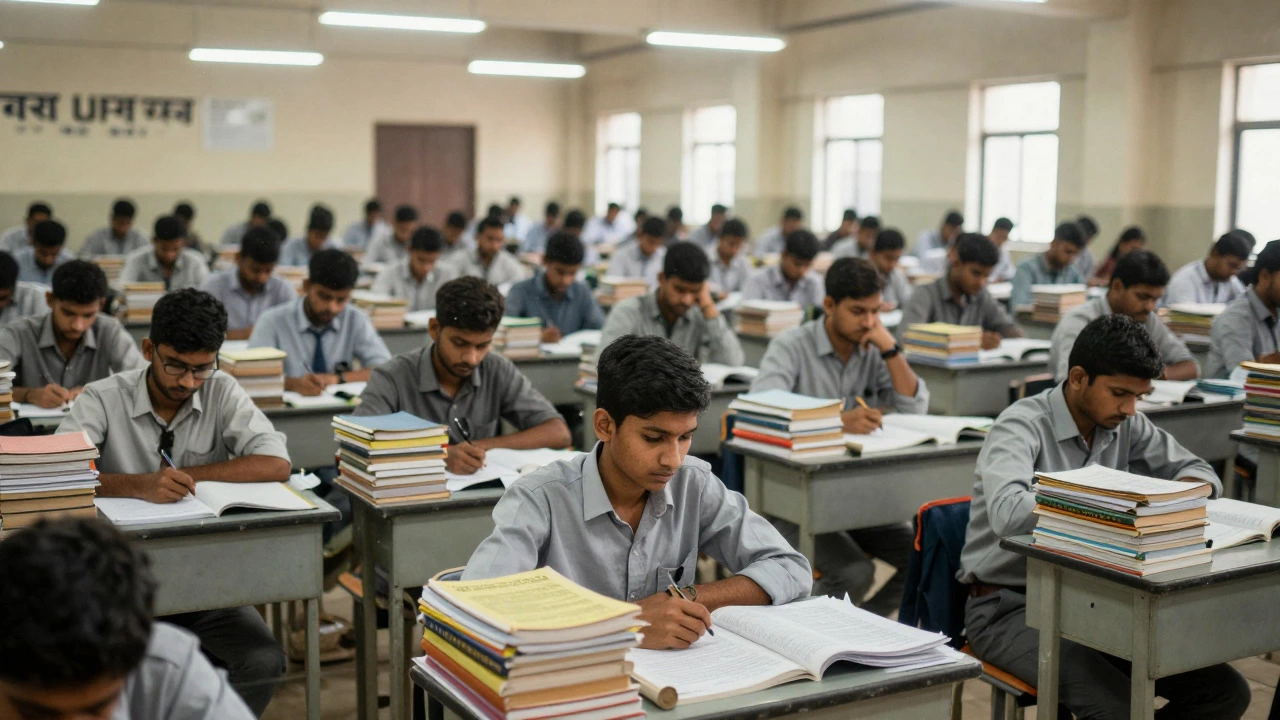
For STEM enthusiasts, the Joint Entrance Examination (JEE) Advanced is the nightmare scenario. It serves as the gateway to the prestigious Indian Institutes of Technology (IITs). To even qualify for JEE Advanced, you must first clear JEE Main, which acts as a massive filter.
The JEE Advanced paper is notorious for its multi-concept questions. A single physics problem might require integrating calculus, thermodynamics, and mechanics. There is no straightforward formula application. You need lateral thinking and deep conceptual clarity. The negative marking scheme adds another layer of psychological stress, punishing guesswork heavily.
Only the top 250,000 scorers from JEE Main get a chance to sit for JEE Advanced. From there, only about 17,000 seats are available across all IITs. The cutoff marks fluctuate wildly each year based on difficulty, but the percentile requirement remains brutally high. It is considered one of the hardest academic tests in the world because it demands mastery of high school-level concepts applied at a graduate level.

The United States Medical Licensing Examination (USMLE)
USMLE Step 1 is
the first part of the licensing examination for physicians in the United States.
Also known as United States Medical Licensing Examination, it covers basic sciences and is known for its vast scope and clinical reasoning requirements.
In the medical field, the USMLE stands tall. Specifically, Step 1 covers basic sciences like anatomy, biochemistry, and pharmacology. Since shifting to a Pass/Fail system in 2022, the pressure has shifted slightly toward Step 2 CK (Clinical Knowledge), but the volume of material remains staggering.
Medical students spend two full years studying for these exams. The content is dense, detailed, and critical for patient safety. The questions are vignette-based, presenting complex patient scenarios where you must diagnose and treat using limited information. It requires not just memory, but the ability to apply knowledge in ambiguous, high-stakes clinical situations.
Failure rates vary by institution, but historically, around 10-15% of first-time takers fail Step 1. Retaking the exam carries significant stigma and can jeopardize residency prospects. The emotional toll is heavy, with burnout being a common side effect among medical residents.
The French Agrégation
L'Agrégation is
a highly selective competitive examination for secondary school teachers and professors in France.
Also known as Agrégation de l'enseignement secondaire, it is considered the pinnacle of intellectual achievement in the French education system.
Not all tough exams are multiple-choice. The French Agrégation is a written and oral examination for teaching positions in lycées (high schools) and universities. It is deeply rooted in the tradition of the École Normale Supérieure (ENS). Candidates compete for a very small number of posts, often fewer than 100 per subject nationwide.
The format includes rigorous written compositions and oral defenses. Candidates must demonstrate exceptional mastery of their discipline, whether it is philosophy, mathematics, or literature. The oral component involves explaining complex concepts clearly and defending arguments against expert judges. It values intellectual elegance and depth over speed.
Success in the Agrégation grants significant prestige and higher salaries within the French civil service. It is seen as a marker of elite intellectual capability. The preparation often takes years, involving intensive seminars and mentorship from former agrégés.

Comparison of Exam Difficulties
| Exam Name | Country | Primary Focus | Selection Rate | Key Challenge |
|---|---|---|---|---|
| UPSC CSE | India | General Knowledge & Ethics | < 0.4% | Breadth of Syllabus |
| Gaokao | China | Academic Proficiency | < 0.1% (Top Tier) | Volume & Pressure |
| IIT JEE Advanced | India | STEM Problem Solving | < 1% | Conceptual Depth |
| USMLE Step 1 | USA | Medical Basic Sciences | ~85-90% Pass Rate | Information Density |
| L'Agrégation | France | Teaching & Theory | Varies by Subject | Intellectual Rigor |
Factors Defining Exam Difficulty
When evaluating which exam is the toughest, consider these dimensions:
- Competition Ratio: How many people apply versus how many seats are available? High ratios indicate fierce competition.
- Syllabus Scope: Does the exam cover a narrow set of advanced topics or a broad range of general knowledge?
- Preparation Time: How many years of dedicated study are typically required?
- Psychological Pressure: Is the outcome binary (pass/fail) with life-altering consequences?
- Evaluation Method: Is it objective (multiple choice) or subjective (essays/oral)? Subjective exams add unpredictability.
Conclusion on Toughness
There is no universal champion. If you value analytical depth in science, the IIT JEE Advanced is arguably the hardest. If you prefer general knowledge and administrative aptitude, the UPSC CSE presents a greater challenge due to its endless syllabus. For those seeking pure academic rigor under extreme social pressure, the Gaokao is unmatched. Each exam reflects the educational priorities and cultural values of its region.
Is the UPSC CSE harder than the IIT JEE?
It depends on your strengths. IIT JEE requires deep specialization in Physics, Chemistry, and Math. UPSC CSE requires broad knowledge across history, geography, polity, and economics. Statistically, UPSC has a lower selection rate, but JEE questions are technically more complex.
What is the pass rate for the Gaokao?
Most students pass enough to enter some form of higher education. However, the pass rate for top-tier universities like Tsinghua or Peking University is less than 0.1%. The real difficulty lies in securing a seat in a prestigious institution.
How long does it take to prepare for the UPSC CSE?
Most successful candidates spend 1 to 3 years preparing full-time. The process involves multiple attempts for many aspirants, extending the timeline significantly.
Is the USMLE harder than the Gaokao?
They test different skills. Gaokao is about speed and accuracy in core academics. USMLE is about applying vast medical knowledge to clinical scenarios. USMLE has a higher pass rate, but the volume of study is enormous.
Which exam has the highest stakes?
In countries like India and China, these exams determine social mobility and career trajectories for decades. The Gaokao and UPSC CSE are often described as having life-changing stakes due to limited opportunities in their respective sectors.