People ask if Python is hard to learn like it’s a math exam you can’t pass. It’s not. You don’t need a computer science degree. You don’t need to memorize syntax like flashcards. You just need to start typing.
Python isn’t magic - it’s just clear
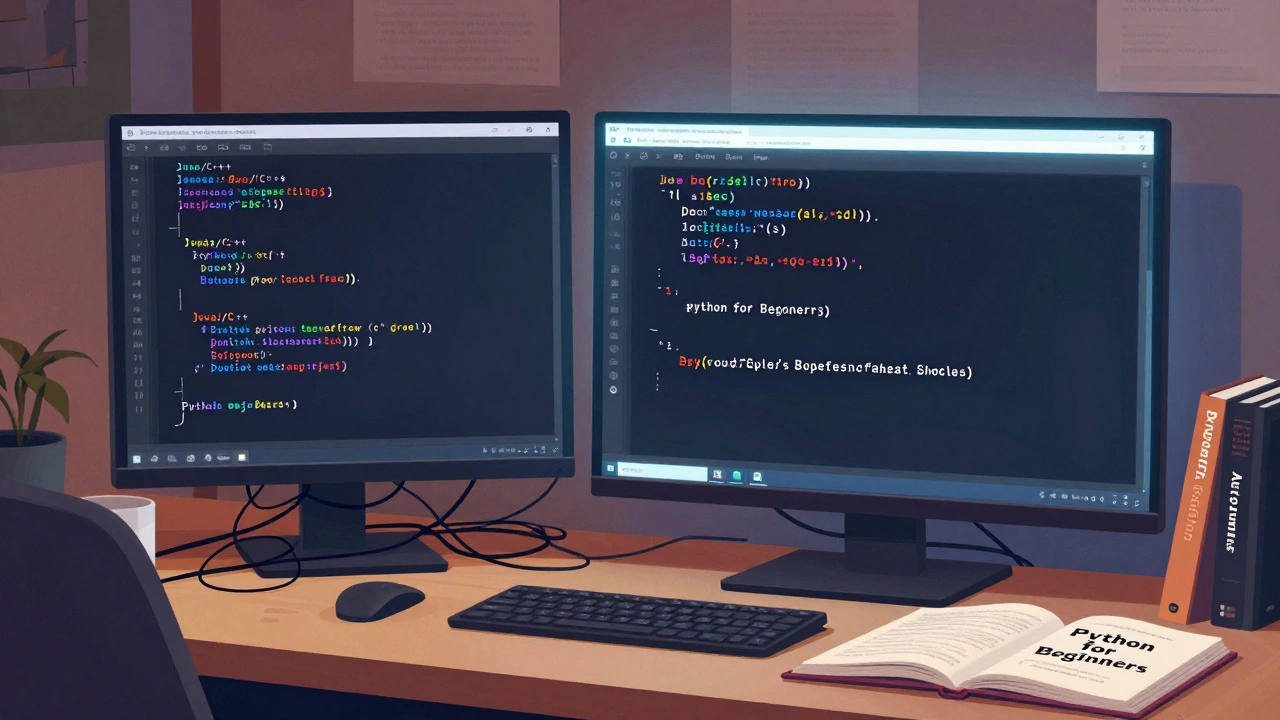
Look at this line of Python code: print("Hello, world!"). That’s it. No semicolons. No curly braces. No complex declarations. Compare that to Java or C++, where you’d need five lines just to print the same thing. Python was built for humans, not machines. It reads like plain English. That’s why schools, startups, and even non-tech departments use it.
When I first tried coding, I got stuck on Java’s public static void main(String[] args) nonsense. Python doesn’t make you jump through hoops. It says what it means. If you want to add two numbers, you write 5 + 3. Not int result = Integer.sum(5, 3);. That simplicity cuts the learning curve in half.
What makes Python feel easy - and where people still get stuck
Most beginners think Python is easy because it’s simple. That’s true - but only up to a point. The real reason people succeed is because Python gives you fast wins. You can write a script that renames 100 files in five minutes. You can scrape weather data from a website in under 20 lines. You can build a simple calculator that actually works on your first try.
Those wins build confidence. And confidence keeps you going.
But here’s where most people hit a wall: indentation. Python uses spaces to define blocks of code. No brackets. No {}. Just four spaces. If you mix tabs and spaces, or forget to align your code properly, Python throws an error. And it doesn’t say "you missed a bracket." It says "IndentationError: unexpected indent." That confuses the hell out of new coders.
It’s not hard - it’s just different. Once you get used to it, you’ll appreciate it. Clean indentation makes code readable. Your future self will thank you.
You don’t need to know math to learn Python
There’s a myth that you need to be good at math to code. That’s not true for Python. You don’t need calculus to automate your spreadsheet. You don’t need trigonometry to build a to-do list app. You need logic - and that’s something anyone can learn.
Most beginner Python projects involve:
- Reading and writing files (like CSVs or text)
- Automating repetitive tasks (renaming, copying, sending emails)
- Working with data from websites (web scraping with BeautifulSoup)
- Building simple games (like tic-tac-toe or number guessers)
These projects use basic arithmetic and conditions - things you learned in school. No advanced formulas. No algorithms you can’t explain out loud.
One student I worked with was a 52-year-old librarian. She wanted to organize her book collection digitally. She learned Python in six weeks. She didn’t know what a loop was before. Now she has a script that sorts books by genre, author, and publication year. No math degree. Just curiosity and patience.
The real challenge isn’t syntax - it’s thinking like a programmer
The hardest part of learning Python isn’t remembering how to write a for-loop. It’s learning to break problems down.
Let’s say you want to count how many times a word appears in a document. The steps aren’t:
- Open Python
- Type code
- Get answer
They’re:
- Read the file
- Split the text into words
- Loop through each word
- Compare it to your target word
- Count matches
- Print the result
That’s programming. It’s not about the language. It’s about thinking step by step. And that skill takes practice - not genius.
Most people quit because they expect to write a full app on day one. That’s like expecting to play Beethoven after two piano lessons. You start small. You fix one thing. Then another. Slowly, you build up.
What tools you actually need to start
You don’t need expensive software. You don’t need a powerful laptop. You don’t even need to install anything if you don’t want to.
Here’s what you actually need:
- A free code editor: Thonny (perfect for beginners) or Visual Studio Code
- Python itself: Download from python.org - it’s free and takes two minutes
- A free online platform: Replit or Google Colab if you want to code in your browser
That’s it. No subscriptions. No licenses. No credit card required.
Thonny is especially good for beginners. It shows you exactly what your code is doing line by line. You can see variables change as you run your script. It’s like having a tutor inside your editor.
What to avoid when learning Python
There are traps everywhere. Here are the three biggest ones:
- Watching too many tutorials - You’ll feel like you’re learning, but you’re not coding. Watch one, then code. Repeat.
- Trying to learn everything at once - Don’t jump into Django, Flask, machine learning, and APIs on day one. Start with variables, loops, and functions.
- Comparing yourself to others - Someone online says they built an AI in a week. They’ve been coding for five years. You’re not behind. You’re just starting.
One person told me they spent three months watching YouTube videos on Python. They never wrote a single line of code. They still say, "I don’t get it." That’s not Python’s fault. That’s the method.
How long does it really take to learn Python?
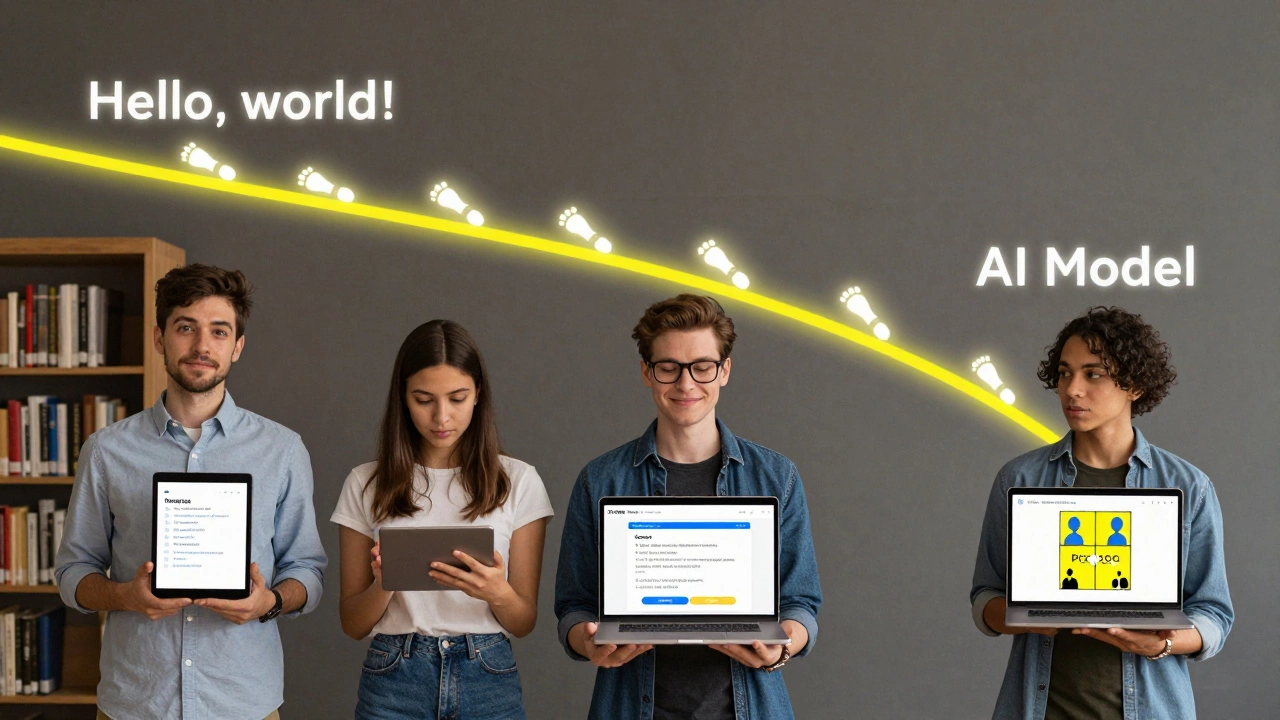
If you spend 30 minutes a day, five days a week:
- After 2 weeks: You can write a script that adds up your weekly expenses
- After 4 weeks: You can rename 50 files automatically
- After 8 weeks: You can scrape headlines from a news site and save them to a file
- After 12 weeks: You can build a simple web app that lets you log your mood daily
That’s not theory. That’s what real beginners have done. You don’t need to be a genius. You just need to show up.
Why Python is the best first language - and why it stays useful
Python isn’t just easy to start with. It’s powerful enough to keep you going. Companies like Google, Netflix, and NASA use it. So do data scientists, marketers, and even artists.
After you learn the basics, you can go in any direction:
- Data analysis - Use pandas to clean spreadsheets and find patterns
- Web development - Build sites with Flask or Django
- Automation - Make your computer do boring work for you
- AI and machine learning - Use libraries like scikit-learn to predict trends
You don’t have to pick one path right away. Start with automation. Then try data. Then maybe AI. Python lets you explore without restarting from scratch.
Final thought: It’s not about being smart - it’s about being stubborn
Python isn’t hard because it’s complex. It’s hard because you’ll get stuck. You’ll see an error you don’t understand. You’ll write code that doesn’t work. You’ll feel like giving up.
That’s normal.
The people who learn Python aren’t the smartest. They’re the ones who keep trying. They Google the error. They ask for help. They try again. They don’t quit because they didn’t get it on the first try.
If you can type, you can learn Python. You don’t need to be a prodigy. You just need to start - and not stop.
Do I need to know math to learn Python?
No. Basic arithmetic and logic are enough for most beginner projects. You don’t need calculus, algebra, or statistics to automate files, read data from spreadsheets, or build a simple game. Math becomes relevant only if you go into data science or machine learning - and even then, you learn what you need as you go.
How long does it take to learn Python for a complete beginner?
You can write your first working script in under an hour. To feel confident doing basic automation tasks - like renaming files or pulling data from a website - most people need 4 to 8 weeks of consistent practice (30-60 minutes a day). Becoming comfortable enough to build small projects usually takes 3 to 6 months.
Is Python better than JavaScript for beginners?
For absolute beginners, Python is easier. Its syntax is cleaner and more readable. JavaScript is essential for web pages, but it has quirks - like type coercion and async behavior - that confuse new learners. Python lets you focus on problem-solving without wrestling with language oddities.
Can I learn Python without a computer?
You can learn the basics on a phone using apps like Pydroid 3 or Sololearn. But to really learn, you need to type code and run it. A cheap laptop or even a $30 Chromebook is enough. You don’t need a high-end machine. Just something that can run a browser and a simple code editor.
What’s the best free resource to learn Python?
The official Python tutorial at python.org is solid. For interactive learning, try freeCodeCamp’s Python course or the "Automate the Boring Stuff with Python" book (free online). If you prefer video, Corey Schafer’s YouTube channel is clear, calm, and practical. Pick one and stick with it.