

CBSE vs. American Curriculum Compatibility Quiz
Answer these questions honestly to see which educational philosophy might suit you best. There are no right or wrong answers, only different strengths.
1. How do you prefer to demonstrate your knowledge?
2. What is your attitude toward subject specialization?
3. How do you handle pressure?
4. What role do extracurriculars play in your life?
5. Where do you plan to pursue higher education?
Your Match
Match Score
Why This Fits You
Key Insight:
Based on Article Analysis
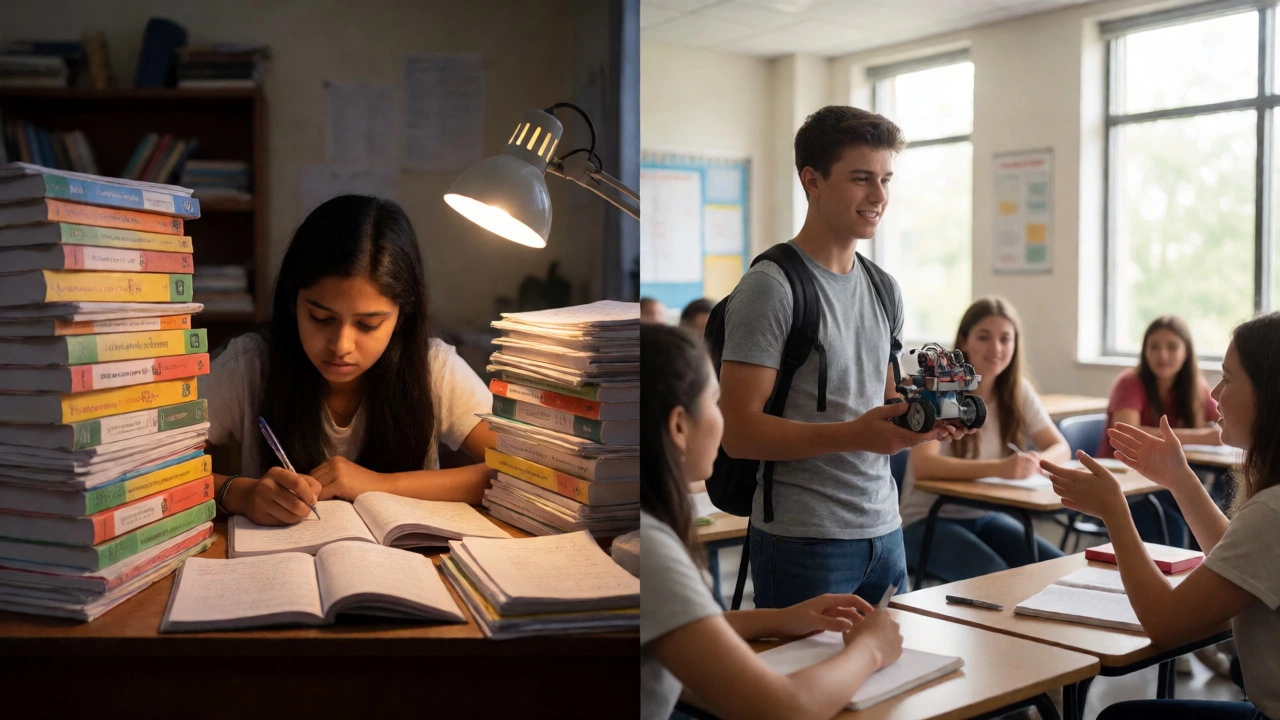
You’ve probably heard the horror stories. Your cousin in Delhi is pulling all-nighters for CBSE board exams, while your neighbor’s kid in Ohio seems to be having a blast building robots and debating climate change. It begs the question: Is one system actually harder than the other? The short answer is no, not really. But the long answer is where it gets interesting because "hard" means something completely different depending on which side of the ocean you’re standing on.
If you’re a parent weighing up schooling options or a student trying to figure out where you’ll thrive, comparing the Central Board of Secondary Education (CBSE) with the American K-12 system isn’t just about counting pages in textbooks. It’s about understanding two fundamentally different philosophies of learning. One prioritizes depth, memorization, and standardized testing at a young age. The other prioritizes breadth, critical thinking, and holistic development over twelve years. Let’s break down why neither is objectively "easier," but both present unique challenges that can trip students up if they aren’t prepared.
The Core Difference: Depth vs. Breadth
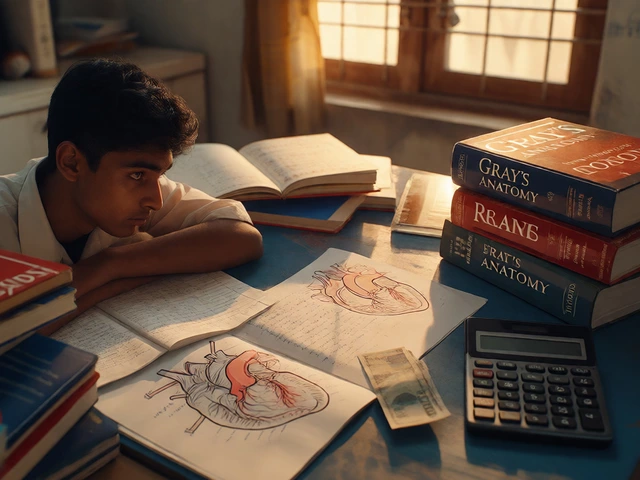
The biggest misconception people have is that CBSE is harder because the books are thicker. In reality, the difference lies in how information is processed. CBSE follows a structured, linear path. From Grade 6 onwards, you are expected to master specific concepts thoroughly before moving on. If you don’t understand Photosynthesis in Class 7, you will struggle in Class 9. The curriculum is rigid, defined by the National Council of Educational Research and Training (NCERT), and leaves little room for deviation.
American schools, governed by state standards rather than a single national board, operate differently. A high school student might take AP Biology while also studying World History and taking an elective in Graphic Design. The workload is spread across more subjects, but the depth in any single subject-unless you take Advanced Placement (AP) or International Baccalaureate (IB) courses-is often less intense than the core science and math streams in CBSE Class 10 or 12.
| Feature | CBSE (India) | American School (US) |
|---|---|---|
| Governance | National Board (Centralized) | State Boards / Districts (Decentralized) |
| Assessment Style | High-stakes final exams (Board Exams) | Continuous assessment (GPA, projects, quizzes) |
| Subject Choice | Limited (Stream-based: Science/Commerce/Arts) | Extensive (Electives + Core requirements) |
| Math Difficulty | Very High (Calculus & Algebra focus early) | Moderate (Varies by track: Regular vs. Honors/AP) |
| Extracurriculars | Often seen as secondary to academics | Integral part of grading and college apps |
Why Students Find CBSE "Harder"
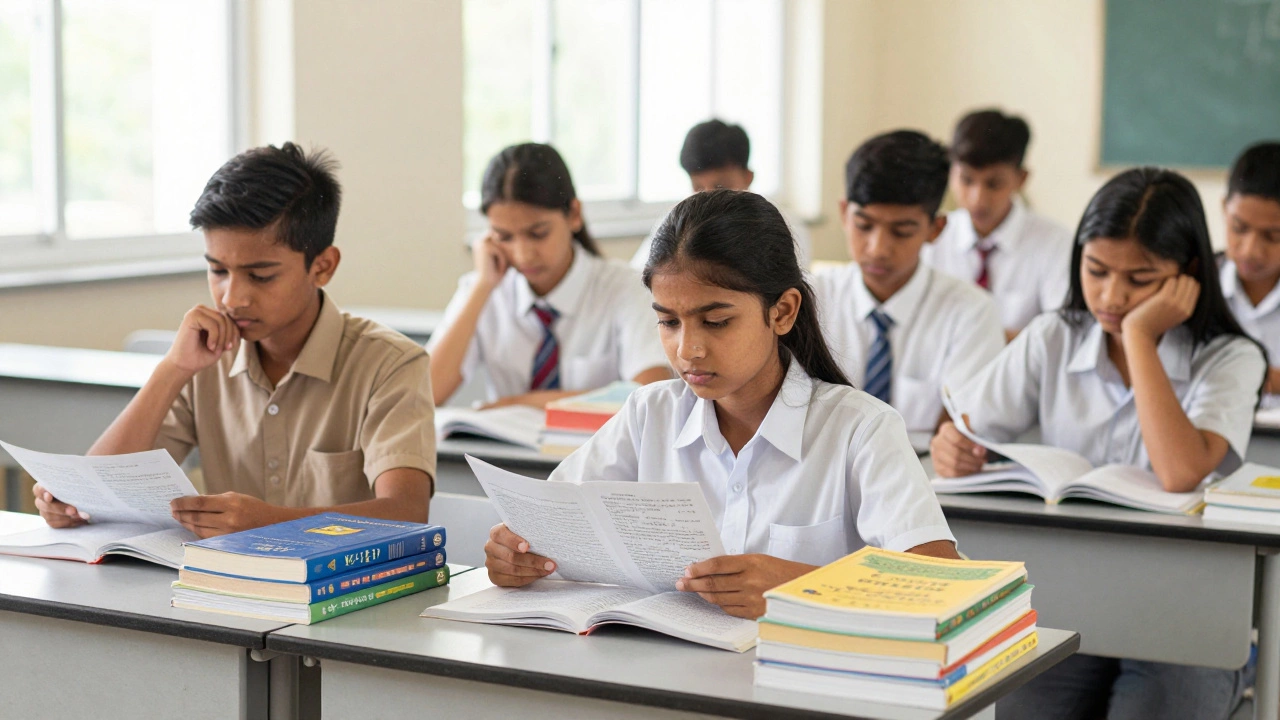
When Indian students move to the US, they often feel a sense of relief initially. The pressure cooker environment of CBSE Class 10 and 12 board exams is gone. There is no single day where your entire future hangs on a three-hour exam paper. However, this doesn’t mean CBSE is easy. It’s hard for different reasons.
- Voluminous Syllabus: The sheer amount of content you need to memorize is staggering. In subjects like Biology or History, you aren’t just asked "what happened," but you must reproduce exact definitions, dates, and processes from NCERT textbooks. If you miss a keyword, you lose marks.
- Early Specialization: By Class 11, you choose a stream. If you pick Science, you are locked into Physics, Chemistry, Math, and Biology. You cannot easily switch to Commerce later without significant catch-up work. This forces teenagers to make career-defining decisions at 15 or 16.
- Competition Intensity: CBSE isn’t just competing against your classmates; you are competing against millions of students nationwide. The normalization of marks and the ranking systems create a psychological pressure that is distinct from the relative grading often found in US schools.
For many, the "hardness" of CBSE is mental endurance. It requires sitting still, absorbing dense theoretical frameworks, and reproducing them accurately under time pressure. If you struggle with rote memorization or test anxiety, CBSE feels brutal.
Why American Schools Can Be Tougher Than They Look
Conversely, students who move from India to the US often underestimate the American system until they hit high school. While the daily homework load might seem lighter, the expectations shift dramatically in Grades 9 through 12.
In the US, grades determine your GPA (Grade Point Average), which is cumulative. A bad grade in freshman year stays on your record forever. This creates a different kind of stress: consistency. You can’t just cram for finals. You need to participate in class discussions, submit essays, complete group projects, and maintain attendance. For a student used to the quiet, note-taking culture of CBSE classrooms, speaking up in a debate club or leading a group project can be terrifyingly difficult.
Furthermore, top-tier American colleges look beyond grades. They want leadership roles, sports achievements, community service, and unique personal narratives. Balancing a 3.8 GPA with varsity soccer practice and volunteer hours is exhausting. It’s not about knowing the formula for integration; it’s about managing your time and personality effectively.
The Math and Science Gap
This is where the stereotype holds some truth. Generally speaking, the mathematical rigor in CBSE Class 10 and 12 exceeds that of standard American public school tracks. An average American high school graduate might stop at Pre-Calculus or Statistics. A CBSE student typically covers Calculus, Vectors, and 3D Geometry before turning 18.
However, context matters. If you compare CBSE to an American student taking AP Calculus BC or AP Physics C, the gap closes significantly. In fact, advanced American curricula often incorporate more applied problem-solving and coding integration (using Python or MATLAB) earlier than traditional CBSE methods, which lean heavily on manual calculation techniques.
So, is CBSE math harder? Yes, for the average student. No, if you compare it to the top 10% of American STEM-focused students. The CBSE approach builds strong computational speed and algebraic fluency. The American approach (especially in honors tracks) builds modeling skills and conceptual flexibility.
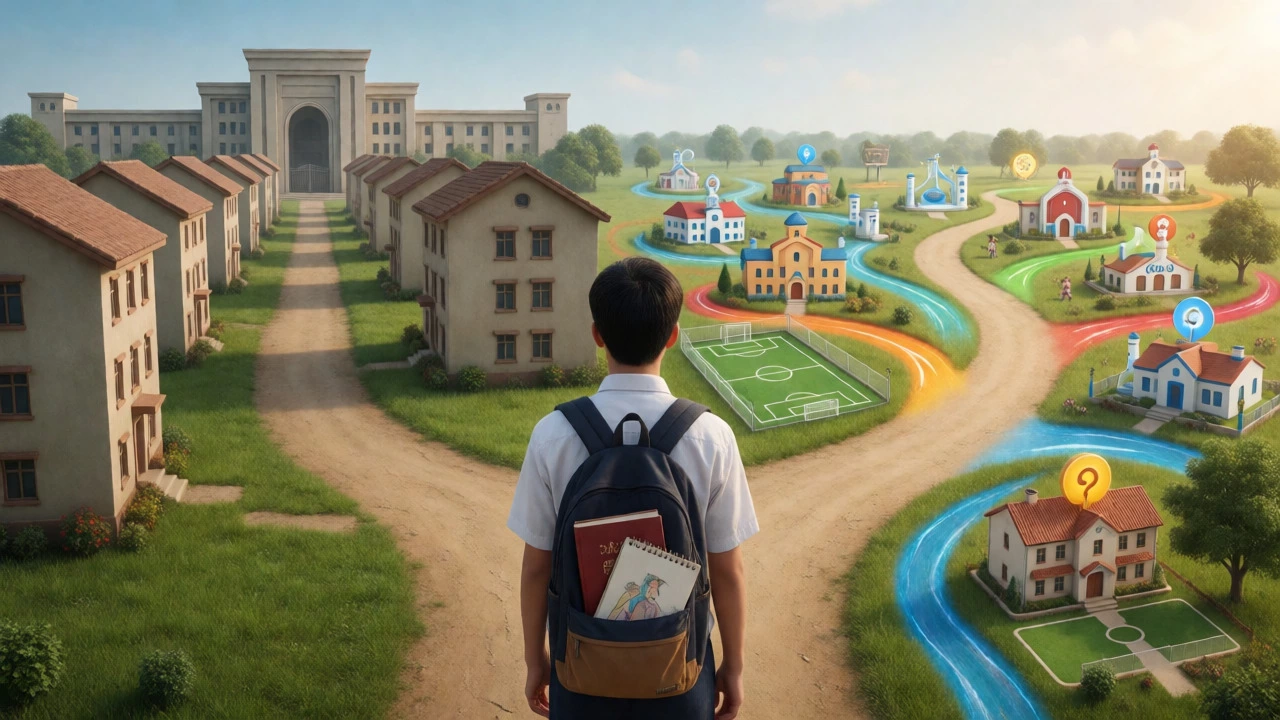
Transitioning Between Systems: What to Expect
If you are planning to switch between these systems, here is the reality check. Moving from CBSE to US schools is usually smoother academically, especially in STEM subjects. You will likely find the math easier and the science content familiar. The challenge will be English proficiency, essay writing styles, and social integration.
Moving from US schools to CBSE is much harder. You will face a steep learning curve in memorizing detailed facts, adapting to strict formatting rules in answers, and dealing with the sudden jump in mathematical complexity if you enter Classes 11 or 12 late. Many US-educated students struggle with the lack of flexibility in CBSE assessments.
Which System Suits You?
There is no winner. The right choice depends on your child’s personality and goals.
- Choose CBSE if: The student thrives in structured environments, enjoys deep diving into specific subjects, plans to pursue higher education in India (or competitive fields like Engineering/Medicine in India), and has good memory retention skills.
- Choose American Curriculum if: The student is creative, enjoys diverse subjects, prefers continuous assessment over one-off exams, plans to study abroad in Western universities, and needs flexibility to explore interests outside pure academics.
Remember, "harder" is subjective. A shy student might find the participation-heavy US classroom harder than the silent, listening-heavy CBSE lecture hall. A creative thinker might find the rigid CBSE answer keys suffocating compared to the open-ended prompts in US English classes. Don’t let fear dictate your choice. Look at the teaching methodology, the school’s support system, and the child’s natural strengths.
Is CBSE recognized internationally?
Yes, CBSE is widely recognized globally. Universities in the UK, Canada, Australia, and Europe accept CBSE results for undergraduate admissions. However, for US universities, CBSE scores alone are often insufficient; students typically need to submit SAT/ACT scores and demonstrate extracurricular involvement alongside their board results.
Which is better for engineering, CBSE or American curriculum?
If you plan to do engineering in India, CBSE is superior because it aligns perfectly with the JEE (Joint Entrance Examination) syllabus. If you plan to study engineering in the US, the American curriculum helps you build the portfolio and soft skills required for admission, though you may need to self-study advanced calculus to keep up with first-year university coursework.
Do American schools use textbooks like CBSE?
Rarely in the same way. While CBSE relies heavily on NCERT textbooks as the primary source of truth, American schools often use a mix of digital resources, articles, teacher-created materials, and supplementary texts. Critical analysis of multiple sources is encouraged rather than mastering a single textbook.
Is the CBSE syllabus changing in 2026?
The CBSE curriculum undergoes periodic revisions to align with the National Education Policy (NEP) 2020. Recent updates have focused on reducing rote learning, introducing competency-based questions, and integrating vocational training. Always check the latest official circulars from the CBSE website for the most current syllabus details for the academic year.
Can I switch from CBSE to IB in Class 11?
It is possible but challenging. The IB Diploma Programme is highly rigorous and requires strong research and writing skills. Students transitioning from CBSE often struggle with the Internal Assessments (IAs) and Extended Essay components, which require independent research capabilities not always emphasized in CBSE. Bridging courses or tutoring in academic writing is recommended.