



Exam Difficulty Comparison Calculator
How difficult are these global exams?
Enter hypothetical scores for China's Gaokao, India's UPSC, and IIT JEE Advanced to see how they compare to real-world passing thresholds. These exams decide the futures of millions of students.
Gaokao (China)
Score range: 0-750 points
Top universities require 700+
UPSC (India)
Score range: 0-2025 points
Passing threshold: 1000+
IIT JEE Advanced (India)
Top 0.5% of test-takers
Only 12,000 seats available
Your Results
Based on the world's toughest academic exams
Imagine spending eight hours a day for years memorizing thousands of formulas, practicing past papers until your hands cramp, and waking up at 4 a.m. just to study before school. This isn’t a movie plot-it’s the daily reality for millions of students preparing for the world’s toughest exams. These aren’t just tests. They’re life-defining gatekeepers that decide who gets into top universities, who lands a government job, or who even gets a shot at a stable future. And among all the exams out there, three stand out as brutal, unforgiving, and nearly impossible to crack.
The Gaokao: China’s Make-or-Break Exam
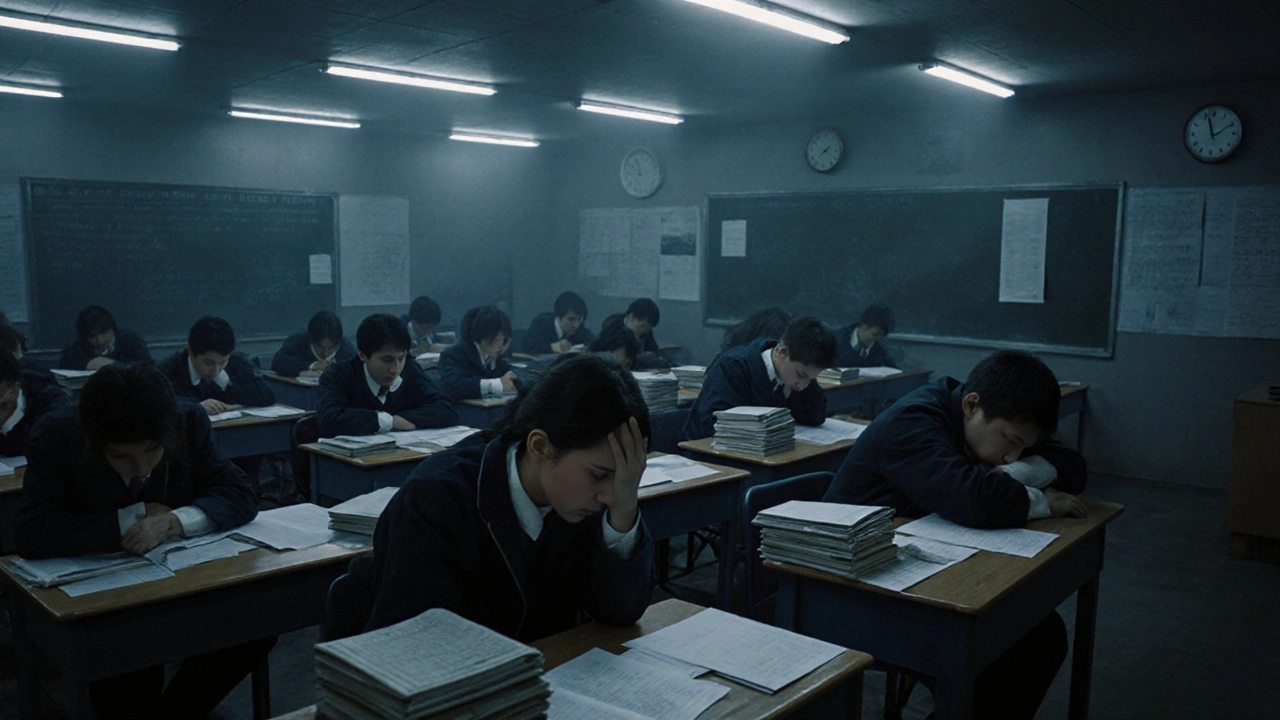
In China, one exam decides your entire future. It’s called the Gaokao, and it’s taken by over 12 million students every June. The test lasts two to three days, depending on the province, and covers Chinese, Math, English, and either Science or Humanities. Scores range from 0 to 750. A difference of five points can mean the difference between Tsinghua University and a regional college with no reputation.
Students spend two to three years preparing. Many attend cram schools that run from 6 a.m. to 10 p.m. Some even sleep in classrooms because they don’t have time to go home. The pressure is so intense that suicide rates spike in the weeks before the exam. In 2023, over 200 students in China died by suicide in the month leading up to Gaokao, according to state media reports.
There’s no retake policy for most students. You get one shot. One chance. And if you fail, your options shrink drastically. The Gaokao isn’t just hard-it’s a national ritual of sacrifice. It’s not about how smart you are. It’s about how much you can endure.
UPSC Civil Services Examination: India’s Ultimate Challenge
If Gaokao is a marathon of endurance, then India’s UPSC Civil Services Examination (CSE) is a triathlon with no finish line in sight. Every year, over 1.1 million candidates apply. Only about 800 make it. That’s a success rate of less than 0.07%.
The exam has three stages: Prelims (a multiple-choice test), Mains (nine written papers over five days), and the Personality Test (an interview with a panel of senior bureaucrats). The Mains alone requires you to write 1,500+ pages of answers by hand. Topics range from Indian history to international relations, ethics to public administration. You’re expected to know everything-and write about it clearly, critically, and without notes.
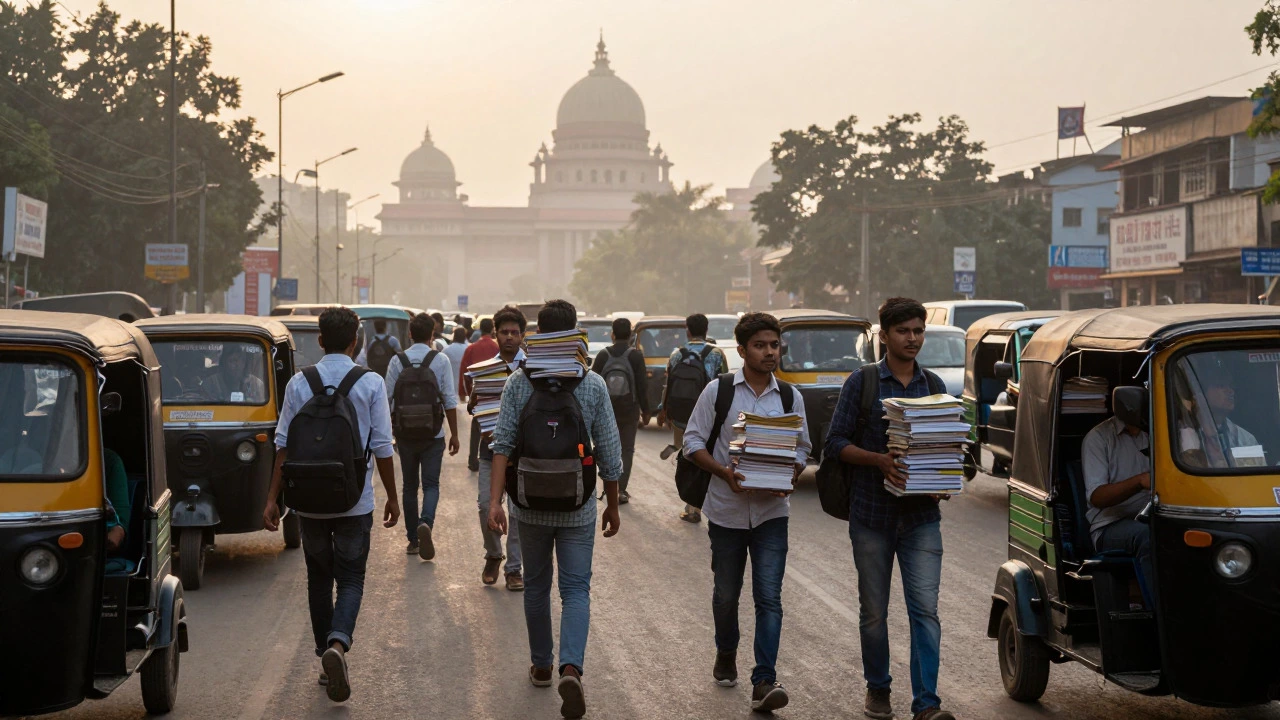
Most aspirants spend 12 to 18 months studying full-time. Many quit their jobs, move to Delhi, and live on ramen noodles. The average age of someone who clears UPSC is 27. That means most candidates start preparing at 21 or 22 and spend years in limbo. Some try three, four, even five times before succeeding.
What makes UPSC harder than other exams? It doesn’t just test knowledge. It tests your ability to think like a government official. You need to balance logic, empathy, policy, and ethics-all while writing in perfect English or Hindi. One wrong word, one flawed argument, and your score drops. There’s no margin for error.

IIT JEE Advanced: The Engineering Gauntlet
If you want to study engineering at India’s top institutes-the Indian Institutes of Technology-you have to survive IIT JEE Advanced. Over 250,000 students take the JEE Main. Only the top 25,000 qualify for JEE Advanced. Of those, fewer than 12,000 get into any IIT.
The exam is two papers, each three hours long, with only multiple-choice and numerical answer questions. But don’t be fooled by the format. The questions are designed to break you. They mix concepts from physics, chemistry, and math in ways no textbook prepares you for. One 2024 physics question combined quantum tunneling with rotational dynamics. Another math problem required deriving a formula from scratch using trigonometric identities you hadn’t touched since class 10.
Students spend 18 to 24 months preparing, often starting in class 9. Coaching centers in Kota, Rajasthan, have become exam factories. Classrooms hold 300 students. Teachers shout over loudspeakers. Students are ranked daily. Failure means shame. Success means a salary of ₹20-40 lakhs per year right after graduation.
What’s unique about JEE Advanced? It doesn’t reward memorization. It rewards creativity under pressure. You need to see patterns in chaos. You need to solve problems you’ve never seen before-in under two minutes per question. And you have to do it while exhausted from six months of sleepless nights.
Why These Three Stand Out
These exams aren’t just hard because of the content. They’re hard because of the system around them.
- High stakes, low margin: One mistake can end your dream. No second chances.
- Massive competition: Hundreds of thousands compete for thousands of spots.
- Systemic pressure: Families, schools, and societies treat these exams like destiny.
- No shortcuts: No coaching can guarantee success. Only relentless effort works.
Compare these to the SAT, GRE, or even the Bar Exam. They’re tough, sure. But they don’t demand years of your life. They don’t define your social status. They don’t carry the weight of an entire nation’s expectations.

What Happens After You Pass?
Passing one of these exams doesn’t mean life gets easier. It just changes the kind of pressure you face.
At IIT, students still work 80-hour weeks. UPSC officers deal with corruption, bureaucracy, and public anger daily. Gaokao winners enter universities where the competition doesn’t stop-it just moves to research labs and internships.
But here’s the truth: the people who make it through these exams aren’t geniuses. They’re survivors. They’re the ones who showed up every day, even when they were tired, broke, or hopeless. They didn’t have talent. They had discipline. And that’s the real lesson.
Is There a Way Out?
Some say these exams are outdated. That they reward rote learning, not innovation. That they crush creativity and mental health. And they’re right.
China has started pilot programs to reduce Gaokao’s weight in university admissions. India is slowly introducing more holistic evaluation in some state boards. But for now, these exams still rule. If you’re aiming for top-tier education or public service in these countries, there’s no alternative.
So if you’re preparing for one of these, know this: you’re not alone. Millions are in the same boat. The goal isn’t perfection. It’s persistence. Show up. Study smart. Rest when you can. And remember-your worth isn’t measured by a score. But if you’re going to take this on, go in with your eyes open.
Are there any other exams as tough as Gaokao, UPSC, or IIT JEE?
Yes, but none match the scale and societal pressure of these three. The Korean CSAT (Suneung) is similarly brutal, with students taking it in silence while police clear the streets. The Japanese University Entrance Examination is also extremely competitive, especially for Tokyo University. But none combine the sheer volume of candidates, the depth of content, and the life-altering consequences like Gaokao, UPSC, and IIT JEE Advanced.
Can you retake these exams if you fail?
Technically, yes-but it’s not easy. You can retake Gaokao, UPSC, and IIT JEE as many times as you want. But each attempt costs time, money, and emotional energy. Most people try once or twice. After that, the pressure from family and society often pushes them toward other paths. Many who fail multiple times end up switching careers or moving abroad.
Do these exams favor rich students?
Yes, unfortunately. Coaching for these exams can cost $5,000-$15,000 per year. Students from wealthy families can afford private tutors, study materials, and even coaching in Kota or Delhi. But the system also produces success stories from poor backgrounds-students who won scholarships, studied in public libraries, or used free YouTube videos. It’s harder for them, but not impossible. Many top scorers come from rural villages with no coaching centers.
How do these exams compare to the SAT or GRE?
The SAT and GRE are standardized tests focused on aptitude and basic skills. You prepare for a few months. The toughest exams like Gaokao or UPSC require years of deep, subject-specific mastery. You’re not just testing your IQ-you’re testing your endurance, memory, and ability to perform under extreme stress. The SAT is a gate to college. These exams are gateways to entire careers and social mobility.
What’s the average passing score for these exams?
There’s no fixed passing score-it’s based on rank. For Gaokao, top students score 700+ out of 750. For UPSC, candidates need to score above 1000 out of 2025 in Mains + Interview. For IIT JEE Advanced, you typically need to be in the top 0.5% of test-takers. Even if you score 70%, you might not qualify if others scored higher. It’s a race, not a test.