



Distance Education Verification Tool
Is This Distance Education?
This tool helps you verify if a program meets the standards of legitimate distance education. Answer all questions based on the program details you're considering.
1. Is the program offered by an accredited university or college?
2. Do you need to formally apply and enroll?
3. Is there a published syllabus with learning outcomes?
4. Are assignments graded and returned with feedback?
5. Is there a final exam or capstone project?
6. Will you receive a transcript or degree at the end?
7. Can you verify the program on the national education regulator's website?
How It Works
All 7 questions must be "Yes" to qualify
Check accreditation on official regulator websites
Legitimate programs offer structured curriculum and feedback
Not all online courses qualify as distance education
Distance education isn’t just watching videos from your couch. It’s a structured way to learn without being physically present in a classroom - and it’s been around longer than most people think. Back in the 1800s, people took correspondence courses by mail. Today, it’s a mix of live Zoom classes, pre-recorded lectures, discussion boards, and digital assignments. But what exactly counts as distance education? And what doesn’t?
It’s About Structure, Not Just Location
Just because you’re learning from home doesn’t mean you’re in a distance education program. If you’re watching a YouTube tutorial on how to fix a leaky faucet, that’s self-directed learning - not distance education. Distance education has three key features: formal curriculum, instructor guidance, and assessment.
Think of it like this: you enroll in a course. You get a syllabus. You have deadlines. You submit assignments. You get feedback. Your progress is tracked. That’s distance education. If any of those pieces are missing, it’s just learning on your own.
Universities like the University of London and Arizona State University offer full degree programs delivered remotely. These aren’t just recordings of on-campus lectures. They’re designed from the ground up for remote learners - with discussion forums moderated by teaching assistants, live office hours, and proctored online exams.
How It’s Different From Online Learning
People use "online learning" and "distance education" interchangeably, but they’re not the same. Online learning is a delivery method. Distance education is a model of education.
Take Coursera or Udemy. You sign up, watch videos, do a quiz, and get a certificate. No instructor gives you personalized feedback. No deadlines are enforced. No credits transfer to a degree. That’s online learning - useful, but not distance education.
True distance education includes:
- Enrollment in an accredited institution
- A defined academic calendar with start and end dates
- Regular interaction with instructors and peers
- Formal assessments that affect your grade
- Recognition of credits or qualifications
That’s why a MOOC from a top university might feel like distance education - but unless it’s part of a degree program with official credit, it’s not.
Technology Isn’t the Defining Factor
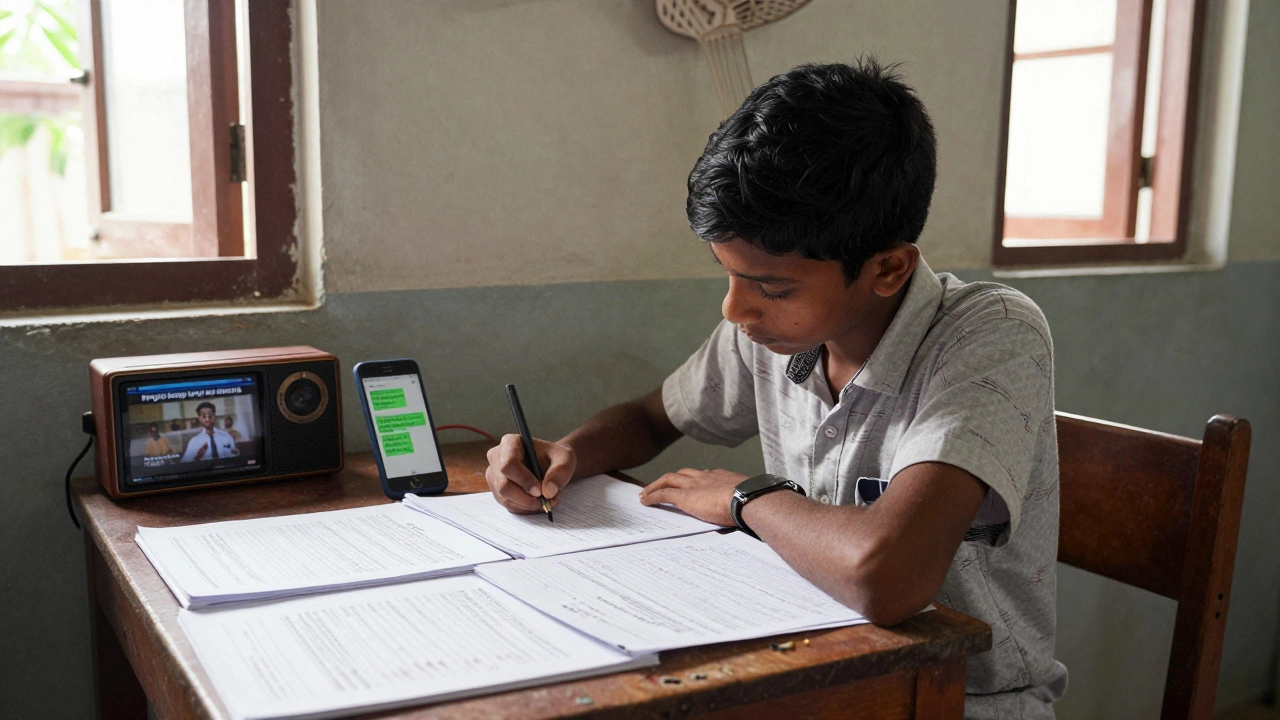
Some think distance education only works with high-speed internet and video platforms. That’s outdated. In rural India, students receive printed study packs by post, attend weekly radio lessons, and submit assignments via SMS. In parts of Africa, learners use SMS-based quizzes and voice calls for tutoring.
Distance education adapts to the tools available. In the UK, a student in rural Wales might use a learning portal with downloadable PDFs and email support. A student in Nairobi might use WhatsApp groups for group discussions. The medium changes - the structure doesn’t.
The core idea is separation: the learner and the teacher are in different physical locations. The rest is just how you bridge that gap.
What Doesn’t Count as Distance Education
Not everything remote is distance education. Here’s what gets confused with it:
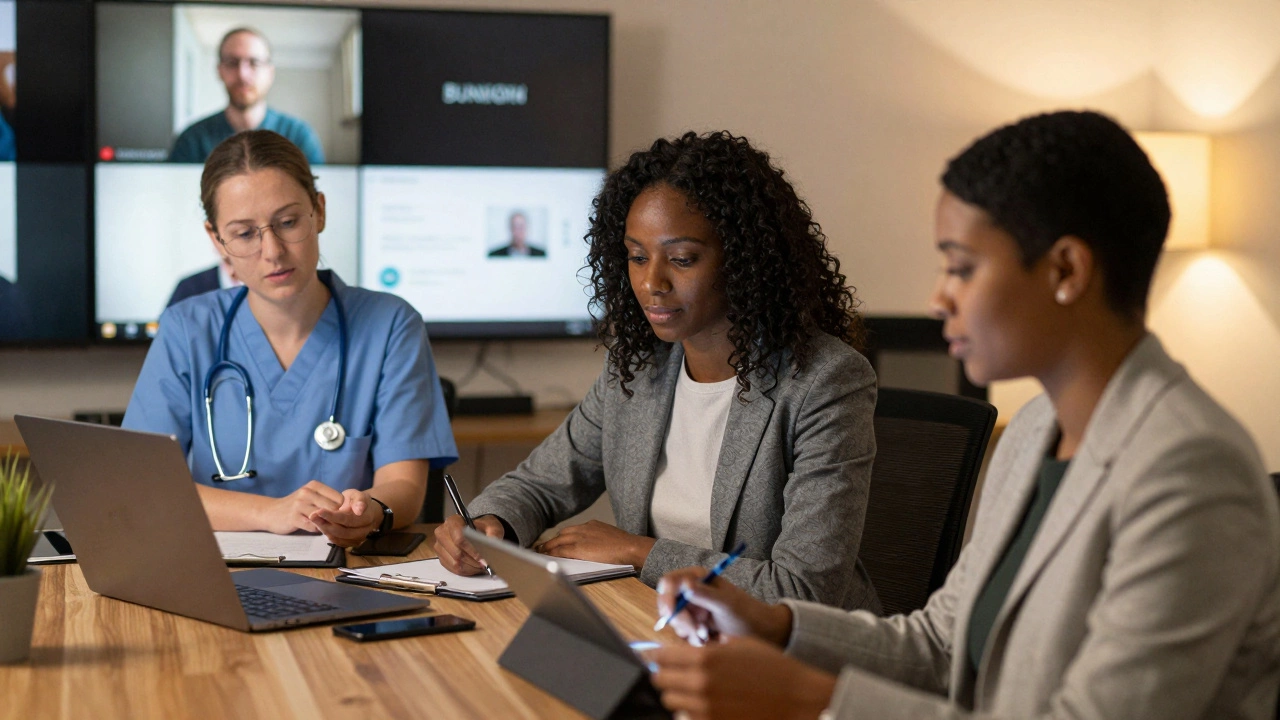
- Self-paced tutorials - like free Skillshare or YouTube courses without structure or feedback
- Corporate training videos - mandatory company modules that don’t lead to academic credit
- Hybrid classes - where you attend some sessions in person and others online. That’s blended learning, not distance education.
- Private tutoring over Zoom - one-on-one lessons aren’t part of a formal program unless they’re tied to a curriculum and institution.
Even if you’re learning from your bedroom, if there’s no official enrollment, no syllabus, no grading - it’s not distance education.
Accreditation Matters
One of the biggest red flags in distance education is lack of accreditation. A program might look official - glossy website, professional videos, testimonials - but if it’s not recognized by a national or international education authority, your certificate might not mean anything.
In the UK, distance education programs offered by universities must be approved by the Office for Students (OfS). In the US, regional accreditors like SACSCOC or NWCCU validate these programs. In India, the University Grants Commission (UGC) oversees distance learning institutions.
Always check: Is this program listed on the official registry of the country’s education regulator? If not, proceed with caution. You’re not just paying for content - you’re paying for recognition.
Who Uses Distance Education Today?
It’s not just for stay-at-home parents or retirees anymore. In 2025, over 30% of university students in the UK are enrolled in fully remote degree programs. That’s up from 12% in 2019.
Who’s enrolling?
- Working professionals upgrading skills without quitting their jobs
- Parents who can’t commute to campus
- Students in remote areas with no local universities
- People with disabilities who need flexible access
- International students avoiding visa restrictions
At Birmingham City University, for example, over 2,000 students are enrolled in distance MBA programs. Many are nurses, teachers, and small business owners who need the flexibility to study after work hours.
The Future Is Blended, But Distance Stays Strong
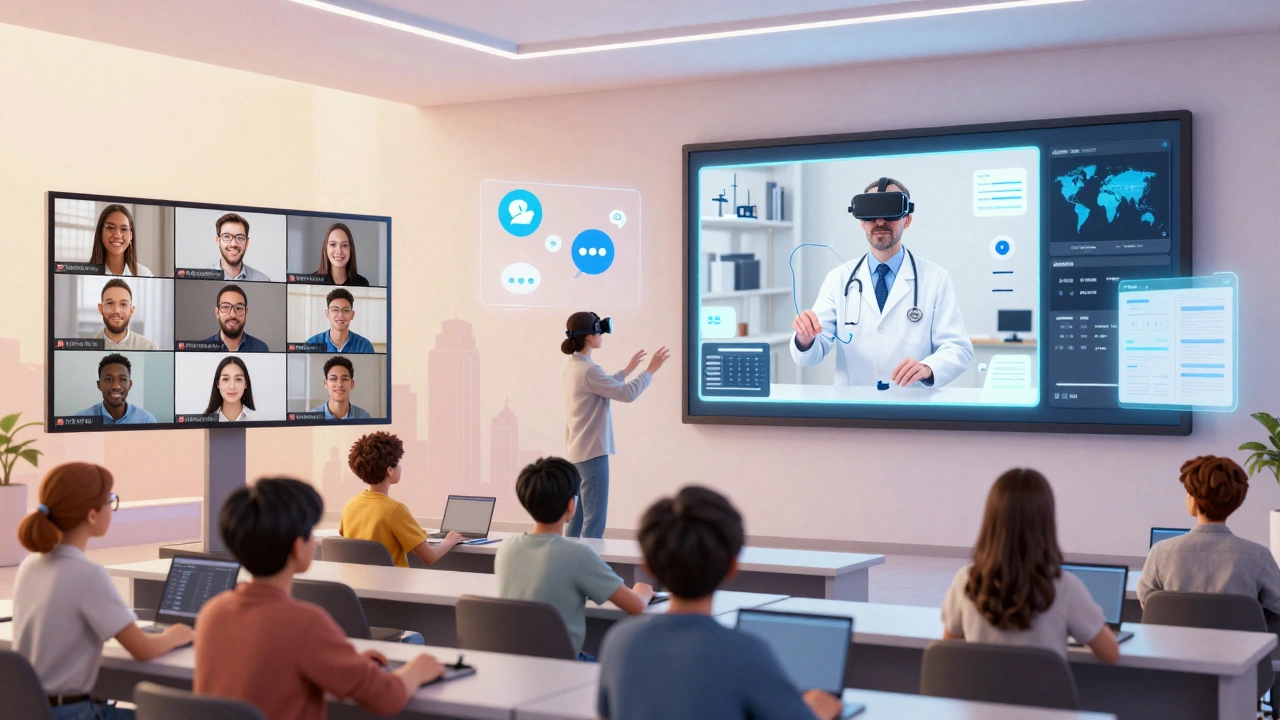
Hybrid models are growing - but distance education isn’t fading. In fact, it’s becoming more robust. Institutions are investing in AI-powered feedback tools, virtual labs, and digital portfolios that replace in-person demonstrations.
Medical students in Australia now use VR simulations to practice patient interactions. Engineering students in Canada submit 3D-printed project designs and get feedback via video annotations. These aren’t gimmicks - they’re essential tools that make distance learning as effective as being on campus.
The goal isn’t to replace classrooms. It’s to remove barriers. If you can learn, grow, and earn a recognized credential without driving to campus - that’s the power of distance education.
How to Tell If a Program Is Real Distance Education
Here’s a quick checklist to spot legitimate distance education programs:
- Is it offered by an accredited university or college?
- Do you need to formally apply and enroll?
- Is there a published syllabus with learning outcomes?
- Are assignments graded and returned with feedback?
- Is there a final exam or capstone project?
- Will you receive a transcript or degree at the end?
- Can you verify the program on the national education regulator’s website?
If you can answer "yes" to all seven, you’re looking at real distance education. If even one is "no," it’s probably just an online course.
Is distance education the same as online learning?
No. Online learning is a way to deliver content - like watching a video or doing a quiz. Distance education is a full academic program with structure: enrollment, curriculum, instructor feedback, assessments, and recognized qualifications. All distance education uses online tools, but not all online learning is distance education.
Can I get a degree through distance education?
Yes. Many universities around the world offer fully accredited degrees through distance education - including bachelor’s, master’s, and even PhDs. Programs from institutions like the Open University (UK), University of the People (US), and Indira Gandhi National Open University (India) are globally recognized. Always check accreditation before enrolling.
Do employers take distance education seriously?
Yes, if it’s from an accredited institution. Employers care more about the reputation of the school and the skills you gained than whether you attended in person. A degree from the University of London’s distance program carries the same weight as its on-campus version. What matters is proof of learning - transcripts, projects, and certifications.
Is distance education cheaper than traditional college?
Often, yes. Without campus fees, housing, or commuting costs, distance programs can be significantly more affordable. For example, a UK distance MBA might cost £12,000 compared to £25,000 for an on-campus version. But prices vary - some private online programs are expensive. Always compare total cost, not just tuition.
Do I need to be tech-savvy to do distance education?
Not really. Most programs provide basic tech support and training. You just need to be comfortable using email, downloading files, and joining video calls. Many programs also offer offline options - printed materials, phone-based support, or SMS-based assignments for low-tech environments.