
CBSE Study Material Strategy Builder
Select your grade and subjects to generate a personalized study material recommendation. This tool helps you decide whether to rely solely on NCERT or supplement with reference books.
Strategy Summary:
Subject-wise Recommendation
Time Allocation Suggestion
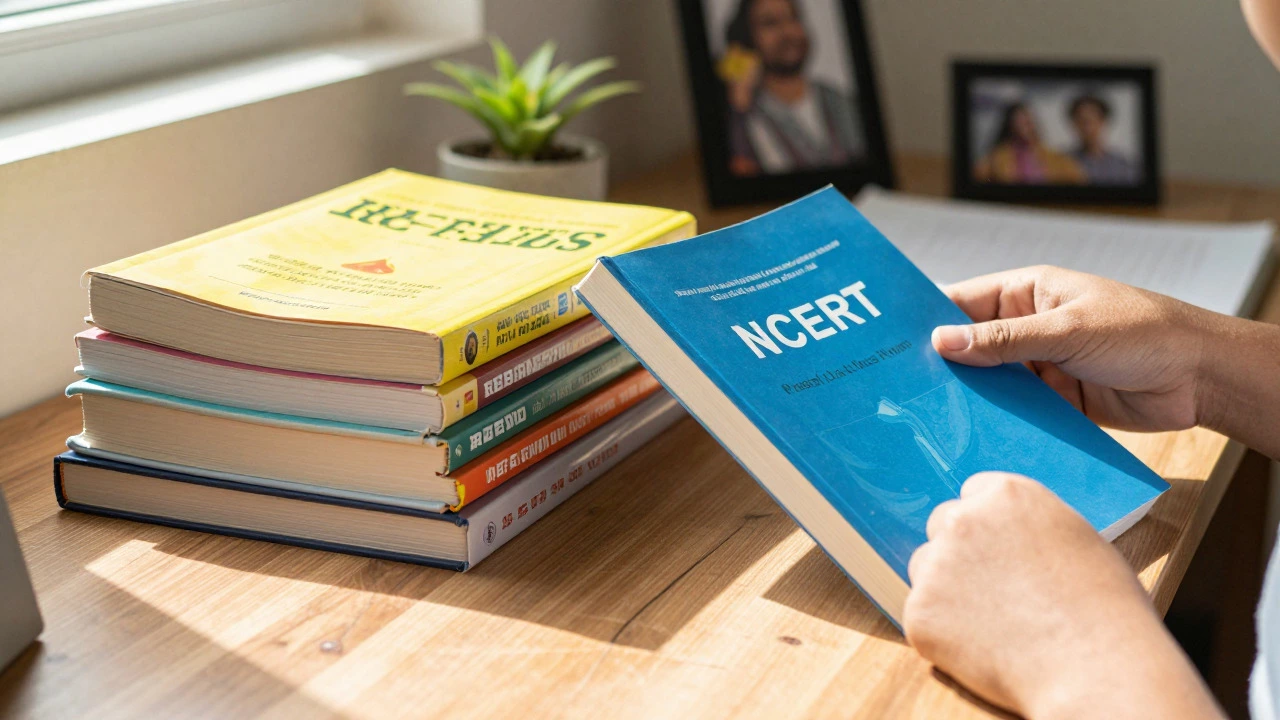
Walking into a stationery store in Delhi or Mumbai during July usually means standing in line while parents argue about whether to buy the thin blue NCERT book or the thick, colorful reference guide from a private publisher. The question isn't just about which book looks better on a shelf; it's about where your marks come from. For CBSE syllabus exams, the answer has shifted significantly over the last five years. If you are still relying heavily on external resources without mastering the core texts, you might be fighting a losing battle against the marking scheme.
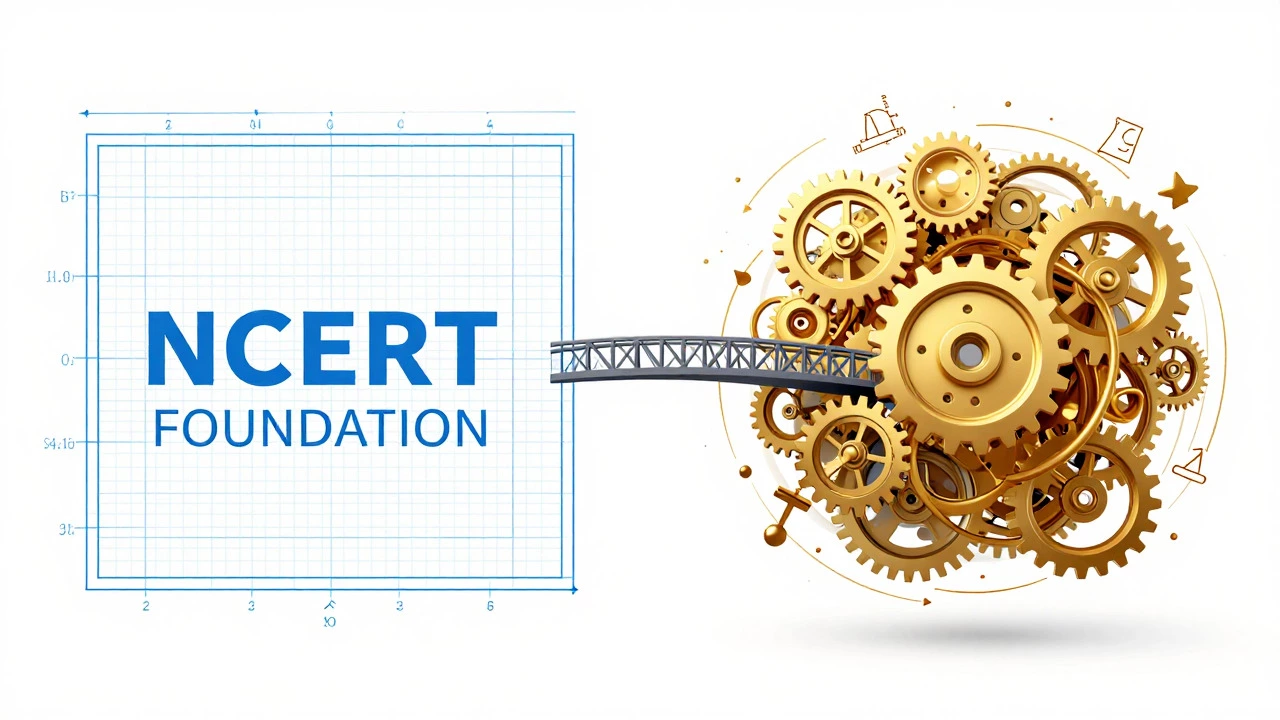
The Core Truth: NCERT is the Blueprint
NCERT (National Council of Educational Research and Training) textbooks are not just suggestions; they are the primary source material for Central Board of Secondary Education (CBSE) papers. Since the board introduced competency-based questions in recent years, the language used in these questions often mirrors the exact phrasing found in NCERT chapters. When you read a paragraph in a Science chapter, that same concept will likely appear as a case study or assertion-reason question in the final exam. Ignoring this direct link is the most common mistake students make. They spend hours solving complex problems from extra books but fail to recall the basic definitions that carry easy marks in Section A of the paper.
However, "best" depends entirely on your current level. If you are struggling with basics, adding more content creates noise. If you are already scoring above 90%, sticking only to NCERT might leave you unprepared for the trickier application-based questions that differentiate top ranks. This is where the choice becomes strategic rather than arbitrary.
When to Stick Strictly to NCERT
For subjects like History, Political Science, Geography, and Economics in Class 12, NCERT is essentially the entire game. The board rarely asks questions that require information outside these pages. In fact, many toppers report that memorizing the first two lines of each paragraph in NCERT History covers nearly 60% of the descriptive answers. The text is concise, aligned with the curriculum, and free of unnecessary fluff. Adding reference books here often leads to confusion because different authors interpret historical events differently. CBSE expects one specific narrative, and NCERT provides it.
- History: Focus on keywords and dates highlighted in bold within NCERT.
- Geography: Maps and diagrams in NCERT are directly asked in exams.
- Economics: Diagrams must be drawn exactly as shown in the textbook.
When You Need Reference Books
Mathematics, Physics, Chemistry, and Biology work differently. These are problem-solving subjects. While NCERT exercises are mandatory, they often cover only the standard difficulty level. To handle the higher-order thinking skills (HOTS) questions that appear in the last section of the paper, you need exposure to varied problem types. This is where reputable reference books earn their place. But you don't need ten books. You need one good supplementary resource per subject that offers previous year questions (PYQs) and advanced numericals.
For example, in Class 12 Mathematics, NCERT covers the theory and basic calculus well. However, integration techniques can vary in complexity. A student who only does NCERT examples might freeze when faced with a multi-step integration problem in the exam. A single reference book that categorizes problems by difficulty helps build that mental flexibility. Similarly, in Physics, understanding the derivation of formulas is crucial. NCERT provides the derivations, but practice books provide the variations that test if you truly understand the logic behind the math.
Subject-Wide Strategy Breakdown
| Subject Category | Primary Source | Supplementary Source | Reasoning |
|---|---|---|---|
| Humanities (History, Pol Sci) | NCERT Textbook | Previous Year Questions Only | Content is static; no new facts needed. |
| Commerce (Accountancy, Eco) | NCERT + Solved Examples | Practice Booklets | Need speed and accuracy in calculations. |
| Science (Physics, Chem, Bio) | NCERT Theory | One Standard Problem Book | NCERT for concepts; others for application. |
| Mathematics | NCERT Exercises | Advanced Problem Solving Guide | Exposure to diverse problem structures required. |
The Role of Previous Year Papers
Regardless of which books you choose, previous year questions are non-negotiable. They serve as the bridge between the syllabus and the actual exam pattern. CBSE tends to repeat concepts, even if the numbers or contexts change. By analyzing the last five years of papers, you can identify which chapters carry the highest weightage. For instance, in Class 10 Science, the chapter on Light often features a diagram-based question every year. Knowing this allows you to prioritize that specific topic in your revision schedule. It turns vague anxiety into a targeted plan.
Common Pitfalls to Avoid
Many students fall into the trap of "collection." Buying three different reference books for Chemistry gives a false sense of security. If you don't finish one book thoroughly, doing half of three books is worse than finishing one completely. Depth beats breadth. Another pitfall is ignoring the back-of-the-book exercises in NCERT. These are often easier than the main exercises but contain fundamental concepts that form the base for harder questions. Skipping them creates gaps that become apparent under exam pressure.
Also, beware of outdated editions. CBSE updates its syllabus periodically, removing or adding topics. Always ensure your NCERT copy matches the academic year you are studying in. Using a book from two years ago might mean you are studying deleted topics or missing newly added ones, wasting valuable time.
How to Choose Your Specific Reference Book
If you decide to use a reference book, look for these indicators:
- Publisher Reputation: Established educational publishers tend to have fewer errors and better alignment with the board pattern.
- Solution Quality: Check if the solutions explain the "why," not just the "how." Step-by-step reasoning is more valuable than just the final answer.
- Digital Availability: Many modern resources offer video explanations for difficult problems. This is helpful if you get stuck late at night.
Frequently Asked Questions
Is NCERT enough for Class 12 Board Exams?
For Humanities and Commerce subjects, yes, NCERT is sufficient if solved thoroughly. For Science and Math, NCERT is essential for theory and basic problems, but a supplementary problem book is recommended for high scores due to the inclusion of application-based questions.
Which reference book is best for CBSE Class 10 Science?
There is no single "best