


Learning App Matchmaker
Not sure which platform is right for you? Answer these three questions to get a personalized recommendation based on current market strengths.
There is no single top learning app that works for everyone. That’s the uncomfortable truth most "best of" lists ignore. If you are trying to learn Spanish for a trip next month, Duolingo is likely your best friend. But if you are trying to pivot your career into data science, Coursera or Udacity will serve you far better. The "best" app depends entirely on what job you need it to do.
I’ve spent the last few years testing dozens of these platforms in Birmingham, juggling full-time work with evening study sessions. I’ve seen friends burn out on gamified apps that taught them nothing but how to tap buttons, while others landed jobs after grinding through rigorous online certifications. This guide cuts through the marketing noise. We’ll look at the specific strengths of the major players, compare their costs, and help you pick the right tool for your specific goal.
The Big Three: Language vs. Academic vs. Skill-Based
To make sense of the market, we need to categorize these apps by their primary function. Most fall into one of three buckets: micro-learning for languages/habits, university-backed academic courses, or project-based professional skills.
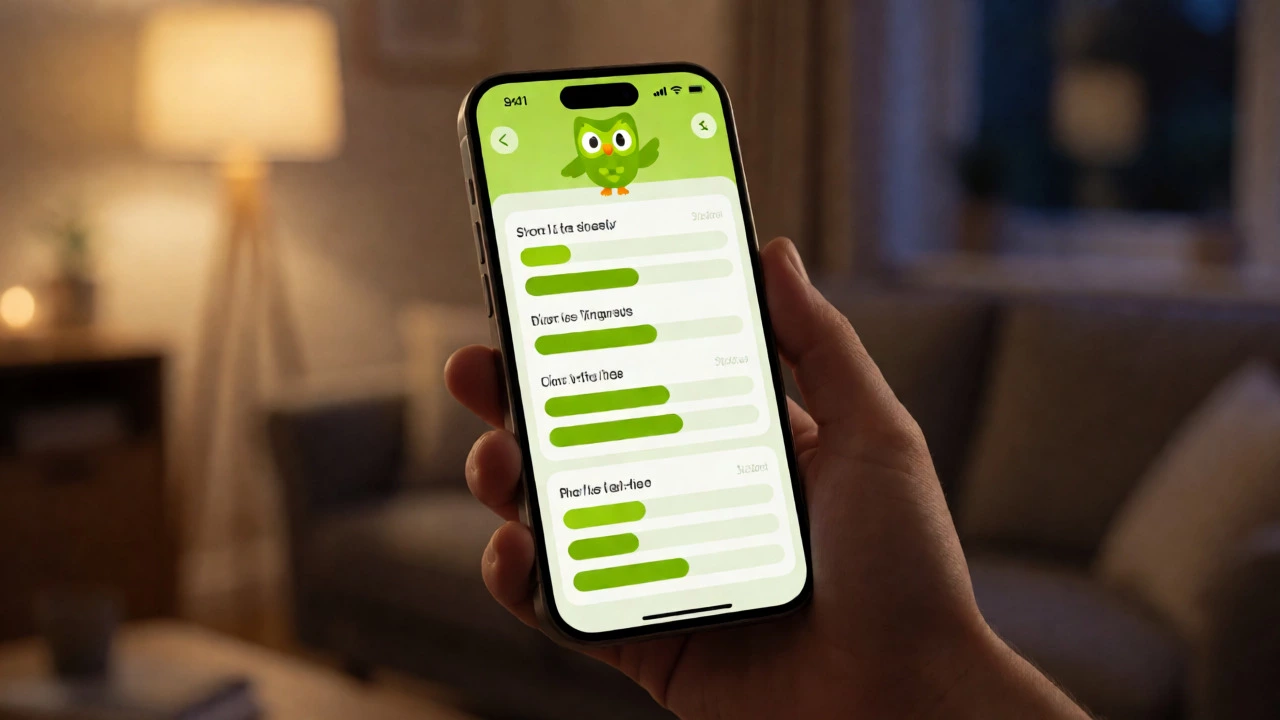
Duolingo dominates the first category. It is a mobile-first platform focused on short, gamified lessons. Its strength isn’t deep fluency; it’s consistency. The streak counter is powerful psychology. However, many users hit a ceiling around the B1 intermediate level where grammar explanations remain thin.
On the other end of the spectrum sits Coursera. This is an online education platform partnering with universities like Stanford and Yale. You aren’t just watching videos; you’re submitting peer-graded assignments and earning verified certificates. It requires hours per week, not minutes. It’s heavy lifting for your brain, which makes it effective for serious career changes but terrible for casual hobbyists.
In the middle, we have Skillshare and MasterClass. These focus on creative and soft skills. Skillshare offers community-taught classes on design, writing, and tech, while MasterClass features celebrity instructors like Gordon Ramsay for cooking or Neil deGrasse Tyson for science. They are less about certification and more about inspiration and technique.
Comparing Costs and Commitment Levels
Money matters, but time is the scarcer resource. Here is how the top contenders stack up in terms of investment required as of 2026.
| App Name | Primary Focus | Monthly Cost (Approx.) | Time Commitment | Best For |
|---|---|---|---|---|
| Duolingo | Languages & Habits | £6 - £8 | 15 mins/day | Beginners & Consistency |
| Coursera | Academic Degrees/Certs | £39 - £49 | 5-10 hrs/week | Career Pivots & Credentials |
| Babbel | Practical Languages | £7 - £13 | 20-30 mins/day | Travelers & Conversation |
| Udemy | Specific Tech Skills | Pay-per-course (£10-£80) | Variable | Troubleshooting & Niche Topics |
| Khan Academy | K-12 & Foundational Math | Free | Flexible | Students & Parents |
Notice the pricing model differences. Duolingo uses a subscription model because it relies on daily engagement. Udemy operates on a marketplace model where you buy individual courses, often during sales. This means you can grab a comprehensive Python course for under £15, whereas a similar certificate on Coursera might cost over £300 for the full specialization.
When to Choose Duolingo Over Babbel
People often ask me why they should pay for Babbel when Duolingo has a free tier. The answer lies in utility versus entertainment.
If your goal is to survive a holiday in Italy-ordering coffee, asking for directions, understanding basic signs-Duolingo is sufficient. It teaches vocabulary recognition quickly. But if you need to actually hold a conversation with a local, Babbel wins. It focuses on dialogue from day one. The lessons are shorter but denser, explaining *why* a verb conjugates a certain way rather than just drilling repetition.
I tried both for French. After three months on Duolingo, I could translate sentences but froze when a waiter spoke to me. Switching to Babbel for two months helped me understand sentence structure enough to respond. It felt less like a game and more like a classroom, which was exactly what I needed.

Professional Certifications: Coursera vs. Udemy
For those looking to boost their resume, the choice between Coursera and Udemy is critical. Employers view these differently.
A certificate from Coursera carries weight because it is backed by institutions like Google, IBM, or the University of Michigan. When I hired a junior analyst last year, candidates with Google Data Analytics certificates stood out because the curriculum was standardized and rigorous. It signals that you completed a structured program with assessments.
Udemy is different. It is a vast library of self-paced tutorials. One instructor might teach Python brilliantly; another might be outdated. There is no central quality control. However, its speed is unmatched. Need to know how to use a specific feature in Excel by tomorrow morning? Search Udemy, buy a 2-hour course, and you’ll have the answer. It is tactical, not strategic.
- Choose Coursera if: You want a credential, need structured learning paths, or are changing careers.
- Choose Udemy if: You need a quick fix, want to learn a specific tool, or prefer low-cost experimentation.
The Hidden Gem: Khan Academy for Foundations
We often overlook Khan Academy once we leave school. But in 2026, it remains the gold standard for foundational math and science concepts. Unlike paid apps, it is completely free and non-profit.
If you are struggling with the math behind machine learning or finance, going back to Khan Academy to refresh algebra and statistics is smarter than paying for a complex coding bootcamp. Their mastery system ensures you truly understand a concept before moving on. Many adult learners find this humbling but necessary. Skipping foundations leads to shaky knowledge later, no matter how advanced the app looks.
How to Decide: A Quick Decision Tree
Still stuck? Follow this simple logic path to find your match:
- Are you learning a language?
- Yes, for fun/travel → Duolingo.
- Yes, for serious conversation/work → Babbel or Rosetta Stone.
- Do you need a job credential?
- Yes → Coursera or edX.
- No, just skill improvement → Udemy or LinkedIn Learning.
- Is it for school-age children?
- Math/Science basics → Khan Academy.
- Reading/Writing practice → Epic! or ABCmouse.
Pitfalls to Avoid
The biggest mistake people make is buying annual subscriptions before testing the platform. Almost every major app offers a 7-day free trial. Use it. Check if the interface annoys you. Some apps have aggressive notification spam that drives users away within weeks.
Another trap is "collection bias." Buying ten courses on Udemy feels productive, but if you only finish one, you’ve wasted money. Start small. Finish one module before buying the next. Completion rates on MOOCs (Massive Open Online Courses) are notoriously low, often below 10%. Your goal isn’t to own content; it’s to consume it.
Finally, beware of outdated content. In fast-moving fields like AI or web development, a course recorded in 2022 might be obsolete by 2026. Always check the "last updated" date on Udemy or Skillshare classes. On Coursera, university partnerships usually ensure better currency, but verify the syllabus dates.
Is Duolingo good enough to become fluent?
No, not on its own. Duolingo is excellent for building vocabulary and maintaining a habit, but it lacks the depth for true fluency. To reach conversational fluency, you must combine it with speaking practice, listening to native media, and perhaps a tutor or a more grammar-focused app like Babbel.
Are Coursera certificates worth it for employers?
Yes, particularly for entry-level roles or career pivots. Certificates from recognized partners like Google, IBM, or major universities signal initiative and baseline competency. However, they are rarely a substitute for experience. Pair the certificate with a portfolio project to maximize impact.
What is the best free learning app?
Khan Academy is arguably the best free option for academic subjects like math, science, and history. For languages, Duolingo’s free tier is robust enough for beginners. YouTube is also a massive free resource, though it lacks structured progress tracking.
Can I switch apps halfway through a course?
It is difficult. Each app uses proprietary algorithms for spaced repetition and lesson sequencing. Switching mid-way often means starting over or losing progress. It is better to commit to one platform for at least three months to give it a fair chance before switching.
Do learning apps replace traditional textbooks?
For practical skills and languages, yes, they often provide a more engaging alternative. For deep theoretical knowledge, especially in law, medicine, or advanced mathematics, textbooks still offer superior detail and reference capability. Apps are best used as supplements or primary tools for applied learning.