


Vocational Career Path Finder
Not sure whether to pursue A-Levels or a vocational route? Answer these 5 quick questions to see which path aligns best with your personality and goals.
Question 1 of 5
Your Recommended Path
Note: This tool provides general guidance. Always research specific course requirements and speak to careers advisors before making final decisions.
You’ve probably heard the term vocational qualification thrown around in career fairs or education debates, but what does it actually mean for your future? Unlike a traditional academic degree that spends three years dissecting theory, a vocational path gets you hands-on with the specific tools and techniques employers need right now. Think of it as the difference between reading about how an engine works versus taking one apart and putting it back together until you can fix it blindfolded.
If you are based in the UK, this distinction matters more than ever. The government has been pushing hard on T-Levels and apprenticeships, trying to close the gap between school and work. But with so many acronyms-BTECs, NVQs, SVQs, City & Guilds-it’s easy to get confused. This guide breaks down exactly what these qualifications are, why they might be better for you than a university degree, and how to navigate the system without getting lost in jargon.
Defining the Core Concept
At its heart, a vocational qualification is an educational credential focused on preparing students for specific trades, crafts, or professions through practical training rather than general academic study. It is designed to prove competence in doing a job, not just knowing about it. While an academic degree often covers broad theoretical frameworks, vocational courses drill down into the "how-to" of a role. For example, a history degree teaches you to analyze sources; a journalism diploma teaches you to write a headline that gets clicked.
This type of learning is competency-based. You aren’t graded on an essay about plumbing; you’re graded on whether the pipes leak. This shift from knowledge retention to skill application is the defining feature. In the UK context, these qualifications are regulated by bodies like Ofqual (in England) or SQA (in Scotland), ensuring that a Level 3 engineering certificate means the same thing whether you got it in Birmingham or Belfast.
The Main Types of Vocational Qualifications in the UK
Navigating the landscape requires understanding the major players. Here is a breakdown of the most common types you will encounter.
| Qualification Type | Focus Area | Typical Duration | Best For |
|---|---|---|---|
| BTEC | Practical coursework and continuous assessment in schools/colleges | 1-2 Years (Post-16) | Students who prefer project work over final exams |
| T-Level | Technical education with 45 days industry placement | 2 Years (Post-16) | Those aiming for high-skilled technical roles |
| NVQ/SVQ | National/Scottish Vocational Qualifications assessed in the workplace | Varies (Often concurrent with employment) | Apprentices and working professionals |
| City & Guilds | Specific trade skills (construction, hospitality, beauty) | Short Courses to Diplomas | Tradespeople needing certified competence |
BTECs (Business and Technology Education Council) are perhaps the most familiar name for school leavers. They are offered at colleges and sixth forms across the UK. Instead of sitting one massive exam at the end of the year, you complete assignments throughout the course. This suits people who panic under timed pressure but thrive when given time to research and produce quality work. A BTEC Extended Diploma, for instance, is roughly equivalent to three A-Levels in terms of UCAS points, allowing entry to university if you change your mind later.
T-Levels are the newer kids on the block, launched recently to replace some older technical routes. They combine classroom learning with a mandatory 45-day industry placement. This structure ensures you don’t graduate with just a piece of paper; you graduate with actual experience on your CV. If you want to become a digital support technician or a healthcare scientist, this route provides a direct pipeline into those sectors.
Then there are NVQs (National Vocational Qualifications). These are strictly workplace-based. You don’t go to college for an NVQ; you demonstrate your skills while doing your job. An assessor comes to your site, watches you work, and asks questions. If you can do the task safely and correctly, you pass. This is ideal for apprentices or adults upskilling in their current roles. Note that in Scotland, these are called SVQs, but the principle is identical.
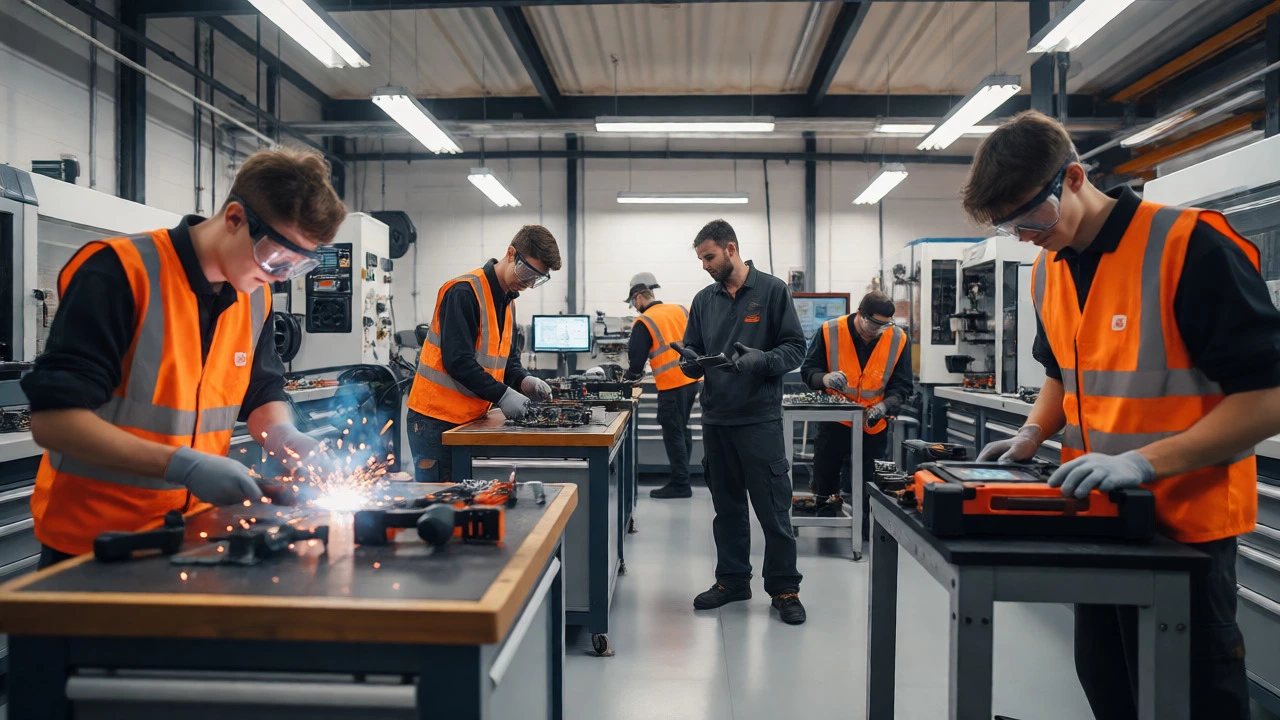
Vocational vs. Academic: Making the Right Choice
Should you choose a vocational route or stick with academic subjects like A-Levels? There is no universal "better," only what fits your personality and goals. Let’s look at the trade-offs.
- Learning Style: Do you learn by listening to lectures and writing essays? Academic. Do you learn by doing, building, and fixing? Vocational.
- Career Clarity: Are you sure you want to be an electrician? Go vocational. Do you have no idea what you want to do yet? Academic degrees offer more flexibility to pivot later.
- Earning Potential: Vocational paths often lead to faster earnings because you start working sooner. University graduates often face student debt and delayed entry into the workforce.
- Job Security: Skilled trades (plumbers, welders, IT technicians) often enjoy higher job security during economic downturns compared to some saturated white-collar sectors.
A common misconception is that vocational training is "second best." That’s outdated thinking. In fields like nursing, engineering, or creative arts, vocational portfolios and practical assessments are often valued higher by employers than pure academic grades. Can you code the app? Can you treat the patient? Results matter more than theory in these industries.
The Benefits of Choosing a Vocational Path
Why are thousands of students choosing this route every year? Beyond avoiding debt, there are tangible advantages.
First, employability. Employers frequently complain that university graduates lack "soft skills" and practical awareness. Vocational learners spend hours in simulated workplaces or real ones. By the time they apply for jobs, they already understand workplace etiquette, safety protocols, and team dynamics. This makes them plug-and-play hires, which is music to a hiring manager’s ears.
Second, specialization. If you love cars, a mechanical engineering diploma lets you dive deep into engines immediately. You aren’t wasting time on compulsory modules in sociology or literature unless they directly relate to your trade. This focus keeps motivation high and learning relevant.
Third, networking. Many vocational courses, especially apprenticeships and T-Levels, embed you in industry networks early. Your trainer might be a former professional in the field. Your peers are your future colleagues. These connections often lead to job offers before you even finish the course.

How to Get Started: Practical Steps
Ready to explore this path? Here is how to move forward without overwhelming yourself.
- Identify Your Interest: Don’t pick a course just because it sounds impressive. Pick something you would tolerate doing for eight hours a day. Visit open days at local colleges. Talk to people actually doing the job.
- Check Entry Requirements: Most Level 2 courses require four GCSEs at grade 4 (C) or above. Level 3 might require five. Some specialized courses ask for prior experience or a portfolio.
- Look for Accreditation: Ensure the course is recognized. Look for logos from awarding bodies like Pearson Edexcel (BTEC), NCFE, or City & Guilds. Unaccredited courses are risky investments.
- Consider Apprenticeships: If you want to earn while you learn, check sites like Find an Apprenticeship. You get paid, gain an NVQ, and avoid tuition fees.
- Plan for Progression: Even if you stop after a vocational diploma, know your options. Many universities accept vocational qualifications for related degrees. A BTEC in Health and Social Care can lead to a Nursing Degree.
Common Pitfalls to Avoid
Not all vocational advice is good advice. Be wary of private providers promising "guaranteed jobs" for high fees. Always check reviews independently. Also, beware of courses that are too short. A two-week "masterclass" in web development won’t make you employable. Real vocational competence takes months or years of practice.
Another trap is ignoring the progression ladder. Just because you start with a Level 2 certificate doesn’t mean you’re stuck there. Use it as a stepping stone to Level 3, then maybe a Higher National Diploma (HND). Treat each qualification as a rung on a ladder, not a dead end.
Is a vocational qualification harder than A-Levels?
It depends on your strengths. Vocational courses require consistent effort and meeting strict practical standards, which can be more demanding than studying for exams. However, if you dislike memorizing facts for tests, you may find vocational assessment easier because it rewards application over recall.
Can I go to university with a vocational qualification?
Yes, absolutely. Most UK universities accept BTECs and other vocational diplomas for admission. In fact, some courses specifically prefer applicants with practical experience gained through vocational study. Check the specific entry requirements for the university and course you are interested in.
What is the difference between an NVQ and a BTEC?
A BTEC is typically studied in a college setting with coursework and projects. An NVQ is assessed in the workplace by observing you perform tasks. BTECs are more common for full-time students, while NVQs are standard for apprentices and employees upskilling on the job.
Are vocational qualifications respected by employers?
In skilled trades and technical industries, they are highly respected, often more so than generic academic degrees. Employers value the proven ability to perform specific tasks. In corporate management roles, academic degrees might still hold more prestige, but this is changing as skills-based hiring grows.
How long does it take to get a vocational qualification?
Duration varies widely. Short certificates can take weeks. Full diplomas like BTECs usually take two years. Apprenticeships leading to NVQs can range from one to four years depending on the level and complexity of the trade.