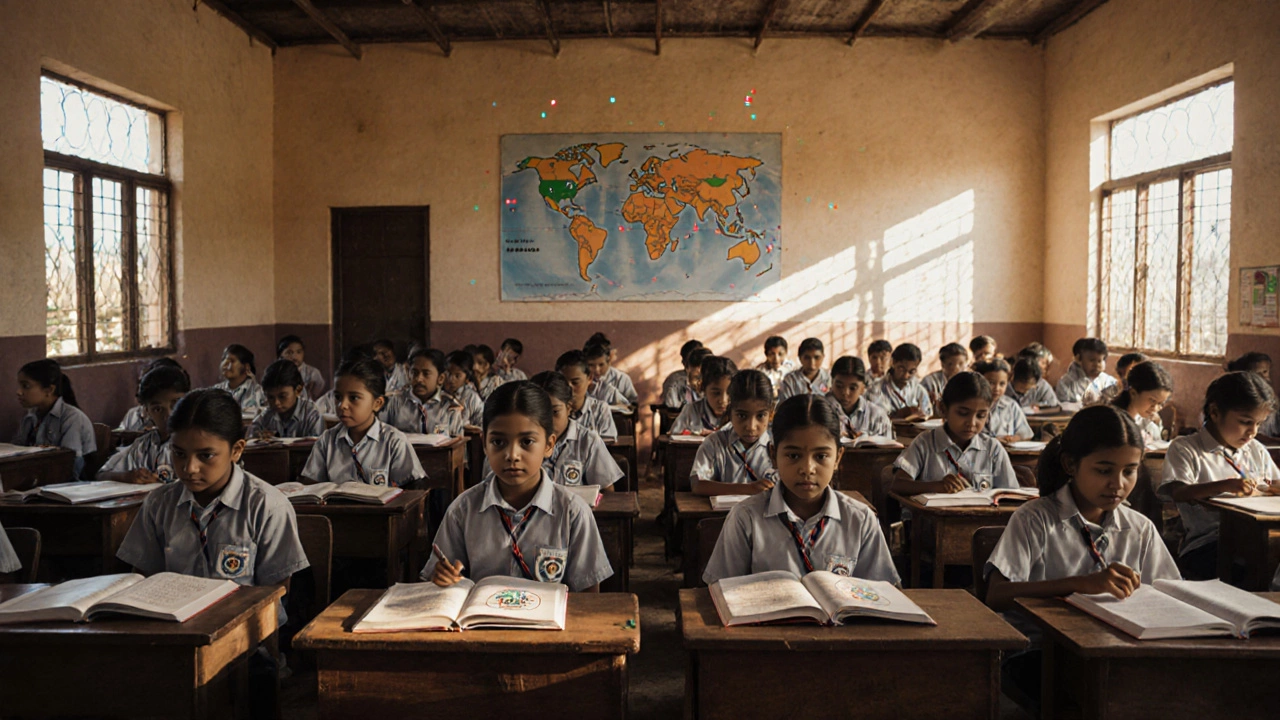
Most Popular Education Board in India: CBSE, ICSE, State Boards Compared
When it comes to schooling in India, the most popular education board, a standardized system that sets curriculum, exam patterns, and grading rules for schools. Also known as national or state-level education councils, it shapes everything from how kids learn math to whether they get into IIT or medical college. Not all boards are the same—and your choice affects exam stress, college admissions, and even future job options.
The CBSE, the Central Board of Secondary Education, runs the largest network of schools across India and abroad. Also known as Central Board, it’s the go-to for families planning for competitive exams like JEE and NEET because its syllabus lines up directly with those tests. Then there’s the ICSE, the Indian Certificate of Secondary Education, known for deeper theory, more project work, and stricter English focus. Also known as Council for the Indian School Certificate Examinations, it’s popular in urban private schools but doesn’t align as cleanly with engineering or medical entrance exams. And don’t forget the state boards, each run by individual states like Maharashtra, Tamil Nadu, or Uttar Pradesh, with local language emphasis and simpler syllabi. Also known as regional education boards, they’re the default for millions of students outside big cities—and often easier to pass, but harder to use for national-level admissions. If you’re aiming for IIT, AIIMS, or top private colleges, CBSE gives you the clearest path. But if your kid thrives on writing essays and understanding concepts over rote memorization, ICSE might be better. State boards? They’re practical, affordable, and work fine if you’re staying local for college.
What you pick now decides how much time you’ll spend memorizing NCERT textbooks versus diving into case studies. It affects whether your child learns science in English or their mother tongue. It even changes how they handle pressure—CBSE students face high-stakes national exams early, while state board students often have more flexible grading. There’s no single "best" board, but there’s a best fit—for your goals, your location, and your kid’s learning style. Below, you’ll find real stories, data-backed comparisons, and insider tips from students who’ve walked this path. Whether you’re choosing a school, switching boards, or just trying to understand why your friend’s exam prep feels totally different, the posts here cut through the noise.