Dubai vs India Education: Which System Is Better for Students?
Compare Dubai's modern, international schools with India's massive, diverse system. Learn about curriculum, cost, quality and global pathways to decide which education fits your goals.
When you think about India education, the vast, complex system that shapes millions of young lives through school boards, competitive exams, and career training. Also known as Indian schooling system, it's not just about classrooms—it's a high-stakes journey that begins in primary school and leads to exams like the CBSE board, the most widely used school curriculum in India, with over 20 million students, and ends with the UPSC Civil Services Exam, one of the hardest tests in the world, where less than 1% of candidates succeed.
What makes India education different isn't just the number of students. It's the pressure. From the IIT JEE Advanced, the gateway to India’s top engineering schools, where years of daily study are the norm, to the NEET, the medical entrance exam that decides who becomes a doctor, the system rewards persistence more than talent alone. Parents, teachers, and students all operate under the same unspoken rule: your exam score defines your future. But it’s not all about rote learning. Behind the scenes, there’s a quiet shift happening—more students are asking if an MBA in India, a degree that can open doors to leadership roles, even after 30 or without a business background, is worth the cost. Others are choosing vocational paths, realizing that trades and skill-based training don’t need a top rank to lead to a good life.
There’s no single story in India education. One student might spend five years preparing for the UPSC, another might learn to code in three months using free apps, and a third might switch from a traditional degree to a vocational course because it actually leads to a job. The system is flawed, yes—but it’s also full of real people making real choices. What you’ll find below isn’t a list of generic tips. It’s a collection of honest stories, hard data, and straight talk about what actually works: how to survive the toughest exams, whether an MBA after 30 makes sense, why CBSE dominates, and how mental strength matters more than memorization. These aren’t theories. They’re lessons from people who’ve been through it.
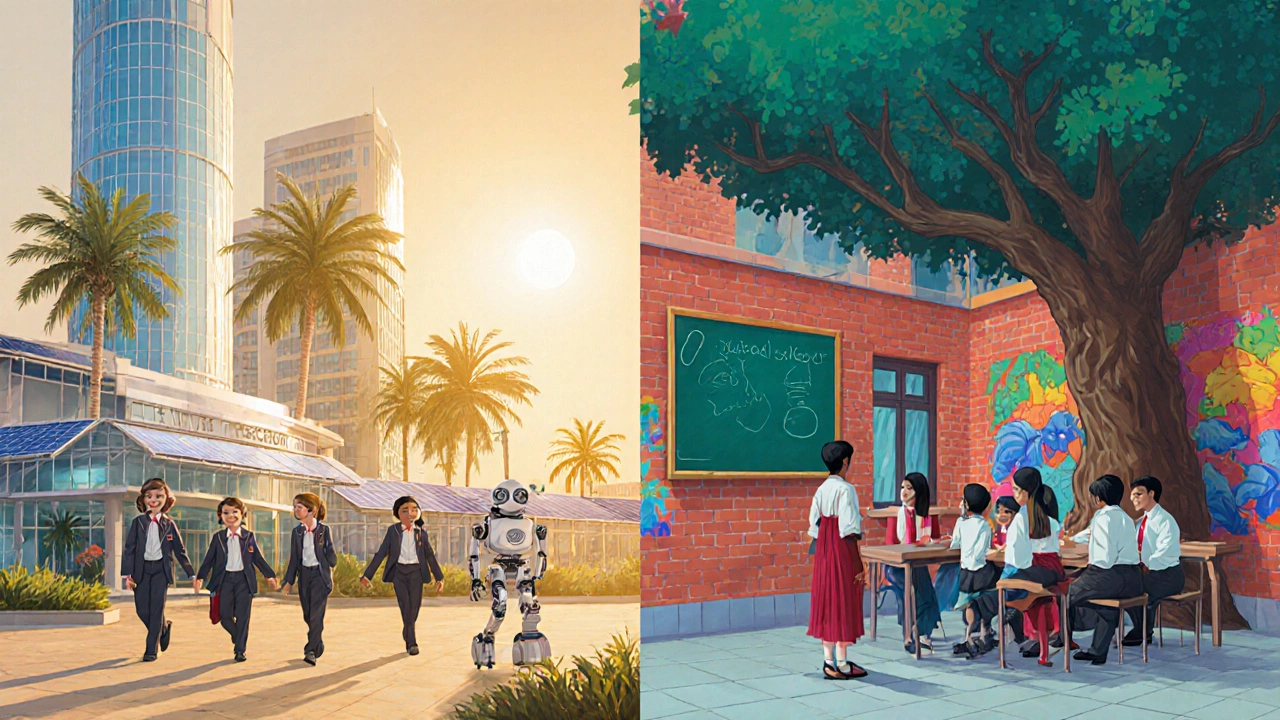
Compare Dubai's modern, international schools with India's massive, diverse system. Learn about curriculum, cost, quality and global pathways to decide which education fits your goals.

India is home to a vast network of CBSE schools, but which state tops the chart in numbers? This article gives a clear picture of the state with the maximum CBSE schools and provides useful insights into what makes the CBSE syllabus preferred by many. From exploring regional trends to practical tips for parents, this piece is designed to offer helpful information for anyone interested in India’s educational landscape.