Best Programming Languages for Beginners in 2025 - Find Your Perfect Coding Path
Discover the most beginner-friendly programming languages, how to pick the right one, and the best resources to start coding today.
When you're starting out in coding, the best programming language for beginners, a language designed to be easy to read, write, and understand for people new to software development. Also known as beginner-friendly language, it should help you build confidence fast without drowning in complex syntax. You don’t need to pick the "most powerful" one—you need the one that gets you writing real code, solving small problems, and feeling like you’re making progress. That’s why Python, a high-level, readable language widely used in web development, data analysis, and automation tops most lists. Its clean structure looks almost like plain English, so you spend less time fighting the language and more time learning how to think like a programmer.
But Python isn’t the only option. If you want to build websites, JavaScript, the language that powers interactive elements on nearly every website is your next best bet. It runs directly in browsers, so you can see results instantly—type a few lines, hit refresh, and watch buttons move or text change. No setup, no compilers, just instant feedback. That’s huge when you’re just starting. Other languages like Ruby or Scratch might pop up in guides, but they’re either niche or meant for kids. For real-world use, Python and JavaScript cover 90% of beginner needs.
What’s the difference between them? Python is great if you’re interested in data, AI, or backend systems. JavaScript wins if you care about websites, apps, or front-end design. Neither requires a computer science degree. You don’t need to know calculus. You don’t need to memorize commands. You just need to try something, break it, fix it, and try again. That’s how everyone learns. The posts below show you how to start coding in 3 months, what tools actually help, and which apps make learning stick. You’ll find real roadmaps, not theory. You’ll see what works for people who had zero experience last year. And you’ll see that the "best" language isn’t about being the fastest or the coolest—it’s about the one that keeps you going.
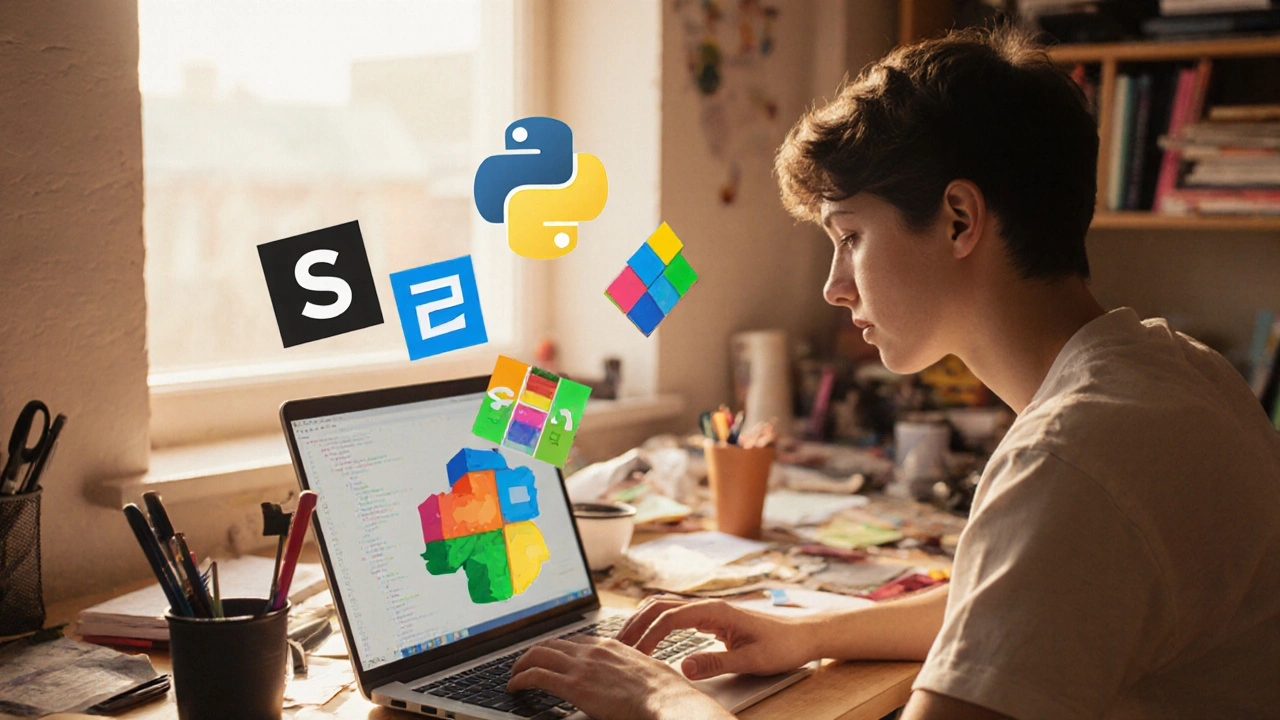
Discover the most beginner-friendly programming languages, how to pick the right one, and the best resources to start coding today.