




City Selection & Budget Estimator
Select your primary exam, set your monthly budget, and assess your discipline to find the best city match.
Includes rent, food, and local transport.
Recommended Strategy
City Comparison for Your Profile
Top Recommendation
Choosing the right city to prepare for competitive exams is often a bigger decision than picking the syllabus itself. You aren't just choosing where you will live; you are choosing your daily routine, your peer group, and the intensity of your study environment. For many aspirants targeting UPSC, CAT, or NEET, moving to a hub like Delhi, Pune, or Hyderabad isn't just about access to famous teachers. It’s about immersion. The social pressure, the availability of resources, and the sheer volume of serious students around you create a feedback loop that keeps you on track when motivation dips at home.
Why Location Matters More Than You Think
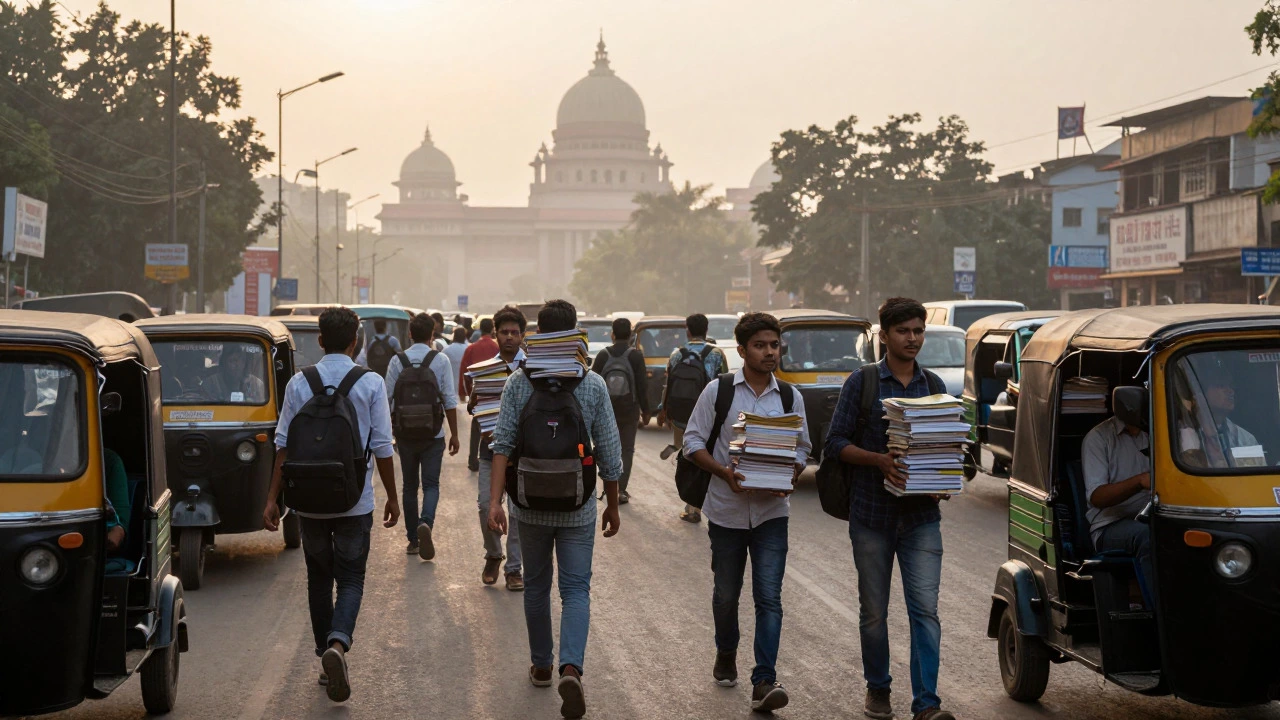
It sounds simple, but your physical surroundings dictate your mental state. If you live in a quiet residential area with no other aspirants nearby, it is easy to fall into the trap of "pseudo-study." You sit at a desk, open books, but lack the urgency that comes from seeing others grind through ten-hour days. In dedicated exam hubs, this urgency is ambient. You see people reading in parks, discussing current affairs over chai, and returning to hostels late at night. This visual constant acts as a silent coach.
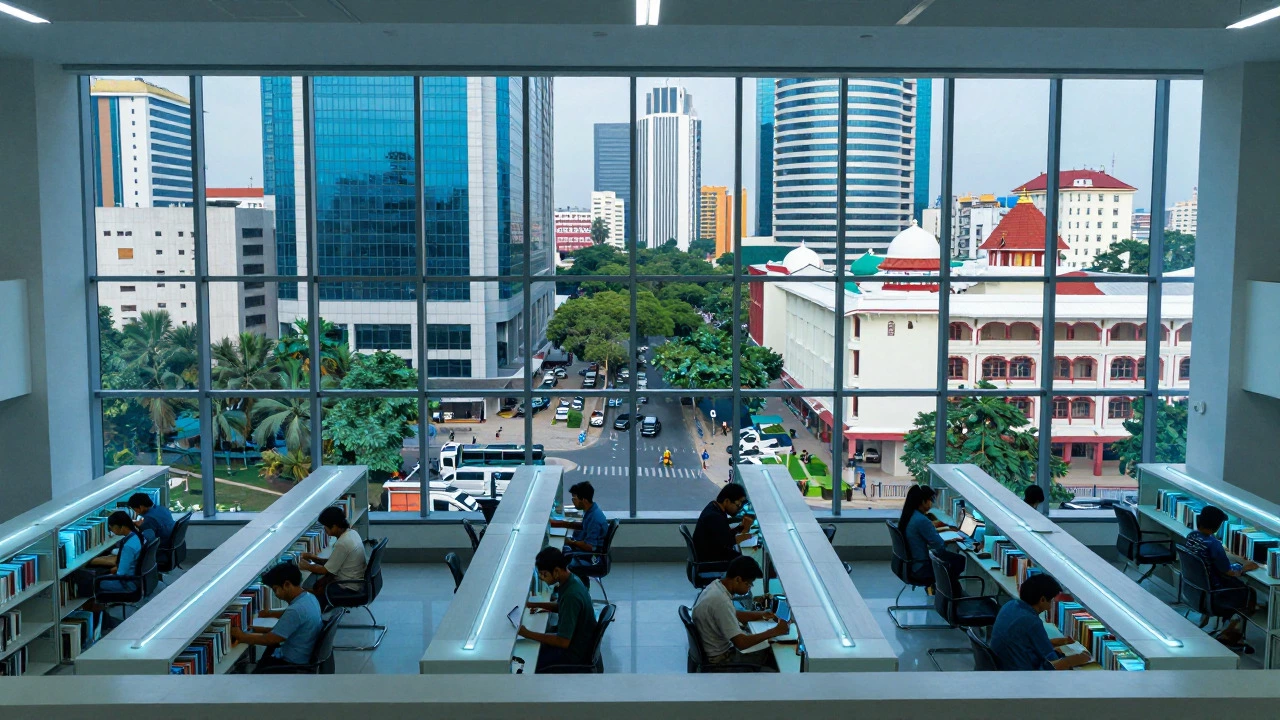
Furthermore, infrastructure plays a critical role. Access to reliable internet, quiet libraries, and proximity to coaching centers reduces friction. When you spend an hour commuting to class, that is an hour less for revision. Cities that have clustered their educational institutions make logistics easier, allowing you to focus on content rather than logistics.
Top Contenders: The Big Three Hubs
New Delhi and Noida
For civil services aspirants, New Delhi remains the undisputed capital. Why? Because the government is there. Being in the heart of political activity means you have direct access to policy discussions, press briefings, and a dense network of mentors who have walked the path before you. Coaching institutes here operate on massive scales, offering full-time residential programs that include food, accommodation, and structured testing schedules. The downside? The cost. Living expenses in central Delhi are high, and the traffic can be a significant time sink if you don't plan your route carefully.
Pune
If you prefer a slightly more relaxed pace without sacrificing quality, Pune is a strong contender. Known as the education hub of western India, it hosts some of the most respected coaching centers for banking, SSC, and engineering entrance exams. The city has a younger demographic, which translates to a vibrant student community. Unlike Delhi, the weather is milder year-round, which helps maintain consistency during summer months when heat can sap energy levels. However, the variety of top-tier specialized coaching for niche exams might be slightly lower compared to the national capital.
Hyderabad
Hyderabad has emerged as a powerhouse for technical competitive exams, particularly for GATE and various engineering entrance tests. The city’s tech ecosystem attracts a lot of IT professionals who also pursue higher studies, creating a unique blend of industry experience and academic rigor. The cost of living is generally lower than in Mumbai or Delhi, making it a budget-friendly option for long-term preparation. The presence of major IITs and NITs adds to the academic atmosphere, providing excellent library resources and peer interaction opportunities.
Comparing Key Factors for Aspirants
| City | Primary Strength | Avg. Monthly Cost (Est.) | Best For |
|---|---|---|---|
| New Delhi | UPSC & Civil Services | High (₹15,000 - ₹25,000) | Government Jobs, Politics |
| Pune | Banking & SSC | Moderate (₹10,000 - ₹18,000) | Bank PO, Insurance, SSC CGL |
| Hyderabad | Engineering & Tech | Moderate (₹9,000 - ₹15,000) | GATE, JEE Advanced, CAT |
| Mumbai | CAT & Management | Very High (₹18,000 - ₹30,000) | MBA Entrance, CSAT |

The Hidden Costs of Moving
Before you pack your bags, look beyond the tuition fees. The hidden costs of relocating for exam prep can eat up your savings quickly. Accommodation near reputable coaching centers commands a premium. In Delhi, a decent PG (Paying Guest) room within walking distance of major institutes can cost upwards of ₹8,000 per month, excluding food. Add groceries, local transport, and incidental expenses, and your monthly burn rate doubles.
There is also the emotional cost. Leaving your support system behind can lead to isolation, especially in the first few months. Many aspirants report feeling lonely despite being surrounded by thousands of peers. This is why choosing a city with a strong alumni network or a supportive hostel culture is crucial. A place where seniors mentor juniors organically can bridge this gap significantly.
Alternative Strategies: Hybrid Preparation
You don't necessarily need to move permanently. Many successful candidates adopt a hybrid model. They attend weekend batches in a major hub while residing in their hometown during the week. This works well if you have strong self-discipline and access to digital resources. Platforms offering recorded lectures and online test series have made this viable. However, this approach requires rigorous time management. Without the physical presence of a classroom, it is easy to procrastinate.
If you choose this route, treat your home setup like a professional office. Dedicate a specific room or corner exclusively for studying. Remove distractions like TV or gaming consoles from that space. Create a fixed schedule that mimics the structure of a full-time course. Wake up at the same time, take breaks at set intervals, and end your day with a review session. Consistency is key here, not intensity.
How to Choose Your City: A Decision Framework
To make the right choice, ask yourself three questions:
- What is my primary target exam? Match the city's strength to your goal. Don't go to Delhi for CAT if you are equally good at it in Bangalore. Go where the specialization is deepest.
- What is my budget ceiling? Calculate your total monthly expenditure including rent, food, and coaching fees. Ensure you have a buffer for emergencies. If your budget is tight, consider tier-2 cities with growing coaching ecosystems like Indore or Jaipur.
- How independent am I? Be honest about your self-motivation levels. If you need external accountability, choose a city with a robust peer group and structured residential programs. If you are highly disciplined, you can afford to save money by staying in a smaller town.
Final Thoughts on Environment and Mindset
The best city is the one that aligns with your personality and financial reality. There is no single "best" location for everyone. Some thrive in the chaotic energy of Delhi, while others need the calm of a quieter suburb in Pune. The key is to find an environment where studying feels natural, not forced. Once you identify that fit, the rest follows. Focus on building habits, connecting with the right people, and maintaining health. The city is just the stage; you are the performer.
Is it necessary to move to a big city for competitive exam preparation?
Not necessarily. While big cities offer better resources and peer groups, success depends more on discipline and strategy. If you have access to quality online materials and a quiet study space at home, you can prepare effectively without relocating. However, moving provides an immersive environment that can accelerate progress for those who struggle with self-motivation.
Which city is cheapest for long-term exam preparation?
Tier-2 cities like Indore, Jaipur, or Bhopal often offer the best balance of low cost and adequate coaching facilities. In these cities, you can find decent PG accommodations for under ₹5,000 per month, and coaching fees are typically 30-40% lower than in metropolitan areas like Delhi or Mumbai.
How much should I budget for coaching and living expenses in Delhi?
For a full-year residential program in Delhi, expect to spend between ₹2.5 lakh and ₹4 lakh. This includes tuition, accommodation, and food. If you opt for non-residential classes, the cost drops significantly, but you must add separate housing and utility bills, which can range from ₹15,000 to ₹25,000 per month depending on the locality.
Can I prepare for UPSC from a small town?
Yes, many toppers have cleared UPSC from small towns. The key is access to standard books, consistent newspaper reading, and regular mock tests. Online platforms now provide access to the same faculty available in Delhi. The main challenge is finding a peer group for discussion, which can be mitigated by joining online forums or local study circles.
What are the red flags to avoid when choosing a coaching center?
Avoid centers that promise guaranteed selection, have no transparent refund policy, or rely heavily on marketing over substance. Check for student testimonials from the last two years, visit the classrooms to assess hygiene and comfort, and talk to current students about the actual teaching quality versus the advertised curriculum.