How Many IITs Are There in India? Complete Guide to Indian Institutes of Technology
Curious about how many IITs exist in India today? Get all the latest facts, updates, and intriguing details in this reliable, easy-to-follow overview.
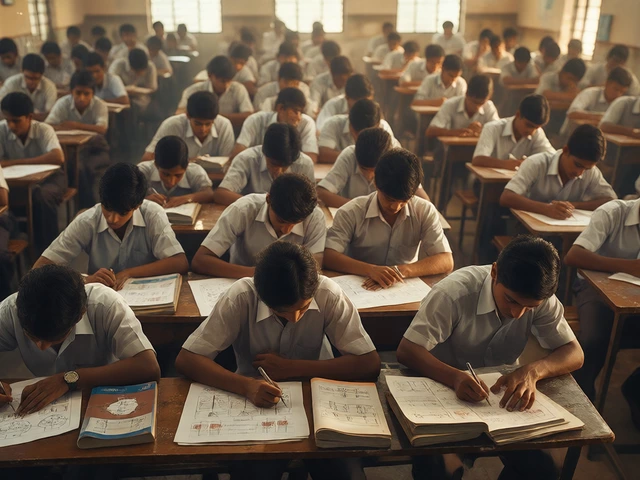
When people talk about the Indian Institutes of Technology, a group of publicly funded engineering colleges in India known for their extreme selectivity and high academic standards. Also known as IITs, they are the most sought-after engineering schools in the country, with admission determined almost entirely by performance in the JEE Advanced, the national entrance exam required to enter any IIT. As of 2024, there are 23 IITs across India. Each one is autonomous, funded by the Government of India through the Ministry of Education, and operates under the IIT Council. These aren’t just universities—they’re brands that shape careers, drive innovation, and often define what success looks like for engineering students in India.
The first IIT was set up in Kharagpur in 1951, and since then, new ones have been added steadily, especially after 2000. The most recent additions—like IIT Jammu, IIT Dharwad, and IIT Palakkad—were created to expand access to world-class engineering education beyond the traditional hubs. Each IIT has its own campus, faculty, and research focus, but they all follow the same admission rule: you must crack JEE Advanced. That’s not just a tough exam—it’s one of the hardest in the world, as shown in posts comparing it to the Gaokao and UPSC. The number of IITs has grown, but the competition hasn’t eased. Around 250,000 students take JEE Advanced every year, and only about 10,000 get in. That means less than 4% of applicants make it. The system is designed to be selective, and the 23 IITs are the only ones that can offer the degree that carries the IIT name.
It’s not just about the count. The IIT admission, the process by which students gain entry into any of the 23 Indian Institutes of Technology through JEE Advanced rankings process is tightly linked to rank cutoffs, branch preferences, and location. Top IITs like Bombay, Delhi, Madras, and Kanpur still get the highest ranks, but newer IITs are catching up fast in placements and research output. Many students don’t realize that even if you don’t get into an older IIT, a newer one can still offer great opportunities—especially in fields like AI, robotics, and renewable energy. The key is understanding how the system works, not just chasing the oldest name. If you’re preparing for JEE Advanced, knowing how many IITs exist helps you plan your options better. You’re not just aiming for one school—you’re aiming for one of 23 possible paths, each with its own strengths.
What you’ll find below are real insights from students and experts who’ve navigated this system. From what it takes to crack JEE Advanced, to how IITs compare to NITs, to whether mental ability matters more than memorization—these posts cut through the noise. No fluff. No hype. Just what actually happens when you aim for an IIT.
Curious about how many IITs exist in India today? Get all the latest facts, updates, and intriguing details in this reliable, easy-to-follow overview.