NEET Opposition in India: States Challenging the National Medical Entrance Exam
This article explores which Indian states oppose NEET, why the resistance exists, the impact on students, and the ongoing legal and political debates.
When you think about becoming a doctor in India, India NEET, the National Eligibility cum Entrance Test for undergraduate medical courses. It's the only exam that decides if you get into an MBBS or BDS program anywhere in the country — public or private. Also known as NEET UG, it replaced over a dozen state-level and institutional exams in 2016 to create a single, national standard for medical admissions. Every year, more than 2 million students take it. Only about 1 in 5 clears it with a score good enough for a government college. That’s not luck — it’s months, sometimes years, of focused effort.
Behind every NEET topper is a mix of discipline, smart prep, and mental toughness. The exam covers Physics, Chemistry, and Biology (Botany and Zoology) from Class 11 and 12 syllabi, but it doesn’t test memory alone. It tests how fast you can apply concepts under pressure. Top performers don’t just memorize formulas — they recognize patterns, eliminate wrong options quickly, and manage time like a pro. And it’s not just about studying harder. It’s about studying right. That’s why NEET coaching, structured programs offered by top institutes like Aakash, Allen, and Fiitjee are so popular. These aren’t just classes — they’re systems designed to break down the exam into manageable parts, track progress, and build exam-day confidence. But coaching isn’t mandatory. Many students crack NEET with free YouTube resources, old question papers, and disciplined self-study.
The pressure is real. Parents expect results. Friends are getting into top colleges. Social media is full of success stories. But NEET isn’t just about marks — it’s about resilience. The subjects are dense. The competition is brutal. And the stakes? Your future as a doctor. That’s why understanding your weak areas — like Organic Chemistry or Human Physiology — and fixing them early matters more than trying to cover everything. The NEET preparation, the process of building knowledge, speed, and accuracy for the exam isn’t a sprint. It’s a long-distance run with checkpoints every month. Mock tests, previous year papers, and error logs are your best tools. And if you’re wondering if you’re ready, ask yourself: Can you solve 180 questions in 3 hours without panicking? If not, you’ve got work to do.
What you’ll find below are real stories, practical guides, and hard numbers from students who’ve been through it. From the best NEET coaching courses in 2025 to the most feared subjects, from how to study without burning out to what percentile you actually need for a government seat — this collection cuts through the noise. No fluff. No hype. Just what works.
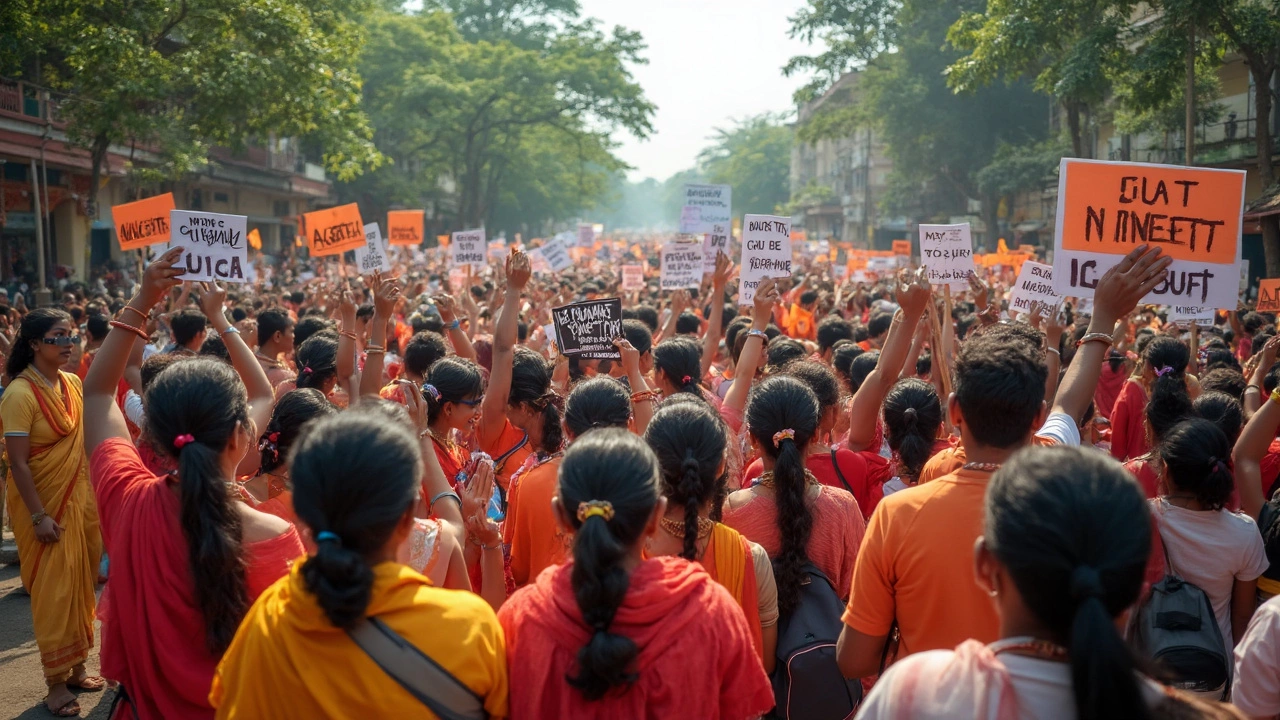
This article explores which Indian states oppose NEET, why the resistance exists, the impact on students, and the ongoing legal and political debates.