Traditional vs Distance Education: Key Differences Explained
Explore how traditional and distance education differ in delivery, interaction, cost, technology, and accreditation, and learn how to choose the best fit for your goals.
When we talk about education differences, the varying structures, goals, and outcomes of learning systems in India. Also known as educational pathways, it shapes everything from how students prepare for exams to what careers they can actually enter. Not all learning is the same. A student in Delhi following the CBSE board, India’s most popular school system with over 20 million students has a very different experience than someone in Kerala studying under ICSE—or someone in a rural town training to be an electrician through a vocational program. These aren’t just minor tweaks. They’re completely different roadmaps with different rules, pressures, and rewards.
The biggest education differences, how India divides learning between academic and vocational paths are often misunderstood. Many assume a college degree is the only way forward. But vocational education, hands-on training in trades like plumbing, coding, or nursing is growing fast—and it’s often faster, cheaper, and more directly linked to jobs. Meanwhile, the pressure to crack the competitive exams, high-stakes tests like JEE, NEET, and UPSC that determine elite career access pushes millions into years of intense prep, often sacrificing mental health and personal time. These aren’t just exams. They’re gatekeepers. And the system around them—how schools teach, how coaching centers operate, how parents react—creates a culture unlike anywhere else.
It’s not just about what you learn, but when, how, and why. The academic education, theory-heavy, exam-focused schooling meant to build broad knowledge system in India rewards memorization and test-taking speed. But real-world skills—problem-solving under pressure, managing stress, adapting quickly—are what separate the top scorers in JEE Mains from the rest. And those same skills? They’re barely taught in classrooms. Meanwhile, students in vocational programs learn by doing, often getting hired before they finish. The real question isn’t which path is better. It’s which one fits your goals, your pace, and your life. Below, you’ll find real stories and data on how these systems actually work—what makes the toughest exams so hard, why some degrees barely help in competitive prep, and how CBSE became the most used board in the world. No fluff. Just what you need to know to make sense of India’s education maze.
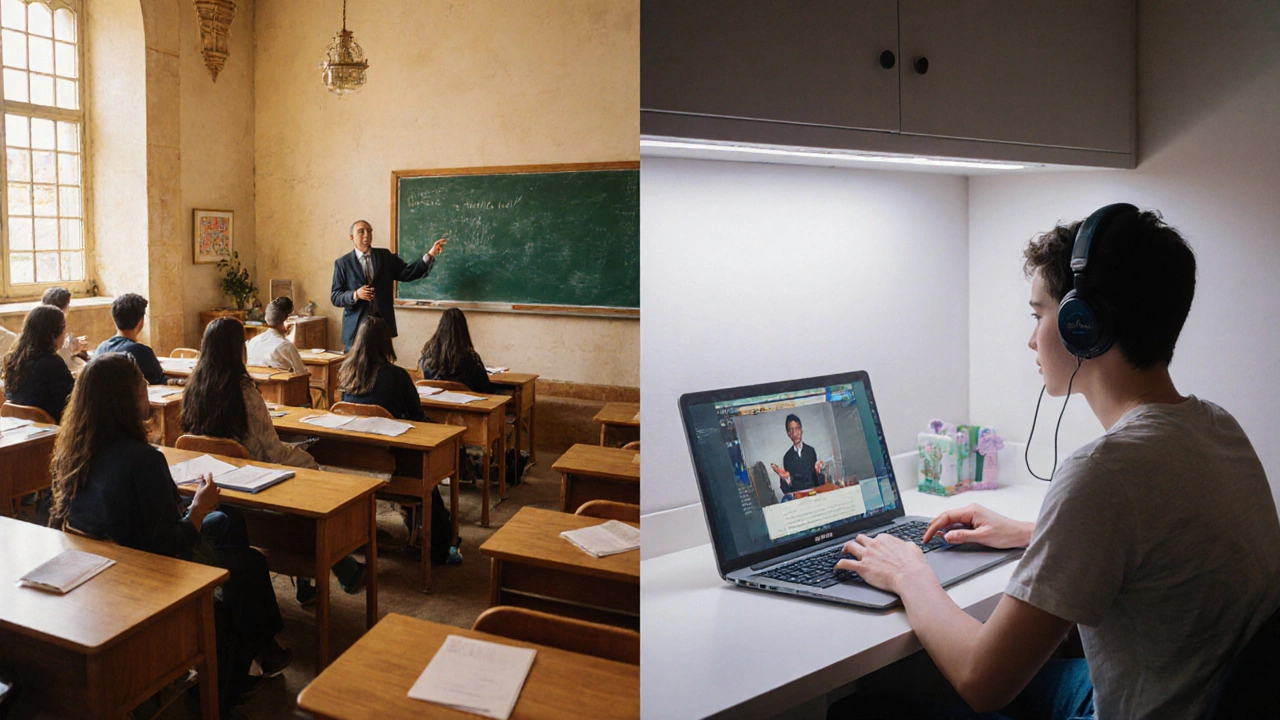
Explore how traditional and distance education differ in delivery, interaction, cost, technology, and accreditation, and learn how to choose the best fit for your goals.