What Is the Most Feared Subject in Competitive Exams? A Data‑Driven Look
Discover which subjects top the fear list in India's biggest competitive exams, why they intimidate students, and practical strategies to conquer them.
When we talk about difficult exam subjects, academic challenges that demand years of relentless focus, mental endurance, and strategic preparation. Also known as high-stakes exams, these aren't just tests—they're filters that sort out who can handle pressure, inconsistency, and burnout. These aren’t the kind of exams you cram for the night before. They’re marathons disguised as multiple-choice papers.
Take the JEE Mains, India’s gateway to engineering colleges like IITs, where success depends on solving unseen problems under extreme time pressure. It doesn’t test memory—it tests how fast your brain can restructure logic on the fly. Then there’s the UPSC Civil Services Exam, a grueling multi-stage test that demands mastery of everything from ancient Indian history to international trade policy. It’s not about knowing facts—it’s about connecting dots across disciplines while sleep-deprived. And let’s not forget the MBA programs, especially at top schools, where the real challenge isn’t the coursework—it’s surviving the emotional toll of constant competition, networking pressure, and 80-hour weeks.
What makes these subjects hard isn’t the content alone. It’s the combination: long preparation cycles, low success rates, high stakes, and the fact that you’re often competing against thousands who’ve been training since they were 15. These exams don’t just measure knowledge—they measure discipline, resilience, and mental health. You can memorize every formula, but if you crack under pressure, you’ll fail. If you burn out halfway, you’ll quit. If you compare yourself to others too much, you’ll lose your way.
There’s no magic trick. No shortcut. But there are patterns. The people who win don’t study more hours—they study smarter. They know when to rest. They avoid toxic competition. They focus on weak spots instead of chasing perfection. They treat each mock test like a real exam and learn from every mistake. And they don’t wait for motivation—they build systems that keep going even when they feel nothing.
Below, you’ll find real stories from people who’ve been through these battles. From what actually gets you through JEE Advanced to why losing a government job is harder than you think, from the mental cost of MBA programs to how the Gaokao breaks students in China. These aren’t motivational quotes. These are raw, practical insights from those who made it—and those who didn’t. No fluff. No sugarcoating. Just what works.
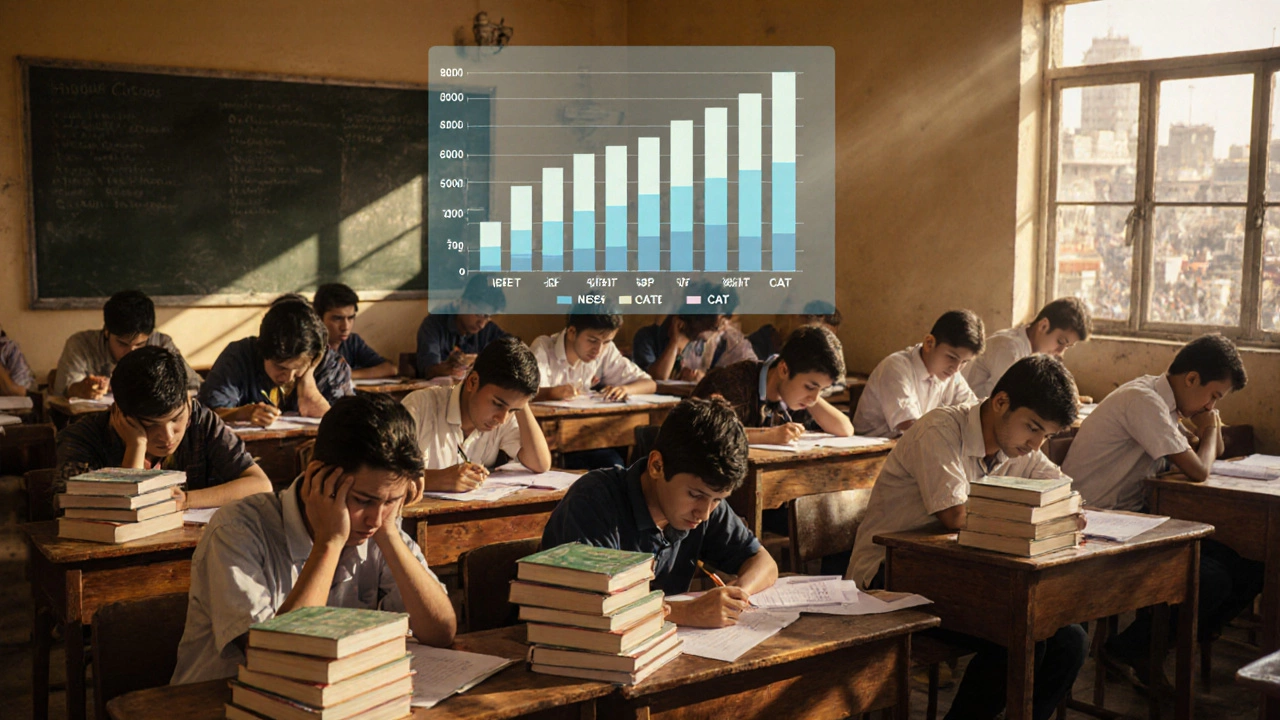
Discover which subjects top the fear list in India's biggest competitive exams, why they intimidate students, and practical strategies to conquer them.