



Passing NEET is just the first door. The real question isn’t whether you got in-it’s which doctor you want to become after you do. Thousands of students clear NEET every year, but few stop to think about what comes next. You don’t just become a doctor. You choose a path-each with different hours, pay, stress, and life impact.
MBBS Is the Base, Not the End Goal
NEET gets you into MBBS. That’s the entry ticket. But MBBS itself doesn’t make you a specialist. It’s a five-and-a-half-year foundation. After that, you’ll need to pick a branch. And this choice shapes your entire career.
Some think MBBS is enough to practice. It’s not. In India, you can’t legally run your own clinic after MBBS without a postgraduate degree. Most hospitals require MD or MS for senior roles. Even in private practice, patients trust specialists more. So the real decision starts after you finish your undergraduate degree.
Top Specializations After MBBS
There are over 50 specializations in medicine. But only a handful dominate in demand, income, and workload. Here are the most common-and what they actually mean day to day.
- MD General Medicine - You become the doctor other doctors call when things get complicated. Long hours, heavy responsibility, high patient volume. You’ll handle diabetes, heart failure, infections. Not glamorous, but always in demand. Average starting salary: ₹1.2-1.8 lakh/month in private hospitals.
- MS General Surgery - You’re in the operating room 6-8 hours a day. Emergency calls every night. Recovery is slow, but the pay is high. Surgeons earn more than most physicians. Starting salary: ₹1.5-2.2 lakh/month. You’ll need to be physically strong and mentally sharp.
- MD Pediatrics - Kids don’t always tell you what’s wrong. You rely on observation, parental input, and gut instinct. Long shifts, emotional toll, but deeply rewarding. Pediatricians are always needed in cities and rural areas alike. Starting salary: ₹1-1.5 lakh/month.
- MD Psychiatry - Mental health is exploding in demand. You’ll spend hours listening, not prescribing. Fewer emergencies, better work-life balance. Still stigmatized in some areas, but growing fast. Starting salary: ₹80,000-1.4 lakh/month.
- MD Radiology - You read scans, not patients. Less direct contact, more tech. High demand in hospitals and diagnostic centers. You can work part-time or even freelance. Starting salary: ₹1-1.6 lakh/month.
- MS Orthopedics - Bones, joints, sports injuries. You’ll fix fractures, do joint replacements. Physical work, but predictable hours. Popular in tier-2 and tier-3 cities. Starting salary: ₹1.4-2 lakh/month.
- MD Dermatology - Skin, hair, nails. High patient volume, low emergency load. Private clinics thrive. Many start their own practice within 2-3 years. Starting salary: ₹90,000-1.5 lakh/month.
What No One Tells You About Specialization
It’s not just about money or prestige. It’s about your personality.
If you hate long nights and emergency calls, avoid ER medicine or obstetrics. If you can’t stand seeing suffering, stay away from oncology. If you love tech and data, radiology or pathology might suit you better than clinical roles.
Many students pick a specialty because their parents want them to. Or because it’s ‘prestigious.’ That’s a mistake. You’ll spend 10-15 years in that field. You need to enjoy the work, not just the title.
One student I spoke to chose MD Psychiatry because he thought it was easy. He ended up quitting after six months. He couldn’t handle the emotional weight of listening to trauma daily. Another picked MS Orthopedics because his uncle was a surgeon. He hated the physical strain and switched to Radiology after his first year of residency.
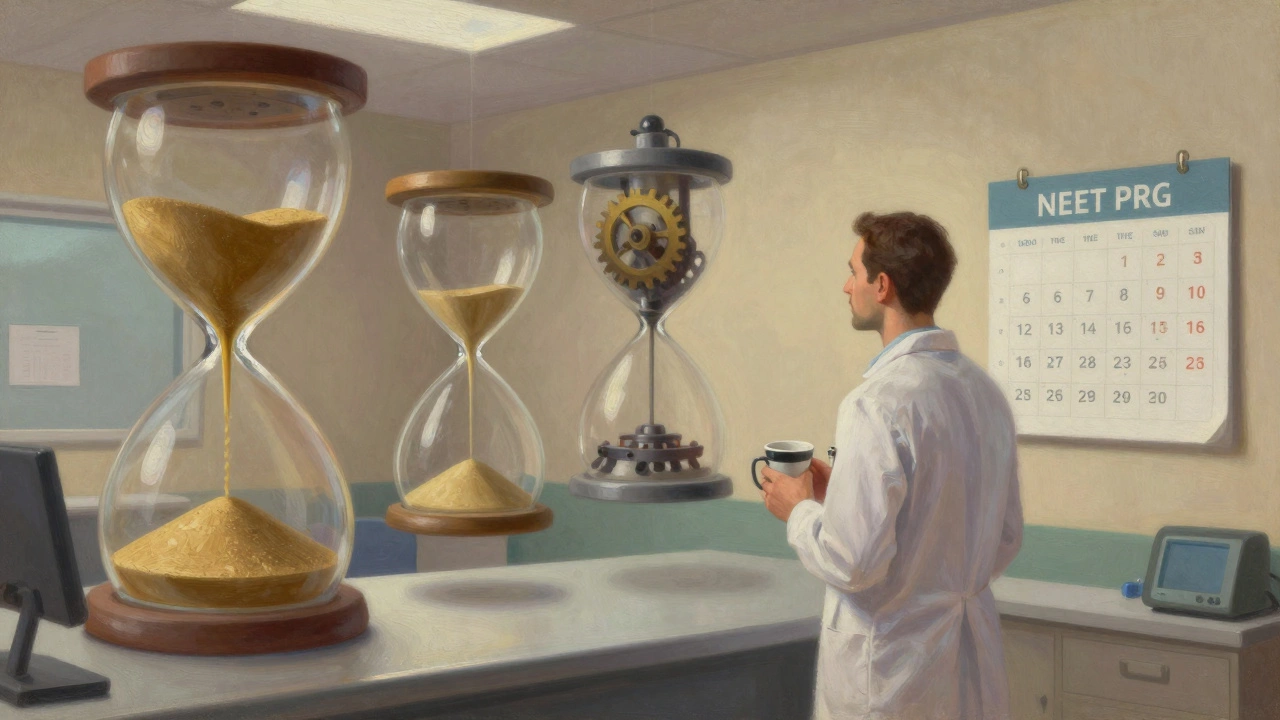
How to Decide: A Simple Framework
You don’t need to guess. Use this three-step filter:
- What do you enjoy doing? Do you like solving puzzles? Go for Internal Medicine. Do you like working with your hands? Surgery or Orthopedics. Do you like talking to people? Psychiatry or Pediatrics.
- What’s your tolerance for stress? Emergency medicine and neurosurgery have high burnout rates. Dermatology and Radiology have lower pressure. Be honest with yourself.
- Where do you want to live? Some specialties are saturated in big cities-like Dermatology in Mumbai or Delhi. Others are in demand in smaller towns-like Pediatrics or General Medicine. Consider where you’ll actually work.
Don’t wait until the end of MBBS to think about this. Start exploring during your third year. Shadow doctors. Talk to residents. Ask them: "What’s the worst part of your day?" That’s more revealing than "What’s the best part?"
The Reality of PG Entrance (NEET PG)
After MBBS, you must clear NEET PG to get into a specialization. It’s harder than NEET UG. The competition is fierce. Around 1.5 lakh students appear each year for 30,000 seats.
But here’s the truth: your rank matters more than your choice. If you get a top 500 rank, you can pick any specialty. If you’re ranked 10,000, you might end up with whatever’s left-like Microbiology or Forensic Medicine.
So plan ahead. If you want Orthopedics, you need to aim for a rank under 5,000. If you’re okay with Radiology or Psychiatry, you can aim lower. Know your target early.

What About Diplomas and Super-Specialties?
Some students skip MD/MS and go for diplomas like DCH (Child Health) or DGO (Obstetrics). These take only 2 years. They’re cheaper. But they limit your options. You can’t become a professor. You can’t get into top hospitals. You’ll be stuck in small clinics.
Super-specialties like DM Cardiology or MCh Neurosurgery come after MD/MS. They’re 3 years long. Only the top 5% of students pursue them. They’re for those who want to be the best in their field. Not everyone needs this. But if you’re aiming for AIIMS, Apollo, or a research career, it’s the only path.
What’s the Most Practical Choice?
Let’s cut through the noise.
For most students, the smartest move is MD General Medicine or MD Pediatrics. Why?
- They’re in demand everywhere-from metro hospitals to rural health centers.
- They have stable work hours compared to surgery.
- You can open your own clinic after 2-3 years of experience.
- They’re the foundation for other specializations later.
Surgeons make more money, but they work longer hours, have higher physical demands, and face more legal risks. If you’re not passionate about the operating room, it’s not worth it.
Psychiatry and Dermatology are rising fast. Mental health awareness is growing. Skin clinics are booming. These are the future-proof specialties.
Final Thought: Don’t Follow the Crowd
Everyone wants to be a surgeon. Everyone thinks Radiology is "easy." But those aren’t reasons. They’re myths.
The best doctor after NEET isn’t the one with the highest rank. It’s the one who wakes up every morning and still wants to help people-even after 14-hour shifts, even when the system is broken.
Your specialty should match your energy, not your parents’ expectations or your friends’ choices. Take time. Talk to real doctors. Watch their days. Listen to their regrets.
Because after NEET, the real exam isn’t on paper. It’s the one you take every day for the next 30 years.
Can I become a doctor without clearing NEET PG?
No. After MBBS, you must pass NEET PG to get a recognized postgraduate degree (MD/MS) in India. Without it, you can’t practice as a specialist in most hospitals or teach in medical colleges. You can work as a general physician, but your scope and pay will be limited.
Which specialization has the best work-life balance?
Dermatology, Psychiatry, and Radiology offer the best work-life balance among medical specialties. These fields rarely require emergency calls or overnight shifts. Dermatologists often work standard clinic hours. Psychiatrists can set private practice schedules. Radiologists mostly read scans during the day. None are stress-free, but they’re far more predictable than surgery or emergency medicine.
Is it better to do MD or MS after MBBS?
It depends on your interest, not prestige. MD (Doctor of Medicine) is for non-surgical fields like Medicine, Pediatrics, Psychiatry. MS (Master of Surgery) is for surgical fields like General Surgery, Orthopedics, Obstetrics. Both are equally respected. Choose based on whether you prefer treating with medicines or operating. Neither is "better"-only what fits you.
Can I switch specialties after choosing one?
It’s extremely rare and difficult. Once you start your MD/MS residency, switching requires reapplying for NEET PG, losing 2-3 years of training, and often starting over. Most doctors who regret their choice stay in it because the cost of switching is too high. That’s why choosing wisely before starting PG matters more than ever.
Do I need to go abroad to get a better medical career?
Not necessarily. India has excellent hospitals, high patient volume, and growing demand for specialists. Many Indian doctors thrive locally. Going abroad means passing exams like USMLE or PLAB, relocating, and starting from scratch. It’s a big risk. Only consider it if you’re seeking research opportunities, higher pay, or a lifestyle change-not just because you think it’s "better."