


Self-Taught Developer Hiring Readiness Calculator
How ready is your portfolio for getting hired?
Answer these questions to get your personalized hiring readiness score based on what employers actually look for.
What employers look for
77% of hiring managers say real projects matter more than degrees.
- ✓ Live demos show your ability to build complete products
- ✓ Clear documentation demonstrates communication skills
- ✓ Open source contributions prove collaboration ability
Your Hiring Readiness Score
$score%Project improvement tips
More than 60% of software developers in the U.S. in 2025 didn’t graduate with a computer science degree. That’s not a fluke. It’s the new normal. If you’re teaching yourself to code and wondering if anyone will actually hire you, the answer isn’t a simple yes or no-it’s yes, but only if you know how to prove you can do the work.
Companies don’t care about your diploma-they care about what you can build
Forget what you heard in college orientation. No hiring manager at a startup, tech giant, or even a local agency is flipping through your transcript. They’re looking at your GitHub. They’re testing your code in a live interview. They’re asking: Can you fix this bug? Can you ship a feature by Friday? Can you work with the team?
Companies like Google, Apple, and Netflix have publicly removed degree requirements from many engineering roles. IBM hired over 10,000 people in 2024 without a four-year degree. Why? Because they found that self-taught coders often solve problems faster-they’ve had to figure things out on their own, debug without a professor, and learn by doing.
One developer in Texas taught himself Python by building a tool to automate his dad’s small business inventory. He posted it on GitHub. A recruiter from a logistics startup saw it, reached out, and hired him as a junior developer. He had no degree. No bootcamp certificate. Just a working app and the ability to explain how it worked.
What you need to get hired (beyond just writing code)
Knowing how to write a for-loop isn’t enough. Employers want to see you’ve solved real problems. That means building projects that matter-not just to you, but to someone else.
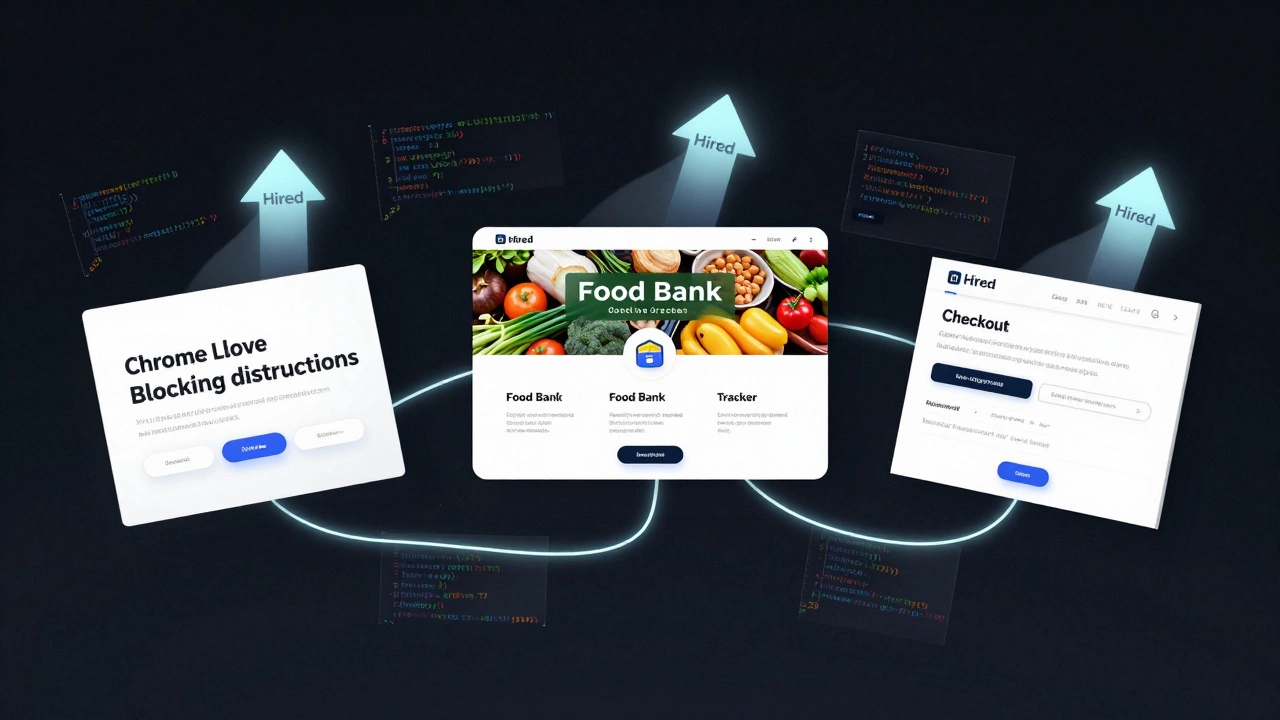
- A weather app that pulls real data and shows local forecasts? Good.
- A website that helps local food banks track donations? Better.
- A Chrome extension that blocks distracting sites during work hours? Even better.
Projects like these show you understand user needs, not just syntax. They show you can go from idea to launch. That’s worth more than five A’s in data structures.
Also, don’t skip the basics: version control (Git), writing clear commit messages, and documenting your code. These aren’t "nice to haves"-they’re table stakes. If your GitHub looks like a messy notebook with 50 abandoned repos, you’ll get passed over-even if your code works.
Bootcamps vs. self-taught: which gets you hired faster?
Bootcamps promise job placement. Self-taught paths promise freedom. But who actually lands jobs faster?
A 2025 study by HackerRank tracked 8,200 entry-level hires. Self-taught coders took an average of 7.3 months to land their first job. Bootcamp grads took 5.1 months. But here’s the twist: after six months on the job, self-taught developers were rated 12% higher on problem-solving skills and 9% higher on code quality by their managers.
Why? Bootcamps teach you how to pass interviews. Self-taught coders learn how to survive real projects. They’ve spent weeks stuck on a bug because no one was there to give them the answer. That kind of grit shows up in performance reviews.
But here’s the catch: bootcamps give you structure, mentorship, and a network. If you’re struggling to stay motivated, a bootcamp can be worth the investment. If you’re disciplined and can build a portfolio on your own, you don’t need it.

How to stand out when you don’t have a degree
Here’s what actually works:
- Build three solid projects-not five half-finished ones. Each should solve a real problem, have live demos, and include a README explaining your process.
- Contribute to open source. Fix a typo in a documentation file. Add a test case. Submit a small feature. It doesn’t have to be huge. Just show you can work in a team.
- Write about what you learn. Start a blog. Post on Dev.to or Medium. Explain how you fixed a tricky bug. People remember those who teach.
- Network like you mean it. Go to local meetups. Join Discord servers for developers. Don’t just ask for a job-ask for feedback on your code. Most hires come from referrals, not job boards.
One self-taught developer in Brazil posted a thread on Reddit showing how he rebuilt a broken e-commerce checkout page using only vanilla JavaScript. It got 27,000 views. A CTO from a SaaS company in Berlin saw it, messaged him, and offered a remote internship. Three months later, he was full-time.
The hidden barriers-and how to break them
Yes, bias still exists. Some recruiters still filter out applicants without degrees. Some companies still require a bachelor’s in their job posts.
But here’s the secret: those aren’t the companies you want to work for anyway.
Focus on startups, tech-first businesses, remote-first teams, and companies that value output over pedigree. Look for job posts that say things like:
- "Demonstrated ability through projects is preferred."
- "No degree required."
- "We care about what you can do, not where you studied."
Use LinkedIn filters to search for those exact phrases. Apply to 10 jobs a week. Track your progress. If you’re rejected, ask for feedback. Most won’t reply-but enough will to help you improve.
What hiring managers really say
"I’ve hired more self-taught devs than degree-holders in the last two years. The ones who succeed? They’re obsessed. They don’t wait for permission to learn. They build at 2 a.m. They fix bugs for fun. They show up ready to solve problems, not just write code." - Senior Engineering Manager, fintech startup, San Francisco
"If you can’t explain your project in under three minutes, you’re not ready. If you can show me you’ve thought through edge cases, user flow, and scalability-you’ve already beaten 80% of applicants with CS degrees." - Hiring Lead, e-commerce platform, Berlin
Bottom line: Yes, you can get hired
You don’t need a degree. You don’t need a bootcamp. You need proof.
Build something real. Share it. Talk about it. Keep improving. The tech industry doesn’t care where you learned to code. It only cares what you can do with it.
If you’re reading this and you’ve spent months learning JavaScript, Python, or React on your own-you’re already ahead of most people who went to college. Now go ship something.
Can I get a coding job without any experience?
Yes, but you need to create experience. Build projects, contribute to open source, and document your learning. Employers hire based on what you can do, not how long you’ve been studying. A single well-built app with clear documentation can replace years of classroom experience.
Do self-taught coders earn less than college grads?
Not in the long run. Entry-level salaries are often similar. After two years, self-taught developers tend to catch up or surpass their degree-holding peers because they often develop stronger problem-solving habits and adapt faster to changing tech. Salary data from Levels.fyi in 2025 shows no significant gap between self-taught and CS graduates at the same job level.
What programming language should I learn first?
Start with JavaScript if you want to build websites or apps fast. Use Python if you’re interested in data, automation, or AI. Both are in high demand, have huge communities, and are beginner-friendly. The language matters less than your ability to solve problems with it.
How long does it take to get hired as a self-taught coder?
Most people land their first job between 6 and 12 months of consistent learning and building. The key isn’t how many hours you put in-it’s how much you ship. Someone who builds three projects in four months often gets hired faster than someone who watches 500 hours of tutorials.
Is it too late to start coding at 30, 40, or older?
Absolutely not. The average age of a new developer in 2025 is 34. Many people switch careers after working in other fields. Employers value maturity, communication skills, and life experience-especially in customer-facing roles. Your background might even be an advantage.
If you’re stuck, ask yourself: What’s the smallest thing I can build this week? Then build it. Share it. Repeat. That’s the path.