Physics Teacher: What It Takes to Teach Physics in India
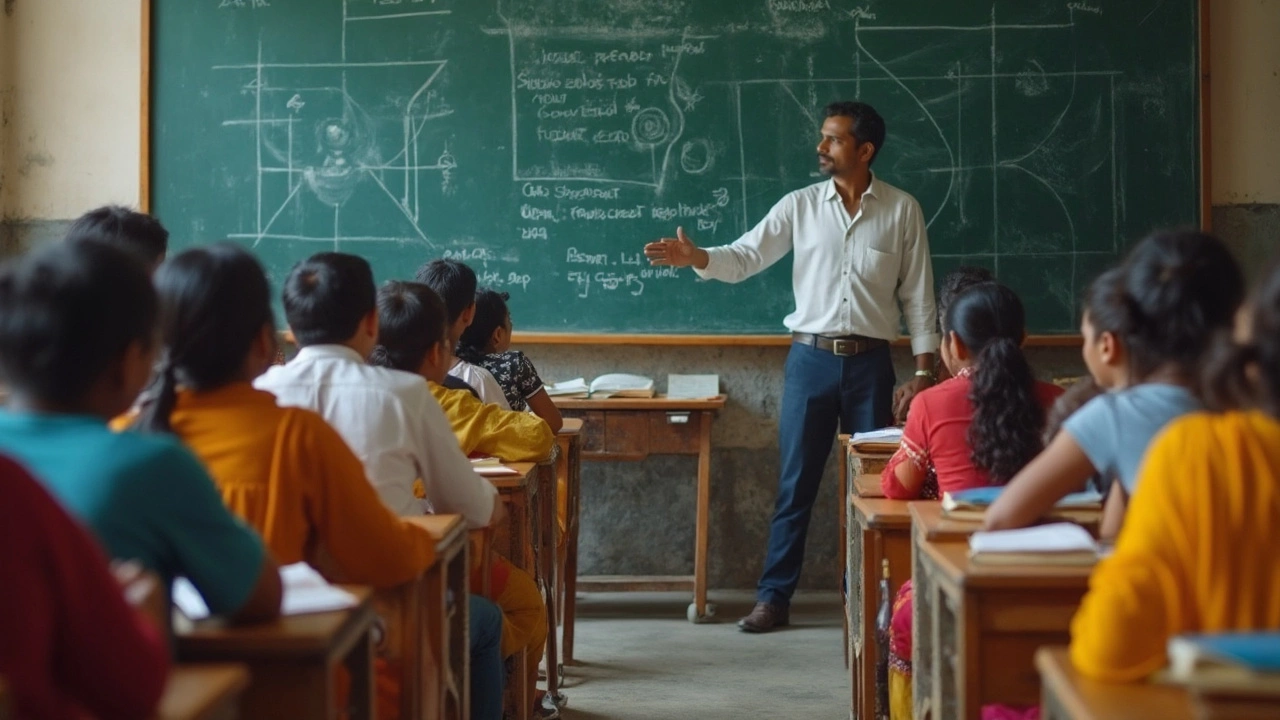
When you think of a physics teacher, a professional who explains the laws of motion, energy, and forces to students in schools or coaching centers across India. Also known as a science educator, it plays a critical role in shaping how the next generation understands the physical world. This isn’t just about memorizing Newton’s laws or solving numerical problems. It’s about making the invisible visible—helping students see gravity in a falling apple, electricity in a light bulb, or waves in a ripple on water.
A physics curriculum, the structured set of topics taught in Indian schools under boards like CBSE, ICSE, or state boards is dense, fast-paced, and heavily exam-focused. That means a physics teacher doesn’t just deliver content—they have to fight disengagement. Many students see physics as a barrier to clearing JEE or NEET, not a window into how the universe works. The best teachers turn that around. They use everyday examples: why a bicycle stays upright, how smartphones use sensors, or why trains don’t fly off tracks during turns. These aren’t just tricks—they’re teaching strategies rooted in cognitive science.
Teaching physics in India also means navigating a system where coaching centers often overshadow schools. Many students get their real physics education from private tutors or online platforms, not classroom teachers. That puts pressure on school-based STEM education, the integrated approach to teaching science, technology, engineering, and math to catch up. A good physics teacher doesn’t just keep up—they innovate. They use simple demos, smartphone apps for motion tracking, or even homemade circuits to make concepts stick. They know that a student who understands why a rocket launches is more likely to ask the next question than one who just memorized F=ma.
And it’s not just about content. A physics teacher in India often doubles as a mentor. Students come to them with doubts about career paths, exam stress, or even self-doubt. When a student says, "I’m just not good at physics," the teacher’s job is to reframe that. It’s not about talent—it’s about persistence, pattern recognition, and the right kind of practice. That’s why so many top JEE scorers credit their physics teacher not for being the smartest, but for being the one who never gave up on them.
What you’ll find in the posts below are real stories, tough truths, and practical insights about teaching and learning physics in India. From how CBSE’s syllabus shapes classroom priorities, to why some students fear physics more than math, to what separates a good teacher from a great one—you’ll see the full picture. No fluff. Just what works, what doesn’t, and why it matters.