Three Main Types of E‑Learning Platforms Explained
Explore the three main types of e‑learning platforms-LMS, MOOC, and corporate training solutions-learn their features, key differences, and how to choose the right one for your needs.
When you think of learning, you might picture a classroom, textbooks, or coaching centers. But a MOOC platform, a Massive Open Online Course platform that delivers free or low-cost university-level courses over the internet. Also known as online learning platform, it lets anyone with an internet connection enroll in classes from Harvard, MIT, IITs, or Stanford—no admission test, no tuition fee, no commute. This isn’t science fiction. Millions of Indian students, job seekers, and working professionals are using MOOC platforms to upskill, switch careers, or prepare for competitive exams like UPSC, JEE, or NEET—all from their phones or laptops.
What makes a MOOC platform different? It’s not just videos. A good one includes quizzes, peer discussions, graded assignments, and even certificates you can add to your LinkedIn or resume. Platforms like NPTEL, SWAYAM, and Coursera partner with Indian institutions to offer content in Hindi, Tamil, and other regional languages. You can learn Python from IIT Madras, understand economics from Delhi University, or master digital marketing from an IIM professor—all for free. And if you want a verified certificate? That usually costs under ₹2,000, far less than a local coaching center.
It’s not just for students. A teacher in Rajasthan uses MOOCs to learn new teaching methods. A factory worker in Gujarat learns basic accounting to apply for a promotion. A stay-at-home parent in Bengaluru picks up data analysis to start freelancing. These aren’t rare cases—they’re the new normal. MOOC platforms are breaking down barriers of geography, cost, and social status. They don’t care if you went to a rural school or a metro college. If you’re willing to learn, the course is open.
And it’s not just about content. The real power lies in flexibility. You study at 2 a.m. or during lunch break. You pause, rewind, repeat. You skip what you already know. You don’t have to wait for a semester to start. This matters because traditional education in India is rigid—fixed schedules, overcrowded classrooms, outdated syllabi. A MOOC platform gives you control. You decide the pace, the path, the purpose.
Of course, it’s not magic. You still need discipline. No professor is watching you. No attendance mark is keeping you on track. But that’s also the point: it tests your real motivation. The people who succeed on MOOC platforms aren’t the smartest—they’re the most consistent. And that’s a skill no classroom can guarantee.
Below, you’ll find real stories and data from Indian learners who used MOOC platforms to change their lives. Some passed UPSC after studying on NPTEL. Others landed jobs at startups after completing a Coursera specialization. A few even started their own businesses using skills they picked up for free. These aren’t outliers. They’re proof that the future of learning in India isn’t in a building—it’s in a browser.
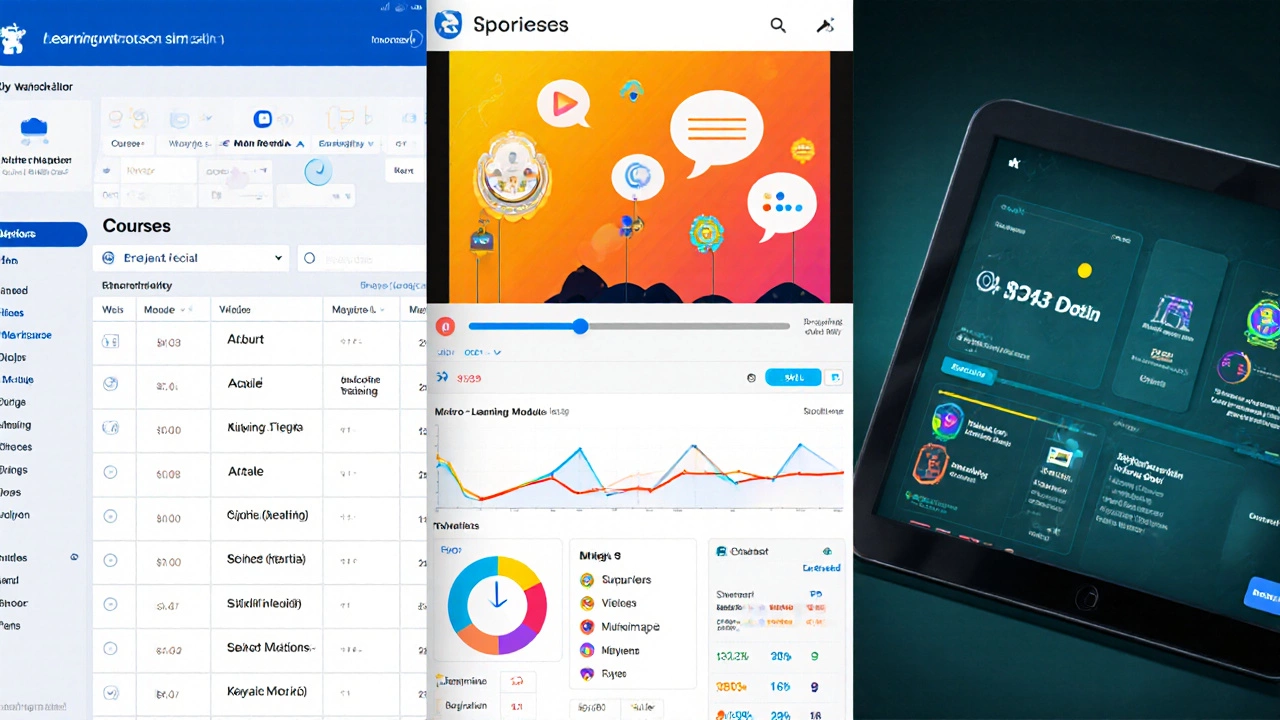
Explore the three main types of e‑learning platforms-LMS, MOOC, and corporate training solutions-learn their features, key differences, and how to choose the right one for your needs.