Best Programming Languages for Beginners in 2025 - Find Your Perfect Coding Path
Discover the most beginner-friendly programming languages, how to pick the right one, and the best resources to start coding today.
When you start programming for beginners, the process of writing instructions computers can follow to solve problems or automate tasks. Also known as coding, it’s not about being a math genius—it’s about learning how to think step by step, break down problems, and keep trying when things don’t work. Many people think you need a degree or years of experience to begin, but that’s not true. You just need curiosity, patience, and the right starting point.
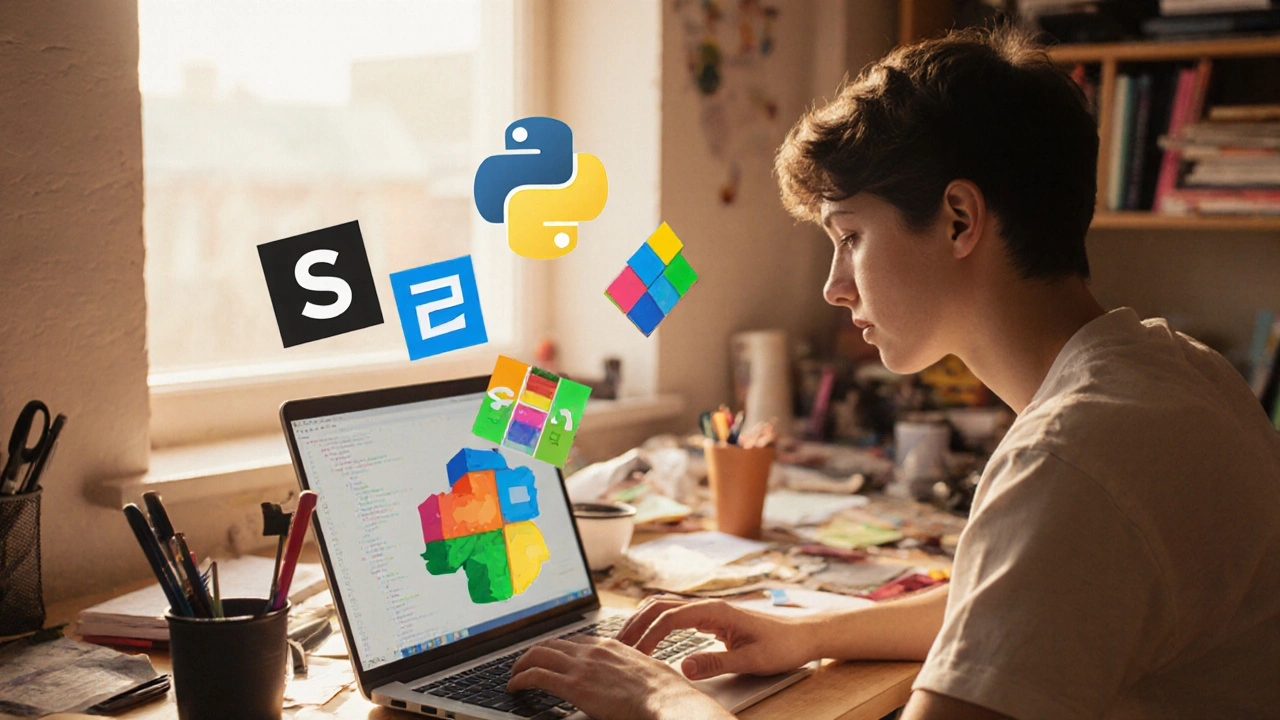
Most beginners jump into languages like Python or JavaScript because they’re clear, forgiving, and widely used. Python, a simple, readable language often used for web apps, data analysis, and automation, is the top pick for first-timers. JavaScript, the language that makes websites interactive, is another great choice if you want to build things you can see right away. You don’t need to learn them both at once. Pick one, stick with it for a few weeks, and build something small—a calculator, a to-do list, a simple game. That’s how real learning happens.
What trips up most beginners isn’t the code—it’s the overwhelm. You’ll hear about frameworks, libraries, IDEs, terminals, and Git before you’ve even written your first line. Ignore the noise. Focus on writing code, running it, breaking it, fixing it. That cycle is the heart of learning. coding bootcamp, an intensive, short-term training program designed to teach practical coding skills can help, but it’s not required. Free resources like YouTube tutorials, freeCodeCamp, and Codecademy work just as well if you’re consistent.
Don’t compare yourself to people who’ve been coding for years. Everyone started where you are now. The difference? They kept going. You don’t need to become a software engineer overnight. Even learning enough to automate your homework, tweak a website, or build a simple app gives you power you didn’t have before. And that’s the real win.
Below, you’ll find real stories and practical guides from people who started with zero experience. Some learned coding in three months. Others switched careers after 30. One guy built his first app while waiting for his coffee. These aren’t success stories—they’re proof that it’s possible. You don’t need to be the smartest person in the room. You just need to show up, type something, and try again tomorrow.
Discover the most beginner-friendly programming languages, how to pick the right one, and the best resources to start coding today.